Home/Blog/Best Gratitude Journals for a Happier Life (2026 Guide)
Best Gratitude Journals for a Happier Life (2026 Guide)
wellness

Best Gratitude Journals for a Happier Life (2026 Guide)

☀️

Get A Happy Life

13 min read
Delen:

Why Gratitude Journaling Is One of the Simplest Habits That Actually Works

There's something quietly powerful about picking up a pen, sitting with your thoughts for a few minutes, and writing down what you're grateful for. It sounds almost too simple — and yet, the science says it works remarkably well.

Research published in the Journal of Positive Psychology found that people who wrote about gratitude regularly reported higher levels of wellbeing, better sleep, and even stronger relationships. A landmark study by Dr. Robert Emmons and Dr. Michael McCullough showed that participants who kept weekly gratitude journals were more optimistic and felt better about their lives compared to those who didn't. The brain, it turns out, responds to gratitude the same way it responds to other rewards — with a hit of dopamine and serotonin, the feel-good chemicals that keep us motivated and happy.

The tricky part isn't believing in the practice. It's actually sticking to it. That's where the right gratitude journal makes all the difference. A well-designed journal gives you structure, prompts, and a ritual — turning a vague intention into a daily habit you actually look forward to.

Whether you're brand new to gratitude journaling or looking to upgrade from a plain notebook, this guide will help you find the best gratitude journal for your lifestyle, personality, and goals in 2026.


What to Look for in a Gratitude Journal

Not all gratitude journals are created equal. Here's what separates a truly useful journal from one that ends up collecting dust on your nightstand:

  • Prompts vs. blank pages: Beginners often do better with guided prompts — specific questions that remove the pressure of "what do I write?" More experienced journalers may prefer open-ended or minimalist designs.
  • Daily vs. weekly format: Daily journals keep you consistent; weekly ones are better if you travel often or have a packed schedule. Consider your realistic availability before buying.
  • Duration: Most journals cover 90 days to 6 months. A 90-day journal is great to start — it's long enough to build a habit but not so long it feels overwhelming.
  • Paper quality: If you love writing with nice pens, thin pages that bleed ink will frustrate you. Look for 90g+ paper weight for a premium feel.
  • Size and portability: A5 journals fit in most bags. A4 journals offer more writing space but are harder to carry. Think about where you'll be journaling most.
  • Additional features: Some journals include affirmations, mood trackers, habit trackers, weekly reflections, or mindfulness exercises — great for people who want an all-in-one wellness tool.
  • Tone and aesthetic: You should genuinely love how your journal looks and feels. If it makes you smile when you pick it up, you're far more likely to use it.

The 5 Best Gratitude Journals for a Happier Life in 2026

We've rounded up five standout gratitude journals for different personalities and budgets. Each one has been evaluated for usability, design quality, prompt effectiveness, and real-world habit-building potential.

The Five Minute Journal by Intelligent Change

Best for: Busy people who want a simple, science-backed daily ritual

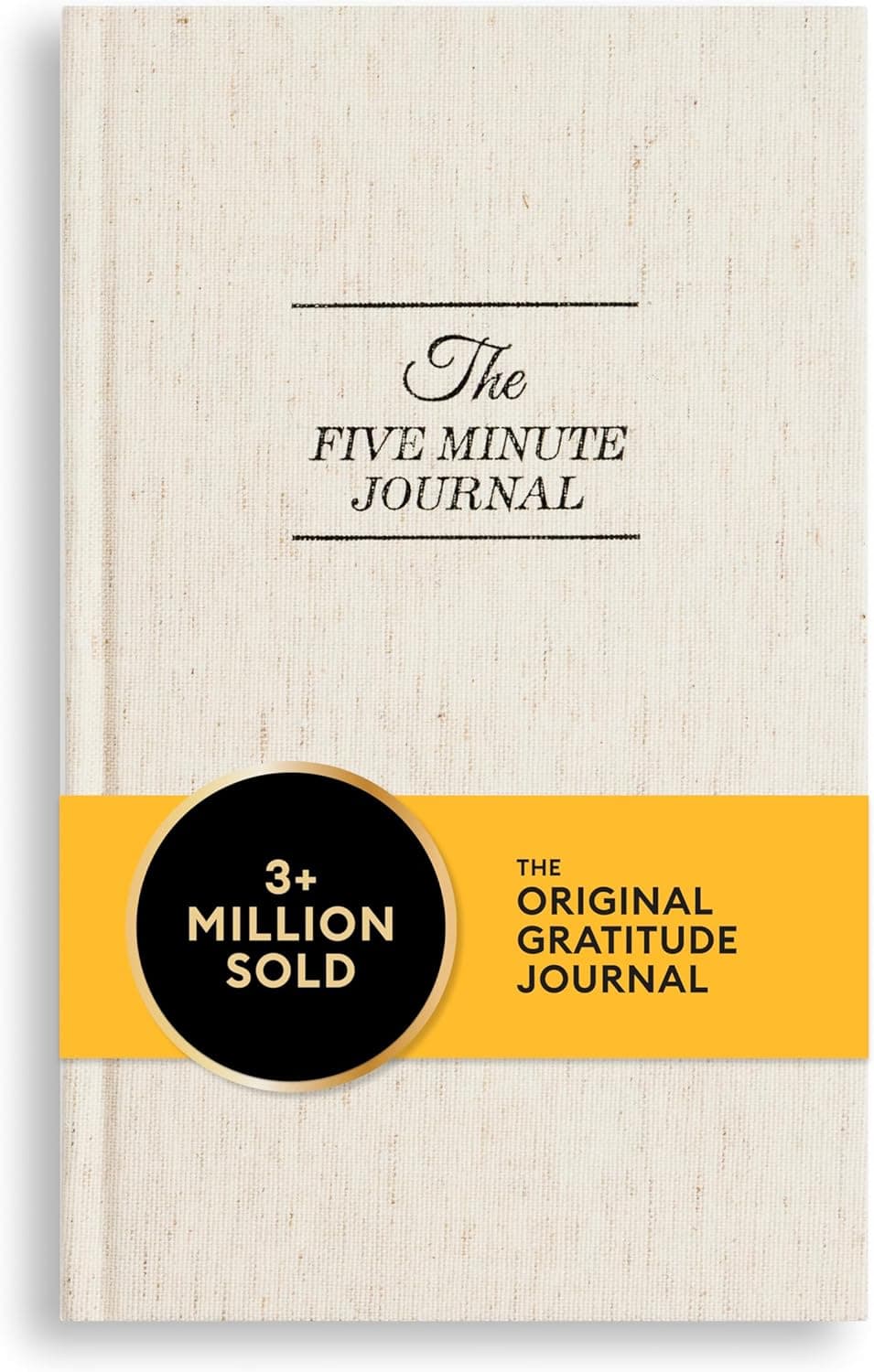
The Five Minute Journal is arguably the most well-known gratitude journal on the market — and for good reason. Created by UJ Ramdas and Alex Ikonn, it's based on positive psychology research and designed to take less than five minutes a day to complete. Each morning, you write three things you're grateful for, three things that would make today great, and a daily affirmation. Each evening, you note three amazing things that happened and one thing you could have done better.

What makes this journal stand out is its simplicity. There's no pressure to write paragraphs — just enough structure to get your brain into a positive, intentional mindset. It's undated, so you won't feel guilty if you miss a day. The hardcover is beautiful and durable, and the paper quality is excellent. Many users report sticking with this one long-term because it feels sustainable, not demanding.

The journal covers about six months if used daily and comes in several cover designs. There's also a digital app version if you prefer typing over writing.

  • Takes genuinely 5 minutes — perfect for busy lifestyles
  • Evidence-based prompts that actually work
  • Beautiful hardcover design with high-quality paper
  • Undated — no guilt for skipped days
  • Pricier than basic notebooks (~$25–$30)
  • Limited space for longer reflections if you're a deep writer

Price range: $25–$30

💡 Tip: Search for this journal on Amazon or in your local bookstore.

Start Where You Are by Meera Lee Patel

Best for: Creative souls and visual thinkers who want a more expressive experience

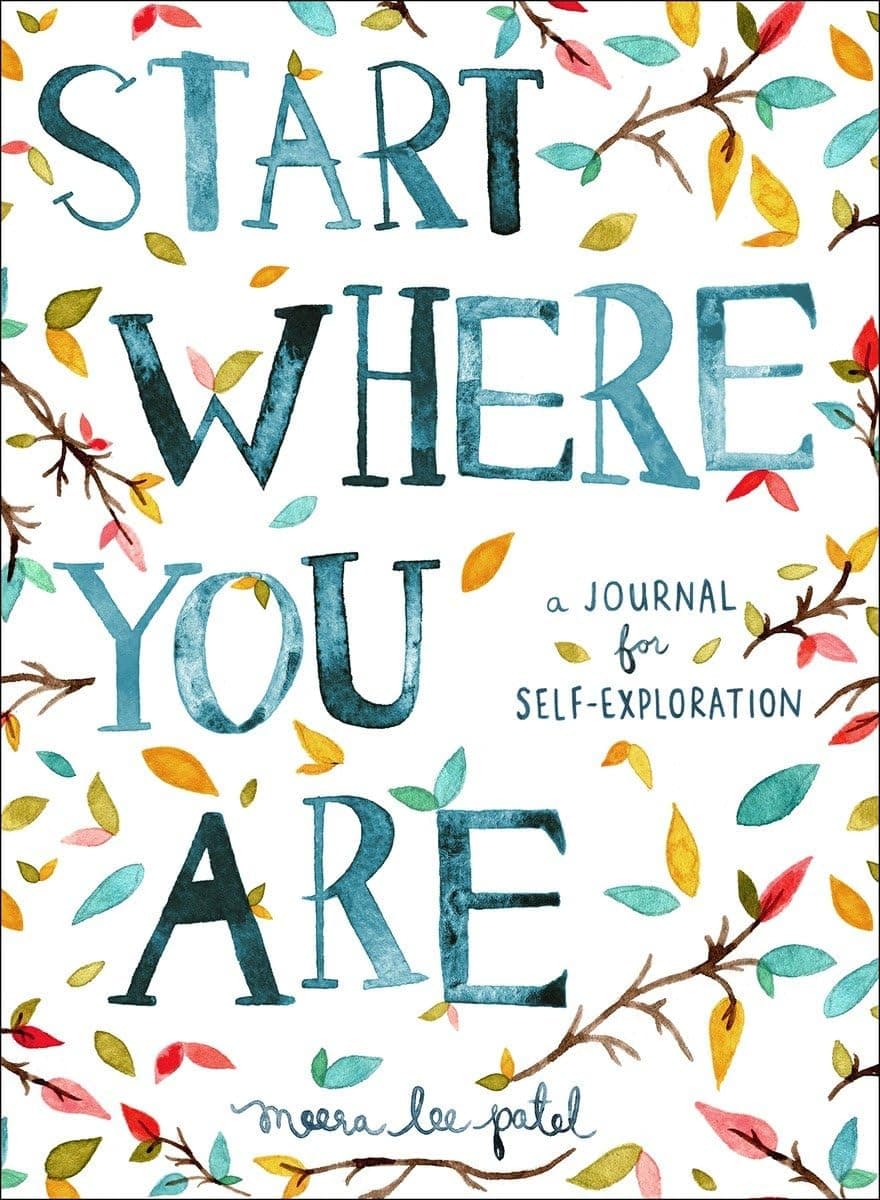
If a plain lined journal makes you yawn, Start Where You Are by artist and author Meera Lee Patel might be exactly what you need. This guided journal blends stunning watercolor illustrations with thoughtful prompts that encourage self-reflection, gratitude, and personal growth. It's part journal, part art book — and flipping through it feels genuinely joyful.

The prompts go deeper than just "what are you grateful for?" — they ask you to reflect on your values, your relationships, your fears, and your dreams. While it's not a traditional daily gratitude journal, it's one of the best tools for building a more grateful, self-aware mindset over time. It works beautifully alongside a morning meditation or a cup of tea on a slow Sunday.

The journal is compact enough to take anywhere and the visual design makes it a pleasure to pick up. It's less structured than the Five Minute Journal, which makes it ideal for people who find rigid formats stifling.

  • Gorgeous watercolor illustrations throughout
  • Deeper, more reflective prompts for meaningful growth
  • Compact and portable
  • More affordable than structured daily journals
  • Not a day-by-day format — requires self-direction
  • Some prompts feel more like self-help exercises than gratitude practice

Price range: $14–$18

💡 Tip: Search for this journal on Amazon or in your local bookstore.

Gratitude: A Day and Night Reflection Journal by Alex Elle

Best for: People who want to journal both morning and evening for a complete daily practice

Written by poet and wellness advocate Alex Elle, this journal is designed for two check-ins per day: a morning intention-setting session and an evening reflection. Each day opens with a short inspirational quote, followed by simple but powerful prompts to help you start the day with clarity and close it with appreciation.

What sets this journal apart is its warmth. Alex Elle writes with a voice that feels like a wise, compassionate friend encouraging you to slow down and be present. The prompts are gentle but effective, making this a wonderful choice for people going through difficult seasons of life who need a soft, nurturing approach to building positivity.

The 90-day format is structured enough to build a habit but short enough not to feel like a commitment. The physical design is minimal and elegant — a journal you'll be proud to leave on your bedside table.

  • Morning and evening prompts for a full daily practice
  • Warm, compassionate tone — perfect for emotional healing
  • 90-day format builds habits without overwhelm
  • Elegant, minimal design
  • Shorter writing space per day
  • The gentle tone may feel too soft for some readers

Price range: $16–$22

💡 Tip: Search for this journal on Amazon or in your local bookstore.

The 6-Minute Diary by UrBestSelf

Best for: People who want gratitude journaling combined with goal-setting and habit tracking

The 6-Minute Diary is popular in the productivity and self-improvement community because it bridges two worlds: gratitude practice and intentional goal-setting. Each day includes a morning session (what you're grateful for, what would make today great, a positive self-affirmation) and an evening session (reflection, what you learned, and what you could have done better). The whole thing takes about three minutes per session.

Beyond the daily pages, the 6-Minute Diary includes weekly challenges, habit trackers, and monthly reviews — making it a comprehensive wellbeing tool. The format is undated, the paper is thick enough for fine-liner pens, and it covers six months. It's particularly well-suited for people who are also working on personal development goals alongside their gratitude practice.

Available in several minimalist cover designs, this journal strikes a nice balance between structure and flexibility. It's one of the best-selling gratitude journals in Europe and has built a loyal following worldwide.

  • Morning and evening format with built-in habit tracking
  • Weekly challenges and monthly reviews for growth
  • Thick, high-quality paper
  • Six months of content — great long-term value
  • Format can feel repetitive after a few months
  • Slightly larger and heavier than pocket-sized options

Price range: $22–$28

💡 Tip: Search for this journal on Amazon or in your local bookstore.

52 Lists for Happiness by Moorea Seal

Best for: List-lovers and people who find traditional journaling intimidating

If the blank page feels daunting or you simply don't think of yourself as a "writer," 52 Lists for Happiness by Moorea Seal is a beautifully low-pressure way to practice gratitude and self-reflection. The concept is straightforward: each week, you complete one list — things that bring you joy, people who make you laugh, small moments you want to remember, places that feel like home. No paragraphs required.

The book is structured around four seasonal themes (spring, summer, autumn, winter) and designed to be completed over the course of a year. Each list page is paired with a gorgeous illustration and a brief reflection prompt that takes you a little deeper if you want to go there. The format makes it ideal for people with busy lives, short attention spans, or anxiety around "doing journaling right."

It also makes a wonderful gift — the design is genuinely beautiful, and the practice is accessible to almost anyone. Many readers report returning to it year after year.

  • Low-pressure list format — no paragraphs needed
  • Beautifully illustrated — a joy to look at and use
  • Year-long structure with seasonal themes
  • Perfect for beginners or non-writers
  • Not a daily practice — weekly format may lose momentum
  • Less structured gratitude focus than dedicated journals

Price range: $18–$24

💡 Tip: Search for this journal on Amazon or in your local bookstore.


How to Build a Daily Gratitude Journaling Habit That Actually Sticks

Buying a beautiful journal is only step one. The real magic happens when you show up consistently — even on the days you don't feel like it. Here's how to make gratitude journaling a real, lasting habit:

1. Attach it to something you already do

Habit stacking is one of the most effective strategies from behavioral science. Instead of trying to create a brand new routine from scratch, attach your journaling to an existing habit. Write in your journal while your morning coffee brews, right after you brush your teeth at night, or during your lunch break. The trigger of the existing habit will carry you into the new one.

2. Start embarrassingly small

You don't need to write three pages. You don't need profound insights. Start with just three things you're grateful for — they can be as simple as "my warm bed," "the smell of coffee," or "the fact that my Wi-Fi worked today." The goal in the beginning is simply to show up, not to write beautifully.

3. Be specific, not generic

Research shows that specific gratitude is more powerful than vague gratitude. Instead of writing "I'm grateful for my family," try "I'm grateful that my sister texted me a funny meme today — it made me laugh out loud at my desk." The specificity makes the feeling more real and the gratitude more impactful.

4. Keep your journal visible

Out of sight, out of mind — it's that simple. Leave your journal on your pillow, on your desk, or next to the kettle. The visual cue of seeing it will remind you to pick it up. Many people find that a pretty journal they love looking at is far more likely to get used than one stuffed in a drawer.

5. Don't aim for perfection — aim for consistency

Missed a day? That's fine. Missed a week? Still fine. Just come back. The research on habit formation consistently shows that missing once has almost no impact on long-term habits — but giving up after missing once does. Be kind to yourself and simply begin again.


Frequently Asked Questions About Gratitude Journals

How long should I write in my gratitude journal each day?

Even five minutes a day is enough to see real benefits. The most important thing is consistency, not duration. Many people find that three to five gratitude entries each morning takes no more than two to three minutes — and that's perfectly sufficient. As the habit grows, you may naturally want to write more.

Is it better to journal in the morning or evening?

Both work — it really depends on your lifestyle. Morning journaling helps set a positive, intentional tone for the day ahead. Evening journaling helps you process the day, notice what went well, and wind down before sleep. Some of the best journals include prompts for both. If you can only do one, try morning first — many people find it easier to stay consistent when it's part of a morning routine.

What if I can't think of anything to be grateful for?

This feeling is completely normal, especially on hard days. Start with the basics: your health (or parts of it), a safe place to sleep, food to eat, a person who cares about you. You can also look for micro-moments of gratitude — a good song, a kind stranger, a moment of sunlight through a window. The practice of actively looking for these moments gets easier over time, even when life is difficult.

Do I need a special journal, or can I just use a plain notebook?

A plain notebook absolutely works — and if you already have one, start there today. That said, many people find that a dedicated gratitude journal with prompts makes the practice easier to stick with, especially at the beginning. Prompts remove the friction of "what do I write?" and a journal you love aesthetically makes the habit more enjoyable. Both are valid. The best journal is the one you'll actually use.


Ready to Start Your Gratitude Practice?

The research is clear, the benefits are real, and the barrier to entry is beautifully low. You don't need to overhaul your entire life or wake up at 5am to experience the power of gratitude. You just need a few quiet minutes and a willingness to notice what's good.

Any of the journals on this list will give you a wonderful starting point. If you're not sure where to begin, we recommend The Five Minute Journal for its simplicity and proven track record — but the "best" journal is always the one that resonates most with you personally.

Pick the one that made you smile when you read about it. Order it, open it, and write your first three things today. That's it. That's the whole practice.

Your happier life doesn't start tomorrow — it starts with what you choose to notice right now.

☀️

Weekly happiness in your inbox

One science-backed tip every week. No spam, no fluff — just practical advice to make your life a little better.

No spam. Unsubscribe anytime.

#gratitude journal#journaling#happiness#wellness#self-care#mindfulness
☀️

Get A Happy Life

Science-backed happiness guides

Our mission is to help people live with more happiness, calm, and balance. Through practical, research-backed guides on mindfulness, gratitude, sleep, and well-being — we help you build a life you truly love.

☀️

Want more happiness science?

Browse all our guides on mindfulness, gratitude, sleep, and well-being.

Read more guides