
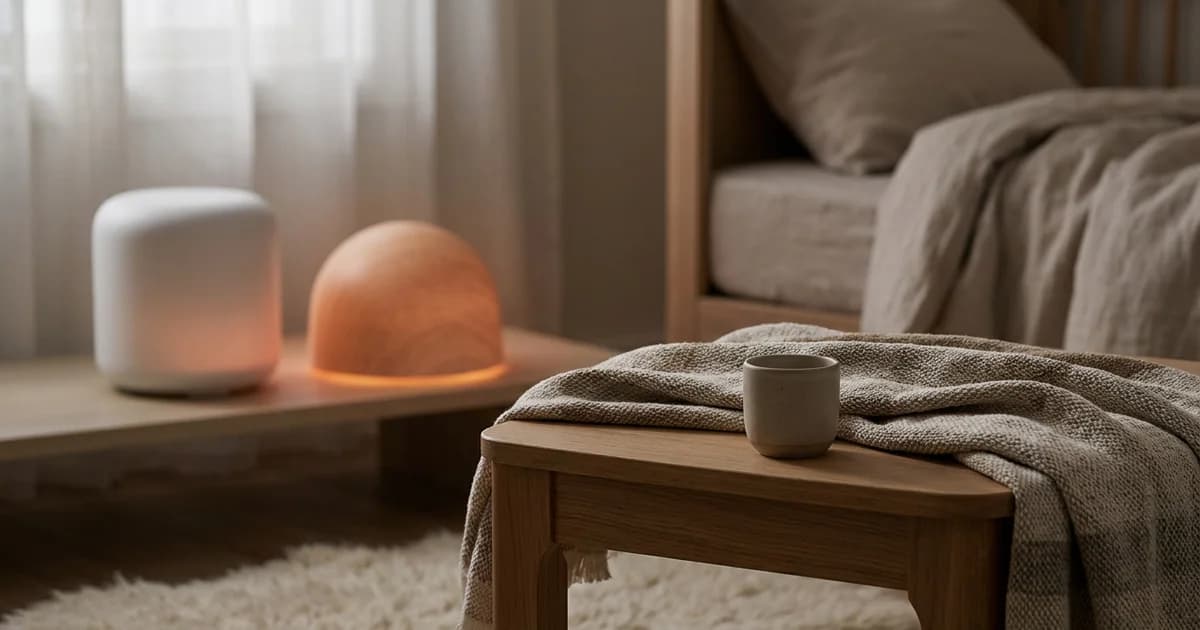
Your choice depends on your primary use: the LectroFan Evo excels at straightforward, travel-friendly sound masking, while the Hatch Rest offers a nursery-ready device with night light, app controls, and time-to-rise features. Adults prioritizing simplicity and portability should choose the Evo; families needing an all-in-one sleep solution should choose Hatch Rest.
- Evo: non-looping audio, USB-powered, $35 to $50
- Hatch Rest: night light, app control, $60 to $90
- Evo ideal for adults, travel, sound masking
- Hatch ideal for nurseries, sleep training, families
- Evo physical buttons; Hatch app-controlled and feature-rich
Quick Verdict
If you want a straightforward, travel-friendly sound machine with precise, non-looping audio, the LectroFan Evo is the better choice. If you need a nursery-ready device with a night light, app controls, and a time-to-rise feature, the Hatch Rest is the clear winner. Most adults prioritizing pure sleep quality will prefer the Evo’s simplicity, while parents of young children get more value from Hatch’s all-in-one ecosystem.
At a Glance
Both devices sit at the top of their respective categories, but they serve different sleep needs. Use the comparison table below to see how they stack up, but remember that your lifestyle matters as much as the specifications. If you travel often, value digital privacy, or need aggressive noise masking, the Evo’s simplicity is a feature, not a limitation. If you are setting up a nursery, managing nighttime feedings, or teaching a toddler independence, the Hatch’s combination of light and sound becomes far more valuable than pure audio engineering. For readers who want to explore additional options beyond these two, our guide to the best white noise machines for better sleep covers models for every budget.
| Feature | LectroFan Evo | Hatch Rest |
|---|---|---|
| Primary Use | Adult sleep, travel, focus | Nursery, kids, family bedrooms |
| Sound Engine | Digitally generated, non-looping fan and colored noise | Curated library of playback-based sounds |
| Night Light | None | Customizable color light |
| App Control | No | Yes (app-based; Bluetooth/WiFi depending on model) |
| Portability | Highly compact, USB-powered | Moderate; best as a bedside fixture |
| Power | USB | USB or plug-in base |
| Ease of Use | Immediate button control, no setup | App and touch controls, short learning curve |
| Price Range | Around $35–$50 | Around $60–$90 |
| Best For | Pure sound masking without distractions | All-in-one nursery and sleep-training solution |
Who Should Buy the LectroFan Evo?
The LectroFan Evo is built for adults who treat sleep as a wellness priority. It strips away every non-essential feature and delivers digitally generated fan sounds and colored noise spectra—including white, pink, and brown noise—without audible looping. Users consistently report that these non-repeating tracks mask disruptive sounds like traffic, snoring, and HVAC cycling more effectively than basic recorded loops. Because there is no light, no app, and no connectivity required, the device is ideal for people who want a dark room and zero screen interaction at bedtime. Shift workers, travelers, and apartment dwellers in noisy cities often praise its compact, USB-powered body, which slips easily into a carry-on or desk drawer. The interface uses tactile physical buttons rather than touchscreens, so adjusting volume at 2 a.m. requires no Wi-Fi password or phone unlocking.
Beyond the bedroom, the Evo has developed a following among remote workers and meditators who use its brown noise settings to create an acoustic cocoon during deep-focus tasks. Because it requires no app login, firmware update, or Bluetooth pairing, it appeals to users concerned about digital distractions and electromagnetic sensitivity. The USB power source adds flexibility; you can run it from a laptop port, a wall adapter, or a portable battery pack during camping trips. Users consistently report that the absence of a bright display or status light helps them maintain a pitch-dark bedroom, which aligns with sleep hygiene guidelines recommended by circadian health experts. If your primary goal is auditory masking and you already practice other sleep hygiene habits—such as using one of the best sleep masks or following a consistent evening routine for better sleep—the Evo is a purpose-built addition to your toolkit. A common limitation users note is the absence of nature sounds or a night light, which means it will not replace a nursery lamp or sunrise alarm.
Who Should Buy the Hatch Rest?
The Hatch Rest is designed around the realities of parenting. It pairs a sound machine with a customizable night light, allowing caregivers to change colors and brightness for midnight feedings without flipping on harsh overhead bulbs. Parents frequently highlight the time-to-rise feature, which teaches toddlers to stay in bed until a specific color appears. The accompanying app lets you adjust volume, light hue, and scheduling from another room, though a common complaint is that some functions feel tethered to your phone. The speaker library includes various white noise variations, wind, and rain tracks suitable for infants through early childhood. Because it replaces three devices—a night light, a sound machine, and an okay-to-wake clock—many families find the higher price justifiable. It works best as a semi-permanent bedside fixture rather than a travel gadget.
The Hatch ecosystem includes multiple hardware iterations, from the Bluetooth-based Rest to the WiFi-enabled Rest+ with a clock and two-way audio monitor. This scalability means you can start with basic sound and light controls, then upgrade to a model that allows remote monitoring from another floor. Parents of newborns frequently mention that the dimmable light prevents the jarring wakefulness caused by turning on room lights during diaper changes. As children grow, the same device transitions into a sleep trainer that uses color cues rather than words, reducing early-morning bedroom visits. A common complaint among adult users is that the app interface can occasionally lag, and those who prefer immediate manual buttons may feel frustrated if their phone is out of reach. Still, for a household that values ambiance and multi-stage sleep support over raw portability, the Hatch Rest remains one of the most versatile wellness investments you can place in a child’s room.
Sound Quality and Sleep Performance
When evaluating how these machines affect rest, the underlying sound architecture matters significantly. The LectroFan Evo relies on digital signal generation to produce its entire audio profile. This method synthesizes sound waves in real time rather than playing back a recording, eliminating the subtle repetition points that can bother sensitive listeners. Sleep researchers and audiologists widely acknowledge that non-looping noise reduces the likelihood of your brain detecting a pattern, which can trigger brief micro-arousals in light sleepers. Users in high-noise urban settings consistently favor the Evo because its fan and brown noise settings carry substantial low-frequency energy, helping cover bass thumps from neighbors, street rumble, and snoring partners. The result is a steady acoustic blanket that supports deeper sleep cycles without the variability of pre-recorded tracks.
The Hatch Rest takes a different approach, drawing from a curated playback library that includes white noise, wind, rain, and other soothing tones. While these tracks are engineered for infant comfort, some users notice a faint loop point during extended listening sessions, particularly on shorter ambient clips. For babies and young children, this is rarely disruptive; the gentle predictability often helps regulate breathing and heart rate during the transition to sleep. The Hatch also allows you to pair sound with colored light, and many parents report that the combination of soft amber hues and steady rainfall creates a powerful cue for nighttime serenity. If you are an adult with tinnitus or hyperacusis who needs aggressive, seamless masking, the Evo’s architecture is generally considered the stronger clinical choice. If your goal is to build a multisensory wind-down ritual for a nursery, the Hatch’s paired light and sound delivery offers an experience the Evo is not built to replicate.
Design, Controls, and Daily Use
Physical design reveals how each manufacturer envisions your relationship with the device. The LectroFan Evo is compact and utilitarian, roughly the size of a large coffee cup lid, with clearly labeled physical buttons. It requires no setup beyond plugging in the USB cable, and it recalls your previous volume and tone settings through simple onboard memory. There is no display to cast unwanted light across the room, no glowing LED to cover with tape, and no wireless pairing process to troubleshoot when you are already tired. This reliability appeals to minimalists, frequent travelers, and anyone who distrusts smart-home dependencies. Users consistently report that the matte plastic housing withstands drops from nightstands and resists dust accumulation better than fabric-covered competitors.
The Hatch Rest is taller and softer in appearance, with a rounded silhouette that blends into modern nursery décor. Controls vary by model; some versions rely heavily on the app, while others include a touch ring or basic buttons on the base for quick adjustments. The light portion is diffused and capable of subtle gradients, which caregivers find useful for checking on a sleeping infant without triggering wakefulness through bright flashes. However, because the device is meant to stay plugged in and remain connected, it functions best as a semi-permanent bedside fixture rather than a travel companion. A common piece of feedback is that the Hatch’s gentle form factor and color customization encourage children to interact with it, which can be either a delightful bonding moment or an unintended distraction depending on age. Long-term durability reports suggest both machines withstand nightly use, though the LectroFan’s lack of moving parts, touchscreens, and light elements may give it a slight edge in longevity over half a decade of continuous operation.
Price and Long-Term Value
Price is often the final filter when committing to a sleep tool. The LectroFan Evo typically costs around $35–$50, placing it in the accessible mid-range tier for dedicated sound machines. For that investment, you receive a specialized acoustic device with a narrow but excellent feature set. There are no subscription tiers, in-app purchases, or accessory ecosystems to buy into, so the total cost of ownership remains low from the first night through years of use. Because it does not rely on software updates to function, buyers avoid the obsolescence cycle common to app-dependent hardware.
The Hatch Rest usually falls in the $60–$90 range depending on whether you select the Bluetooth-based Rest or the WiFi-enabled Rest+ with added clock and audio monitor functions. While the upfront cost is noticeably higher, it consolidates spending that might otherwise go to separate night lights, sound machines, and sleep-training clocks. A common point of feedback is that families use the Hatch across multiple developmental stages, from newborn white noise to preschool time-to-rise routines, which spreads the investment over several years. Neither device is disposable; both are widely reported to last through years of nightly operation without significant degradation in speaker quality. If you need only sound, the Evo delivers superior masking per dollar. If you need light, app convenience, and room to grow, the Hatch justifies its premium through multifunctionality.
Building a Better Sleep Environment
Whichever machine you choose, it should serve as one component of a broader wind-down strategy rather than a standalone cure. Sound masking works most effectively when paired with light management and consistent timing. Consider pairing your device with blackout curtains and one of the best sleep masks to eliminate visual stimuli that suppress melatonin. If you are using the Hatch Rest for a child, establishing a predictable sequence—bath, book, sound on, light dimmed—reinforces circadian cues and reduces cortisol spikes before bed. Adults using the LectroFan Evo can benefit from a deliberate evening routine for better sleep that begins thirty minutes before the machine turns on, signaling the nervous system that the environment is safe for rest.
Mindfulness practitioners sometimes use brown noise settings for focused meditation and then transition the same device to white noise for overnight sleep, creating continuity between daytime calm and nighttime recovery. Remember that the goal is not merely to buy a gadget, but to condition your brain to associate a specific soundscape with relaxation. Over time, the machine becomes a Pavlovian cue for sleep onset, which is why consistency matters more than brand. Whether you prioritize the Evo’s acoustic purity or the Hatch’s sensory versatility, the best choice is the one you will actually use every night.
Frequently Asked Questions
What is the best rated white noise machine?
There is no universal best-rated model, because ratings depend on whether you need portability, a night light, or app control. The LectroFan Evo and Hatch Rest both earn consistently high marks in their respective categories, with the Evo dominating adult sleep forums and the Hatch leading parent reviews. Your personal sleep environment and whether you are buying for yourself or a child will determine which rating matters most to you.
What's the best white noise machine for babies?
The Hatch Rest is widely favored for babies because it combines soothing sounds with a customizable night light and time-to-rise features that support sleep training. Parents often appreciate the ability to control settings remotely via the app without entering the nursery. Its soft light also helps caregivers navigate nighttime feedings without disrupting the infant’s melatonin production.
What is the difference between Yogasleep and LectroFan?
Yogasleep, formerly known as Marpac, is the company behind the Dohm series of sound machines, which use a mechanical fan to create natural rushing air sounds. LectroFan is manufactured by Adaptive Sound Technologies and relies on digital, non-looping generation to produce fan and colored noise profiles without any moving parts. The two brands solve noise masking with fundamentally different technologies.
Is hatch white noise good?
Users generally find Hatch white noise to be effective and volume-adequate for nurseries and small bedrooms. A common complaint is that some tones can sound slightly synthetic or reveal a loop point during long sessions compared to digitally generated machines like the LectroFan Evo, but most families find the overall library soothing and perfectly adequate for infant sleep.
Can adults use the Hatch Rest?
Yes, many adults use the Hatch Rest for its light and sound combination, especially those who want a sunrise alarm or relaxing hues for meditation. However, adults who only need sound masking often prefer the LectroFan Evo’s simpler interface and more precise noise controls. If you do not need a night light or sleep trainer, the Evo generally offers a more focused adult sleep experience.
Weekly happiness in your inbox
One practical idea every week. No spam and no miracle claims — just clear advice you can assess for yourself.
No spam. Unsubscribe anytime.
Marcel Kupures
Founder & Editor
Founder and editor of Get A Happy Life. Research references are linked where they are used, and product comparisons rely on public product information unless hands-on testing is explicitly documented.
Last updated: June 14, 2026
Want more happiness science?
Browse all our guides on mindfulness, gratitude, sleep, and well-being.
Read more guides