
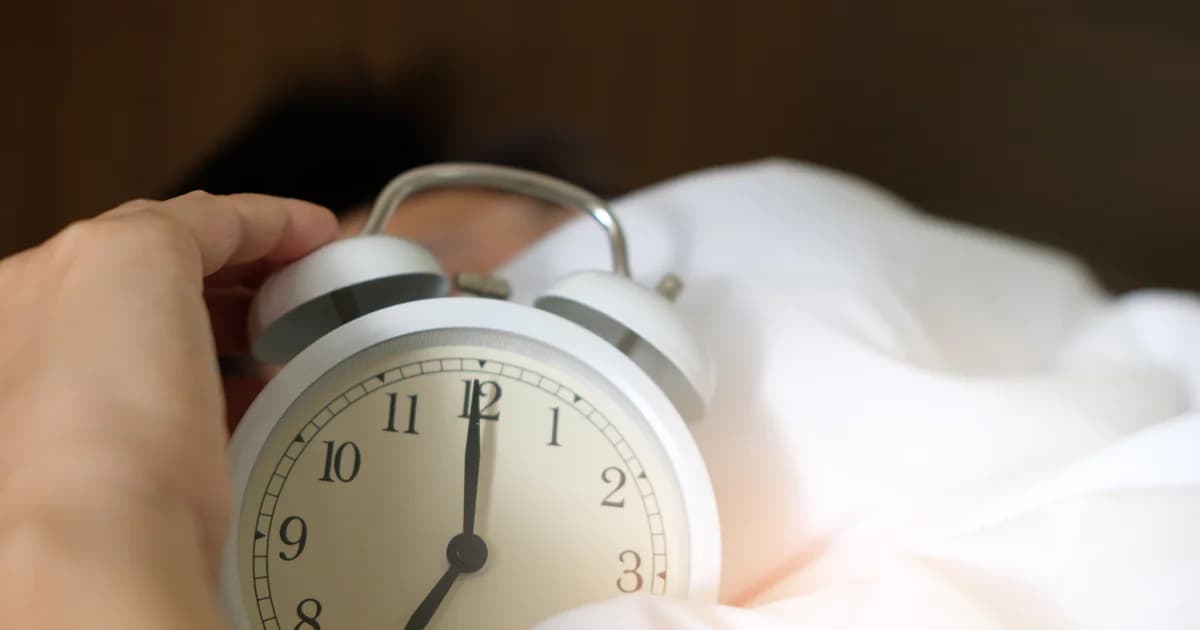
Sleep is the foundation of happiness because sleep deprivation measurably increases negative emotion, reduces positive emotion, and chemically impairs your ability to regulate feelings and maintain emotional balance. When you're sleep-deprived, your brain's emotional alarm system becomes hyperreactive, making small frustrations feel enormous. Adults need 7–9 hours of actual sleep per night for optimal emotional and cognitive function.
- Sleep deprivation reduces happiness and emotional regulation
- Adults need 7-9 hours of actual sleep
- Deep sleep consolidates memories and heals emotions
- One good night begins restoring cognitive function
- Brain waste clearance happens almost exclusively during sleep
You can meditate, exercise, practice gratitude, and eat well, but if you're not sleeping enough, all of it is undermined. Sleep is the non-negotiable foundation on which every other pillar of well-being rests. And yet, in a culture that glamorizes busyness and treats rest as laziness, sleep is the first thing we sacrifice. That trade-off is costing us our happiness, our health, and our sanity.
How Sleep Deprivation Sabotages Happiness
Even one night of poor sleep measurably increases negative emotion, reduces positive emotion, and impairs your ability to regulate your feelings. A landmark 2018 study from UC Berkeley found that sleep-deprived people rated neutral facial expressions as significantly more threatening or hostile. Your exhausted brain becomes a threat-detection machine, scanning for danger that isn't there, finding enemies in friends, catastrophizing the ordinary.
Think about the last time you were running on four or five hours of sleep. Small frustrations, a slow driver, a passive-aggressive email, a minor misunderstanding, probably felt enormous. That's not a personal failing. That's neuroscience. The amygdala, your brain's emotional alarm system, becomes up to 60% more reactive after sleep loss, according to research published in Current Biology. Meanwhile, the connection between the amygdala and the prefrontal cortex, the rational, calming part of your brain, weakens significantly. You're all gas pedal and no brakes.
Chronically under-slept people also show higher levels of cortisol (the stress hormone), lower levels of serotonin and dopamine (your key happiness chemicals), and reduced activity in the prefrontal cortex, the region responsible for keeping your emotional responses proportionate and rational. In other words, sleep deprivation chemically makes you less happy, more stressed, and more irrational. If you've ever wondered why reducing anxiety feels so hard despite trying everything, poor sleep may be the hidden variable undermining all your other efforts.
What Actually Happens in Your Brain While You Sleep
Sleep is not simply an absence of wakefulness. It is a profoundly active biological process during which your brain performs critical maintenance tasks that are impossible to replicate any other way.
During slow-wave (deep) sleep, your brain consolidates the memories and learning of the day, transferring information from the hippocampus (short-term storage) to the prefrontal cortex (long-term storage). This is why pulling an all-nighter before an exam is counterproductive, you're actively preventing the consolidation of everything you studied.
During REM sleep, your brain does something even more remarkable: it reprocesses emotional memories. Neuroscientist Matthew Walker describes REM sleep as "overnight therapy." Your brain strips the emotional charge from difficult experiences, allowing you to remember events without being re-traumatized by them. People who are consistently REM-deprived, a common effect of alcohol, many medications, and fragmented sleep, often find that old emotional wounds stay raw instead of healing.
Perhaps most fascinatingly, your brain has its own waste-clearance system called the glymphatic system, which is almost exclusively active during deep sleep. This system flushes out metabolic byproducts, including amyloid-beta, the protein associated with Alzheimer's disease. Chronic sleep deprivation doesn't just make you feel terrible today; it may be silently accumulating neurological damage for decades. Understanding why sleep is so important for your overall health is one of the most motivating things you can do for your long-term well-being.
The Myth of "I'll Sleep When I'm Dead"
Matthew Walker, neuroscientist and author of Why We Sleep, puts it bluntly: "Every disease that is killing us in the developed world has causal links to sleep deficiency." Routinely sleeping fewer than 6 hours per night is associated with significantly higher risk of depression, anxiety, obesity, type 2 diabetes, heart disease, stroke, and even certain cancers.
The irony of the "sleep when you're dead" mentality is that insufficient sleep is directly accelerating that outcome. A 2010 meta-analysis published in Sleep, which followed over 1.3 million people, found that short sleep duration was associated with a 12% greater risk of death from all causes. Sleeping fewer than 6 hours per night consistently was associated with a 13% increased mortality risk.
There's also the productivity paradox. Most people who sacrifice sleep believe they're gaining productive time. Research consistently shows the opposite. Sleep-deprived workers make more errors, take longer to complete tasks, have worse judgment, and generate fewer creative insights. A 2010 Harvard study estimated that sleep deprivation costs American companies over $63 billion per year in lost productivity. You're not gaining time by sleeping less, you're just spending more time doing things poorly.
The good news: the damage is largely reversible. Even one or two nights of adequate sleep begin to restore emotional balance and cognitive function. Your brain is remarkably resilient when given the chance to recover.
How Much Sleep Do You Actually Need?
Adults need 7–9 hours per night of actual sleep, not time in bed, but real sleep. This is not a suggestion. It's a biological requirement backed by decades of research from institutions including the National Sleep Foundation, the American Academy of Sleep Medicine, and the CDC.
The small percentage of people who genuinely thrive on 6 or fewer hours (so-called "short sleepers") carry a specific rare genetic mutation affecting the ADRB1 gene. Researchers estimate this group represents fewer than 3% of the population. The other 97% of us who claim to "do fine on six hours" are, in all likelihood, chronically sleep-deprived and simply adapted to it, which is a critical distinction. You can adapt to feeling terrible. That doesn't mean you're functioning well.
One of the most telling studies on this point, conducted by the University of Pennsylvania, found that subjects who slept 6 hours a night for two weeks showed cognitive impairments equivalent to two full nights of total sleep deprivation, yet those same subjects rated themselves as only "slightly sleepy." We are remarkably poor at assessing our own sleep deprivation, which is precisely what makes it so dangerous.
The Four Sleep Stages and Why They All Matter
Not all sleep is equal. Your body cycles through four distinct stages roughly every 90 minutes, each serving a different function. A full night of sleep typically includes 4–6 complete cycles.
- Stage 1 (Light Sleep): The transition between wakefulness and sleep. Your heartbeat, breathing, and eye movements slow. This stage lasts only a few minutes and is where you experience those sudden "falling" sensations.
- Stage 2 (Deeper Light Sleep): Body temperature drops, heart rate slows further, and brain waves show characteristic bursts called sleep spindles. Memory consolidation begins here. Most adults spend about half their sleep time in Stage 2.
- Stage 3 (Deep / Slow-Wave Sleep): The most physically restorative stage. Growth hormone is released, immune function is repaired, and the glymphatic system clears waste. This stage dominates the first half of the night, which is why cutting your sleep short by even an hour disproportionately reduces deep sleep.
- REM Sleep (Rapid Eye Movement): Dreaming sleep. Emotional processing, creative insight, and long-term memory consolidation happen here. REM sleep dominates the second half of the night, meaning that sleeping 6 hours instead of 8 cuts your REM sleep by up to 50%.
This architecture matters because it explains why you can't simply "make up" lost sleep on weekends. You can partially recover some sleep debt, but the specific restorative processes that happen in sequence, particularly late-night REM, cannot simply be rescheduled. Consistency is everything.
Practical Sleep Hygiene Tips That Actually Work
Sleep hygiene isn't about perfection: it's about systematically reducing the obstacles between you and quality rest. Here are the most evidence-supported strategies:
- Keep a consistent schedule. Go to bed and wake up at the same time every day, including weekends. This single habit regulates your circadian rhythm more powerfully than any other intervention. Even a 1–2 hour shift on weekends (social jet lag) measurably impairs mood and cognitive function.
- Make your room cool and dark. The optimal bedroom temperature for sleep is around 65–67°F (18–19°C). Your core body temperature needs to drop by 1–3°F to initiate and maintain sleep. Even small amounts of light, including the glow of a standby LED, can suppress melatonin production. Blackout curtains are one of the highest-ROI investments for sleep quality.
- Stop screens 60 minutes before bed. Blue light from phones and laptops delays melatonin release by up to 3 hours. If you must use screens, enable night mode, reduce brightness significantly, or wear blue-light blocking glasses. But the content matters too, doom-scrolling the news activates your threat-response system regardless of the light spectrum.
- Limit caffeine after 2pm. Caffeine has a half-life of roughly 5–7 hours in most adults, meaning half of a 3pm coffee is still circulating in your system at 8pm. For sensitive individuals, the half-life can be up to 9–10 hours. Note that caffeine doesn't reduce sleep pressure, it only masks it temporarily. The sleep debt is still accumulating.
- Create a wind-down routine. Your brain learns from repeated cues. A consistent 20–30 minute pre-sleep routine, dimming lights, light reading, stretching, or a warm shower, trains your nervous system to shift from sympathetic (alert) to parasympathetic (rest) mode. The warm shower trick is particularly effective: it raises your skin temperature, causing blood to rush to the extremities and lowering your core temperature afterward.
- Reserve your bed for sleep and sex only. If you work from your bed, scroll on your phone in bed, or watch TV in bed, your brain begins to associate that environment with wakefulness. This is one of the core principles of cognitive behavioral therapy for insomnia (CBT-I).
- Limit alcohol. Alcohol is widely misunderstood as a sleep aid. While it may help you fall asleep faster, it dramatically fragments sleep architecture, suppressing REM sleep and causing multiple micro-awakenings in the second half of the night. A drink or two before bed typically cuts REM sleep by 25% or more.
Building Your Ideal Sleep Routine: A Step-by-Step Guide
Understanding sleep hygiene principles is one thing; actually implementing them is another. Here's a practical framework to build a sleep routine that sticks.
- Set your wake time first. Work backward from when you need to wake up. If that's 6:30am and you need 8 hours, you need to be asleep by 10:30pm, meaning in bed by 10:00pm. Anchor your wake time before bed time; the alarm creates the structure.
- Design a 30-minute wind-down window. One hour before bed, dim all lights in your home. Thirty minutes before bed, put your phone face-down in another room (or at least outside the bedroom). Fill those 30 minutes with something calming and screen-free: journaling, light reading, a brief meditation, or gentle stretching. Pairing your wind-down with a set of strong daily habits creates bookends that reinforce your circadian rhythm from both ends of the day.
- Optimize your sleep environment. Lower the thermostat, hang blackout curtains, and consider white noise if you live in a loud environment. A good white noise machine can mask disruptive sounds without the dependency risks of sleep medication.
- Address racing thoughts proactively. If your mind races at bedtime, don't try to force sleep. Instead, keep a notepad by your bed. Write down tomorrow's to-do list before trying to sleep, research from Baylor University found that writing a detailed to-do list for the next day reduced the time it took to fall asleep significantly, because it offloads the "open loops" your brain is trying to hold onto.
- Be patient with the process. It typically takes 2–4 weeks for a new sleep routine to feel natural. Your circadian rhythm is a biological clock that changes slowly. Consistency compounds, the longer you maintain the schedule, the stronger and more automatic it becomes.
Sleep and Mental Health: A Two-Way Street
One of the most important things to understand about sleep and happiness is that the relationship is bidirectional. Poor sleep worsens anxiety and depression, but anxiety and depression also worsen sleep. This feedback loop is one of the most common traps people fall into.
Research published in JAMA Psychiatry found that insomnia is one of the strongest predictors of future depression, stronger, in fact, than many traditionally recognized risk factors. Treating insomnia proactively may be one of the most underutilized tools in mental health prevention. As part of a comprehensive approach to daily well-being practices, prioritizing sleep may yield more measurable results than almost any other single intervention.
The good news is that this loop can be reversed. Studies show that improving sleep quality, even through simple behavioral interventions, reduces symptoms of anxiety and depression measurably within weeks. You don't necessarily need to wait until you're mentally well to sleep better; sleeping better actively helps you get mentally well.
When to Seek Help
If you consistently struggle to fall asleep, stay asleep, or wake too early despite practicing solid sleep hygiene for several weeks, you may be dealing with clinical insomnia, and you deserve real support.
Cognitive Behavioral Therapy for Insomnia (CBT-I) is the gold standard treatment, recommended as first-line therapy by the American College of Physicians, the American Academy of Sleep Medicine, and the National Institutes of Health. Multiple large-scale studies confirm it is more effective than sleep medication over the long term, and without dependency or side effects. CBT-I typically involves 6–8 sessions and addresses the thought patterns, behaviors, and physiological arousal that perpetuate chronic insomnia.
CBT-I is now available through therapists, sleep clinics, and digital programs (apps like Sleepio have shown clinical efficacy in randomized controlled trials). If in-person therapy isn't accessible, digital CBT-I is a well-validated alternative.
Other conditions worth ruling out include sleep apnea (obstructive breathing during sleep, which fragments sleep architecture dramatically and affects an estimated 1 billion people worldwide, most of them undiagnosed) and restless leg syndrome. If your partner reports that you snore heavily, stop breathing, or gasp during the night, a sleep study is worth pursuing.
What the Research Shows
The link between sleep and happiness is not just intuitive, it is well documented: too little sleep reliably worsens mood, emotional control and even how connected we feel to others.
| Researcher | Institution | Key finding | Year |
|---|---|---|---|
| Matthew Walker | UC Berkeley | Sleep-deprived people feel lonelier and withdraw socially, much like those with social anxiety; poor sleep also drives mood swings | 2015 |
| Bryce Mander & Matthew Walker | UC Berkeley | More deep sleep was associated with better memory in people with similar amyloid burden, supporting sleep's role in brain health | 2015 |
Matthew Walker at UC Berkeley has documented how sleep underpins emotional wellbeing. His team found that even one night of poor sleep makes people feel lonelier and less inclined to interact, avoiding close contact in much the same way someone with social anxiety would. Because warm relationships are one of the strongest predictors of happiness, sleep quietly protects the social ties that make us feel good.
Sleep also restores the systems that keep mood stable. Walker's research connects sleep loss to mood swings, a weakened immune response and stronger cravings, while deep sleep consolidates memory and clears the brain of metabolic waste. Treating sleep as a foundation rather than a luxury gives every other happiness habit, from gratitude to exercise, a steadier base to build on.
Sources: UC Berkeley News: sleep and the brain; UC Berkeley: Matthew Walker research profile.
Frequently Asked Questions
Can I catch up on lost sleep on the weekend?
Partially, but not fully. Weekend recovery sleep can reduce some of the cognitive impairment from sleep debt, but it does not fully restore metabolic, immune, or emotional functioning. More importantly, irregular sleep timing, shifting your schedule by more than an hour or two on weekends, creates "social jet lag" that disrupts your circadian rhythm and leaves many people feeling groggy on Monday mornings. The best strategy is consistent daily sleep, not cyclical deprivation and recovery.
Is it normal to wake up briefly during the night?
Yes. Most adults experience 3–5 brief awakenings per night, often at the transition between sleep cycles. These are normal and typically so brief they're not remembered. What matters is whether you can return to sleep quickly. If you consistently lie awake for 20+ minutes during nocturnal awakenings, that's worth addressing, most commonly with stimulus control therapy (a component of CBT-I) and relaxation techniques.
Does napping help or hurt nighttime sleep?
Strategic napping can be beneficial. A 10–20 minute "power nap" before 3pm can restore alertness and mood without significantly affecting nighttime sleep pressure. However, naps longer than 30 minutes or taken in the late afternoon can reduce sleep pressure enough to make it harder to fall asleep at your target bedtime, particularly if you're struggling with insomnia. For people with chronic insomnia, avoiding naps entirely (to build sleep pressure) is often part of the initial treatment protocol.
How does exercise affect sleep?
Regular aerobic exercise is one of the most powerful non-pharmacological sleep aids available. Multiple studies show that people who exercise regularly fall asleep faster, experience more deep sleep, and report higher sleep quality. However, timing matters for some people: vigorous exercise within 1–2 hours of bedtime can elevate core body temperature and cortisol in a way that makes falling asleep harder. Morning or early afternoon exercise provides the greatest sleep benefit for most people, and conveniently aligns with the kind of habits covered in a well-designed morning routine.
Do sleep supplements like melatonin actually work?
Melatonin is a signaling hormone, not a sedative. It tells your brain that darkness has arrived and sleep should begin, but it doesn't directly cause sleep. At low doses (0.5–1mg), melatonin can be genuinely helpful for shifting your circadian rhythm (for jet lag or adjusting to a new schedule). As a general sleep aid for insomnia, the evidence is much weaker than marketing suggests. More importantly, many over-the-counter melatonin products contain 5–10mg, doses that are unlikely to be more effective and may disrupt your natural melatonin rhythm over time. If you're going to try melatonin, use the lowest effective dose, take it 1–2 hours before your target bedtime, and treat it as a short-term tool rather than a permanent solution.
What's the connection between sleep and anxiety?
Sleep deprivation amplifies anxiety through multiple biological pathways: elevated cortisol, increased amygdala reactivity, reduced prefrontal cortex regulation, and altered activity in the anterior cingulate cortex (involved in worry and rumination). Research shows that even one night of poor sleep increases next-day anxiety by up to 30% in people with existing anxiety tendencies. The relationship is bidirectional, anxiety makes it harder to sleep, and poor sleep fuels anxiety. Breaking this cycle often requires addressing both simultaneously. A combination of sleep hygiene, relaxation techniques, and strategies for naturally reducing anxiety tends to be more effective than treating either in isolation.
Can improving sleep quality actually make me happier?
Absolutely, and the research is unambiguous on this point. Studies tracking people's mood over time consistently show that sleep quality is a stronger predictor of next-day happiness than almost any other behavioral factor, including exercise, social connection, and major life events. A 2014 study from the University of Surrey found that just one week of restricted sleep (6 hours per night) produced measurable changes in gene expression related to inflammation, immune function, stress response, and metabolism. The reverse is equally true: improving sleep quality produces rapid, measurable improvements in positive mood, emotional regulation, and life satisfaction. If you're pursuing happiness as a long-term goal, few investments offer a faster or more reliable return than getting consistent, high-quality sleep.
🛒 Sleep Better Tonight
As an Amazon Associate we earn from qualifying purchases.
Weekly happiness in your inbox
One practical idea every week. No spam and no miracle claims, just clear advice you can assess for yourself.
No spam. Unsubscribe anytime.
Marcel Kupures
Founder & Editor
Founder and editor of Get A Happy Life. Research references are linked where they are used, and product comparisons rely on public product information unless hands-on testing is explicitly documented.
Last updated: September 17, 2026
Want more happiness science?
Browse all our guides on mindfulness, gratitude, sleep, and well-being.
Read more guides