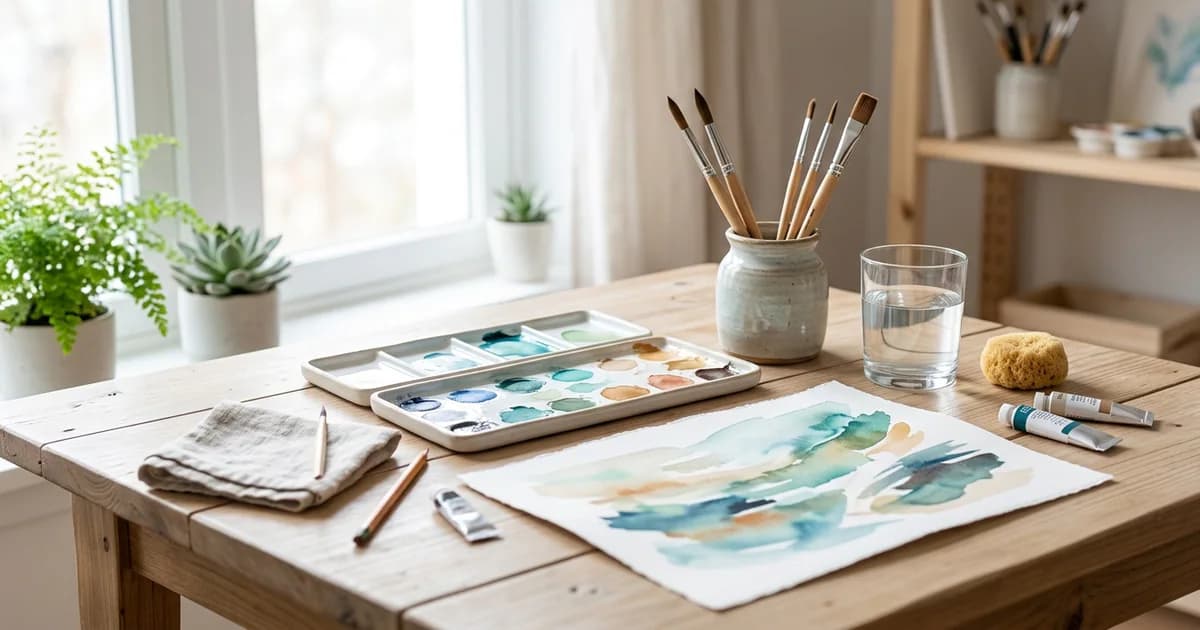
Art therapy benefits your mind by reducing cortisol, releasing dopamine, and quieting the brain's analytical chatter so emotional processing can occur. Creative activity has been used for decades to help people manage stress, process trauma, and build resilience. No artistic skill is required, even coloring books can produce a meditative, calming state.
- Art-making reduces cortisol after just 45 minutes
- Creative activity releases dopamine and boosts mood
- No artistic skill is required to benefit
- Used clinically for trauma, anxiety, depression, and PTSD
- Adult coloring produces a meditation-like mental state
You don't have to be an artist to benefit from art therapy. Whether you've been feeling anxious, stuck, or just emotionally drained, there's something genuinely powerful about picking up a brush, pencil, or coloring book and letting your hands take over for a while. Science backs this up, and you don't need a therapist's office to experience it.
Art therapy has been used for decades in clinical settings to help people process trauma, manage stress, and build emotional resilience. But the art therapy benefits aren't reserved for people in crisis. Creative expression can be a simple, accessible daily practice that improves your mood, helps you think more clearly, and reconnects you with yourself in ways that talking sometimes can't reach. Think of it as a conversation with yourself, one that happens through color, shape, and movement rather than words.
In this article, you'll discover what art therapy actually does to your brain and body, which forms of creative expression work best for different goals, and the best books and supplies to help you get started, even if the last thing you drew was a stick figure in fourth grade. Below you'll find a quick overview of our top picks.
Quick overview: the best art therapy books and supplies
Secret Garden: An Inky Treasure Hunt and Coloring Book
A longtime bestseller and the most accessible entry point to art therapy, calming, meditative, and genuinely stress-relieving.
View price →The Art Therapy Sourcebook
A comprehensive guide that bridges creative expression and therapeutic art-making in one widely praised volume.
View price →World of Flowers: A Coloring Book and Floral Adventure
Beautiful floral designs by a beloved illustrator, created specifically to reduce stress and quiet a busy mind.
View price →Drawing on the Right Side of the Brain
A classic drawing course that helps beginners access creative, intuitive brain states, ideal for expressive release.
View price →Enchanted Forest: An Inky Quest and Coloring Book
Intricate, nature-inspired patterns that demand deep focus, great for shutting off mental chatter.
View price →Pentel Arts Aquash Water Brush (Set of 3)
A practical, travel-friendly set of water brushes perfect for therapeutic watercolor painting and coloring.
View price →The Artist's Way: A Spiritual Path to Higher Creativity
A 12-week creativity program widely used for creative recovery, self-discovery, and emotional unblocking.
View price →Tombow ABT Dual Brush Pen Art Markers (10-Pack)
Vibrant, water-based brush pens with a flexible tip, excellent for expressive coloring, lettering, and art journaling.
View price →What art therapy actually does to your brain
Before getting into specific products, it's worth understanding why art therapy works, because the science is genuinely fascinating. When you engage in creative activity, your brain shifts into a different mode of processing. The constant verbal, analytical chatter of your prefrontal cortex quiets down, and more intuitive, emotionally expressive parts of your brain get to speak up. This is partly why people often say things like "I don't know why, but I feel so much better after painting."
Research has shown that art-making reduces cortisol, your primary stress hormone, measurably, even after just 45 minutes of creative activity. It also activates the brain's reward system, releasing dopamine in response to making something. If you're curious about other natural ways to boost your mood chemistry, our guide on how to increase serotonin naturally pairs beautifully with an art therapy practice.
Art therapy benefits also extend to emotional processing. When you can't find the words for what you're feeling, grief, confusion, anger, fear, images and colors give those feelings somewhere to go. This is why art therapy is widely used for trauma, anxiety disorders, depression, and PTSD. The act of externalizing an internal experience creates what therapists call "distance" from the feeling, which makes it easier to examine and work through without being overwhelmed by it.
1. Secret Garden: An Inky Treasure Hunt and Coloring Book: the perfect starting point
Secret Garden: An Inky Treasure Hunt and Coloring Book
A beloved bestseller filled with intricate garden illustrations that invite you to slow down, focus, and just be present with color and pattern.
View on Amazon →If you've never tried art therapy before, this is where to start. Johanna Basford's Secret Garden combines two of the most evidence-backed approaches to mental wellness, art therapy and mindfulness, into one simple, accessible format. You don't need any skills, any special materials, or any prior experience. You just need colored pencils, a quiet corner, and a few minutes.
Adult coloring has been shown to produce a state similar to meditation, your focus narrows, your breathing slows, and that relentless inner critic takes a break. Unlike blank-page drawing (which can feel intimidating), a coloring book gives you a structure to work within, which paradoxically frees up a lot of mental space. You're not thinking about what to make; you're just experiencing the act of making.
At around $10, this is also the most affordable way to test whether art therapy resonates with you. Many people who swear they're "not creative" find that they absolutely love a good coloring session once they give it a real chance. The designs in this book are complex enough to hold your attention but not so technical that they feel frustrating, exactly the sweet spot for therapeutic effect.
People who've used this book often report using it as part of their evening wind-down routine, swapping screen time for coloring time. The results, they say, speak for themselves: better sleep, less mental chatter, a genuine sense of calm. For a book around $10, that's a remarkable return.
- Extremely affordable, easy to try without commitment
- No skill required, works for complete beginners
- Combines mindfulness and art therapy effectively
- Great for daily wind-down routines
- Coloring books alone don't replace structured therapy for serious conditions
- May feel too simple for those who want more expressive freedom
2. The Art Therapy Sourcebook: for those who want to go deeper
The Art Therapy Sourcebook
A comprehensive guide to using art as a therapeutic practice, part workbook, part theory, part practice manual. Written for both individuals and those working with others.
View on Amazon →Once you've experienced the basics and you're ready to understand the deeper "why" behind art therapy: this is the book to reach for. The Art Therapy Sourcebook goes beyond coloring pages and into the actual framework of how creative expression heals. It covers specific techniques, exercises, and the psychological principles that underpin art therapy as a clinical practice.
What makes this book stand out is that it doesn't just describe art therapy from a distance, it invites you to do it. There are guided exercises throughout, each designed to address specific emotional states or challenges. Feeling disconnected? There's an exercise for that. Processing loss? There's an exercise for that too. The book acts almost like a gentle guide who walks you through experiences rather than just explaining them.
For anyone who already has a mindfulness practice, perhaps through meditation or yoga, this book will feel like a natural and enriching extension. It speaks a similar language: presence, non-judgment, curiosity about inner experience. If you're also interested in how mindfulness reading can deepen your practice, our roundup of the best mindfulness books in 2026 is worth a look alongside this one.
At around $20 it's a more considered investment, but for what it offers, a genuine roadmap to using creativity as emotional self-care: it's well worth it for anyone serious about their mental health journey.
- Combines theory and practice in one accessible volume
- Exercises target specific emotional experiences
- Useful for both personal practice and working with others
- Excellent pairing with existing mindfulness practices
- Higher price point than coloring books
- Requires more commitment and engagement from the reader
3. World of Flowers: A Coloring Book and Floral Adventure: pure, simple calm
World of Flowers: A Coloring Book and Floral Adventure
A beautifully illustrated coloring book filled with floral designs, bouquets, and botanical patterns created specifically to induce a state of calm and focused relaxation.
View on Amazon →There's a reason so many stress-relief coloring books use floral and botanical imagery: nature patterns have a documented calming effect on the human nervous system. Looking at and recreating organic, symmetrical shapes, petals, leaves, spiraling botanicals, activates the parasympathetic nervous system, the "rest and digest" counterpart to your stress response. In other words, your body physically relaxes.
This book leans fully into that science. The designs are intricate enough to absorb your full attention, which means your mind can't simultaneously run through the mental to-do list or replay awkward conversations from three years ago. That single-pointed focus is one of the most therapeutic gifts art-making can offer, something meditators often spend years trying to achieve, that coloring can deliver in minutes.
At around $13, this is one of the most budget-friendly entries into stress-relief art therapy available. It works beautifully alongside the Pentel Arts Aquash Water Brushes listed at #6 below, especially if you enjoy wet media for a more fluid, unpredictable coloring experience. If you're new to adult coloring and want more options, our full guide to the best adult coloring books for stress relief in 2026 covers even more choices.
- One of the most affordable options on this list
- Floral/botanical imagery has proven calming effects
- Excellent for stress and anxiety management
- Works well with pencils, pens, or watercolor brushes
- No therapeutic guidance or written content, just coloring pages
- Floral themes may not appeal to everyone
4. Drawing on the Right Side of the Brain: expressive drawing for beginners
Drawing on the Right Side of the Brain
A classic drawing course that teaches you to see and draw in a new way, unlocking expressive, intuitive creative states, no prior skill required.
View on Amazon →If you've ever felt the urge to just put pencil to paper and see what happens, this book is your permission slip. Expressive drawing is one of the most therapeutically potent forms of art-making precisely because it bypasses the inner critic entirely. There's no "right" outcome to aim for, which means there's no failure. There's just process, feeling, and line.
Drawing on the Right Side of the Brain makes the leap from coloring pages to freeform drawing feel manageable and non-intimidating. It walks you through the basics of seeing and rendering what you observe, but always with an emphasis on shifting into an intuitive, receptive brain state. The goal isn't to make something perfect (though that often happens); the goal is to make something honest.
In an art therapy context, learning to draw intuitively is particularly powerful for people who struggle to articulate their emotions verbally. Choosing where to place a line, shading a form without a plan, watching an image emerge, these are all ways of accessing emotional material that might otherwise stay buried. Many people report a feeling of emotional release after a session of expressive drawing that's hard to explain but unmistakably real.
- Ideal for emotionally expressive, unstructured art-making
- No drawing skills required at all
- Step-by-step guidance removes intimidation
- Pairs perfectly with the watercolor brush pens on this list
- Requires a sketchbook and pencils (supplies sold separately)
- Less structured than coloring books, some people find this harder to start
5. Enchanted Forest: An Inky Quest and Coloring Book: for deep focus and flow
Enchanted Forest: An Inky Quest and Coloring Book
Complex, interweaving natural designs and hidden details that demand sustained focus, creating long, uninterrupted flow states that are deeply restorative.
View on Amazon →Johanna Basford's Enchanted Forest is intricate by nature, the patterns weave through trees, foliage, and hidden creatures in ways that require close, sustained attention to follow and color. That's not a drawback; it's precisely what makes this coloring book so effective for mental health. When a pattern demands your full focus, your brain enters what psychologists call a "flow state", a deeply absorbed, effortless attention that is one of the most consistently reported sources of happiness and wellbeing.
Flow states reduce self-referential thinking (the kind that feeds anxiety and rumination) and increase positive affect. Some researchers describe flow as a form of "active meditation", you're fully engaged and present, without the deliberate effort that traditional meditation requires. For people who find sitting still and "trying not to think" frustrating, this kind of focused creative activity can be a far more accessible route to the same mental state.
The forest aesthetic also has a particular richness, the designs feel magical, meaningful, and beautiful in a way that flat geometric patterns sometimes don't. Many people find they form an emotional connection to the pages they work on, which adds another layer of engagement and personal meaning to the practice.
- Intricate patterns naturally induce deep focus and flow states
- Beautiful, richly detailed designs
- Good for people who find simpler patterns too easy
- Mid-range price, good value for the detail on offer
- High complexity may frustrate beginners
- Forest/fantasy aesthetic is not for everyone
6. Pentel Arts Aquash Water Brush: the perfect therapeutic tool
Pentel Arts Aquash Water Brush: Set of 3
Three water-filled brush pens in assorted tip sizes, designed for watercolor painting, blending, and lettering, travel-friendly and incredibly easy to use without any setup.
View on Amazon →One reason people give up on art therapy practices is setup friction, digging out paints, filling cups of water, cleaning brushes. These Pentel water brushes eliminate almost all of that friction. The water is built into the handle; you simply squeeze lightly for more flow. Clean-up takes thirty seconds. That ease of use matters more than it sounds, because the biggest obstacle to any wellbeing practice is simply starting.
Watercolor as a medium is uniquely therapeutic. Unlike acrylic or oil paint, watercolor has an element of unpredictability, the paint flows, bleeds, and blends in ways you can't fully control. For many people, learning to work with (rather than against) that unpredictability is a genuinely meaningful metaphor for letting go of control in daily life. It's soft, forgiving, and beautiful even when you make "mistakes."
These Pentel water brushes work beautifully with all the coloring books on this list, but they really shine when used for free-form journaling, nature sketching, or the expressive drawing approach from Drawing on the Right Side of the Brain listed above. At around $12 for a set of three, this is excellent value for a tool that will genuinely lower the barrier to creative practice.
- Minimal setup, start creating in under a minute
- Travel-friendly; use anywhere
- Watercolor's fluid nature teaches letting go
- Great value for a quality brush set
- You still need watercolor paints separately
- Three brushes is a modest selection for advanced work
7. The Artist's Way: A Spiritual Path to Higher Creativity: creative recovery and self-discovery
The Artist's Way: A Spiritual Path to Higher Creativity
A 12-week creativity program and longtime bestseller that helps readers recover their innate creativity through morning pages, artist dates, and self-reflection.
View on Amazon →Art therapy isn't only about individual sessions of coloring or drawing. Sometimes the deepest healing comes from rebuilding your relationship with creativity itself. The Artist's Way is a 12-week program widely recognized as a classic in creative recovery. It uses two core tools, morning pages (daily stream-of-consciousness writing) and artist dates (weekly solo outings to feed your imagination), to help you recover the creative trust you may have lost.
While not a clinical art therapy text, the book addresses many of the same emotional blocks that art therapy targets: perfectionism, fear of judgment, self-censorship, and the belief that you are "not creative." By working through the program, many people find that their art-making becomes freer, more honest, and more emotionally releasing. The practices create a container for regular self-expression, which is one of the most reliable predictors of therapeutic benefit.
This is a more introspective book than the others on this list, and it asks for a consistent time commitment. But for anyone who feels creatively blocked, burned out, or disconnected from their own inner life, it offers a structured path back to yourself. At around $16, it is an affordable investment in a practice that can reshape how you relate to your own creativity.
- Structured 12-week program builds lasting creative habits
- Widely praised for helping people overcome creative blocks
- Blends self-reflection with creative action
- Requires daily commitment (morning pages) for full benefit
- Focused on creative recovery rather than clinical art therapy
8. Tombow ABT Dual Brush Pen Art Markers: vibrant color for expressive work
Tombow ABT Dual Brush Pen Art Markers: 10-Pack
Vibrant, water-based dual-tip markers with a flexible brush end and a fine bullet end, widely praised for coloring, lettering, and art journaling.
View on Amazon →A high-quality set of brush markers can transform your art therapy practice. The Tombow ABT Dual Brush Pens offer a flexible brush tip on one end and a fine tip on the other, giving you versatility whether you're filling in intricate coloring book pages or lettering in an art journal. They are water-based, blendable, and non-toxic, which makes them pleasant to use for long, meditative sessions.
Color selection itself can be therapeutic. Having a curated range of shades to choose from intuitively, picking up whatever color matches how you're feeling, can be a rich part of the expressive process. The brush tip responds to pressure, so your marks can be bold and sweeping or delicate and precise, depending on your mood. That responsiveness makes the tools feel like an extension of your hand rather than a barrier.
These markers pair beautifully with the coloring books on this list, especially if you enjoy blending colors or adding hand-lettered notes to your pages. At around $25 for a 10-pack, they are a worthwhile step up from basic colored pencils for anyone ready to deepen their practice.
- Dual tips give huge versatility for coloring and lettering
- Water-based, blendable, and widely praised for quality
- Responsive brush tip supports expressive mark-making
- Can bleed through thin coloring book pages
- A 10-color set may feel limited if you want a huge palette
How to start an art therapy practice: a simple guide
Art therapy works best as a regular practice rather than a one-off activity. Like any form of self-care, exercise, journaling, meditation, the benefits compound over time. The good news is that you don't need a dedicated studio, a lot of money, or a formal training to get started. Here's how to build a practice that actually sticks.
Start smaller than you think you need to. The biggest mistake people make is buying a full set of expensive supplies and setting aside an hour. That's too much pressure. Start with one coloring book, one set of pencils, and fifteen minutes. Consistency of ten minutes daily is worth more than one elaborate session per week.
Choose your medium based on your mood goal. If you need to calm down and quiet your mind, coloring books and intricate patterns work best, they direct your focus. If you need to release something or process an emotion, expressive, freeform drawing gives you more room to let it out. If you're just starting, coloring is usually easier to pick up and put down without feeling like you've "failed."
Don't evaluate what you make. The moment you start judging your art, is this good? Is this bad?, you've stepped outside the therapeutic process and back into your head. Art therapy isn't about the product. It's about the experience of making. Let yourself be bad at it, imprecise, childlike. That's actually the point.
Set a regular time for your art practice, the same way you'd schedule a workout or a meditation session. Many people find that after dinner or before bed works well. The ritual of sitting down with your materials becomes a signal to your nervous system: it's time to slow down.
Art therapy pairs beautifully with other mindfulness practices. If you already meditate or do yoga, consider using a few minutes of creative activity as a complement, either before or after your existing practice. The combination tends to deepen both. For those who find traditional meditation difficult, art therapy can be a gentler doorway into the same kind of present-moment awareness.
Frequently asked questions about art therapy benefits
Do I need to be good at art for art therapy to work?
Absolutely not, and this is probably the most important thing to understand about art therapy. Skill is completely irrelevant. What matters is the process of making, not the quality of the result. A therapist working in art therapy would never evaluate your artwork aesthetically. The therapeutic value comes from the act of expression, not from producing something impressive. Most people who try it for the first time are surprised by how quickly they forget to worry about how it looks.
What are the main art therapy benefits for anxiety and stress?
Research shows several measurable effects: art-making lowers cortisol (the primary stress hormone), activates the parasympathetic nervous system (calming your body's fight-or-flight response), and induces flow states that interrupt anxious thought patterns. Coloring specifically has been shown to reduce anxiety comparable to meditation in some studies. For people with chronic stress or generalized anxiety, a regular art practice offers a genuine, non-pharmaceutical tool for managing symptoms, one with no side effects and a very low barrier to entry.
Is art therapy different from just making art as a hobby?
Yes and no. Any creative activity has inherent wellbeing benefits: that's simply what making things does to humans. "Art therapy" as a clinical practice involves a trained therapist who uses art-making as a tool for psychological assessment and treatment, particularly for trauma, grief, or mental health conditions. What you do at home with a coloring book or watercolor set is closer to "therapeutic art-making", which still carries real benefits, but without the structured clinical process. For serious mental health challenges, working with a qualified art therapist is always the better route. For everyday stress, mood support, and self-exploration, your home practice is a genuinely valuable thing.
How often should I practice art therapy at home to notice a difference?
Even two or three short sessions per week of 15–20 minutes can produce noticeable effects on mood and stress levels within a few weeks. Daily practice of just 10 minutes is even more effective. The key is regularity rather than duration. Think of it the way you'd think about exercise, three short runs per week beats one long session once a month every time.
Can art therapy help with depression?
Art therapy is used in clinical settings as an adjunct treatment for depression, with positive results documented in research. Creative activity stimulates dopamine release, promotes a sense of accomplishment, and provides a structured way to externalize and examine difficult inner states. However, art therapy, whether clinical or home-based, is not a replacement for professional treatment of depression. If you're experiencing depressive symptoms, please talk to a healthcare provider. Art-making can be a wonderful supportive practice alongside professional care.
The Secret Garden: An Inky Treasure Hunt and Coloring Book is the best starting point for most people, affordable, accessible, and genuinely effective for stress and anxiety. If you want to go deeper into the practice, The Art Therapy Sourcebook offers a comprehensive guide that will transform how you think about creative expression and mental health. Pair either one with the Pentel Arts Aquash Water Brush for a therapeutic practice that's easy to pick up, easy to maintain, and quietly but meaningfully good for your mind.
Related Reads
- How to Reduce Anxiety Naturally: 8 Evidence-Based Strategies
- How to Boost Mood Naturally: 10 Quick Strategies That Actually Work
- Best Weighted Blankets
- Best Essential Oils for Anxiety
What the Research Shows
Art therapy is increasingly backed by measurable physiological and psychological data, not just anecdote. Here is what controlled research has found about making art.
| Researcher | Institution | Key finding | Year |
|---|---|---|---|
| Girija Kaimal | Drexel University | Cortisol levels dropped in 75% of participants after just 45 minutes of art-making | 2016 |
| Tamlin Conner | University of Otago | Days with more creative activity predicted higher next-day flourishing and positive emotion | 2016 |
Girija Kaimal and her team at Drexel University had 39 adults make art for 45 minutes using markers, clay, or collage with no instructions. Salivary cortisol, a key stress hormone, fell in 75% of participants, and the effect held regardless of prior artistic experience, suggesting you do not need to be "good" at art to benefit.
Tamlin Conner at the University of Otago analyzed 13-day diaries from 658 young adults and found an "upward spiral": engaging in everyday creative activity one day predicted greater enthusiasm and flourishing the next. This supports art therapy's premise that the act of creating, not the finished product, is what lifts mood.
Sources: Drexel: Making art reduces stress hormones; ScienceDaily: Creative activity and wellbeing.
Frequently Asked Questions
Why is Art Therapy Benefits important for mental health?
How does art therapy benefits affect the brain?
What does the research say about art therapy benefits?
How long before I notice the benefits?
Can art therapy benefits replace therapy or medication?
Is art therapy benefits suitable for everyone?
Weekly happiness in your inbox
One practical idea every week. No spam and no miracle claims, just clear advice you can assess for yourself.
No spam. Unsubscribe anytime.
Marcel Kupures
Founder & Editor
Founder and editor of Get A Happy Life. Research references are linked where they are used, and product comparisons rely on public product information unless hands-on testing is explicitly documented.
Last updated: September 17, 2026
Want more happiness science?
Browse all our guides on mindfulness, gratitude, sleep, and well-being.
Read more guides