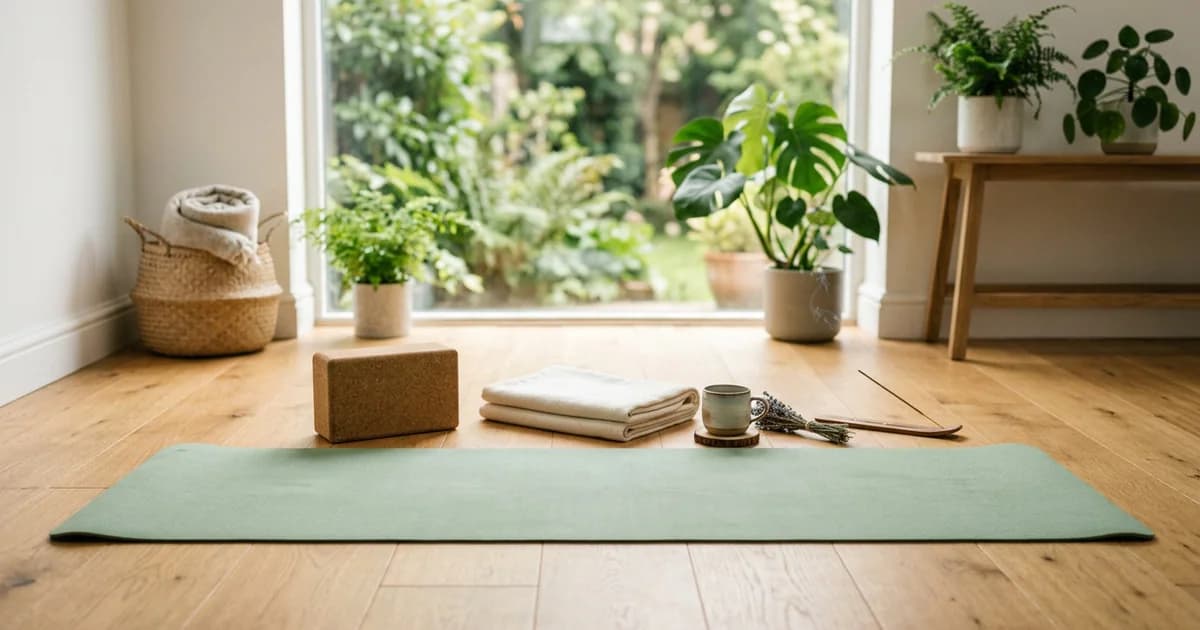

If you want one clear answer, Start Here, Start Now is the easiest first meditation book, while Mindfulness in Plain English is the stronger choice for a beginner who wants more detail. Choose Real Happiness for a four-week structure, 10% Happier if skepticism is your biggest barrier, and The Mind Illuminated only when you are ready for a dense, stage-based manual.
The best meditation book is not necessarily the most famous or the longest. It is the one whose instructions, language and level fit the practice you can realistically maintain. This guide compares eight distinct books by intended reader, teaching format, practical usefulness and limitations. It does not rank books by commission, display temporary retailer prices or treat a publisher’s description as independent proof of an outcome.
We prepared this comparison from the books’ stated scope and publicly available edition information from their publishers or authors. We did not conduct a clinical trial or claim that every book was hands-on tested by our editorial team. Amazon links are affiliate links: if you buy through one, Get A Happy Life may earn a commission at no extra cost to you. That relationship does not change the selection order.
Quick picks: which meditation book fits you?
| Book | Best for | Format |
|---|---|---|
| Start Here, Start Now | A complete beginner who wants a short, practical starting point | Direct meditation instruction |
| Mindfulness in Plain English | Beginners who want detailed explanations and help with common problems | Vipassana meditation manual |
| Real Happiness: The Power of Meditation | A beginner who follows through better with a four-week plan | A structured 28-day program |
| 10% Happier | A skeptic who wants a candid personal route into meditation | Memoir plus practical introduction |
| Wherever You Go, There You Are | A reflective reader who wants mindfulness woven into ordinary life | Short essays and everyday practices |
| The Miracle of Mindfulness | A reader who wants to practice during work, chores and daily routines | Everyday mindfulness exercises |
| Zen Mind, Beginner’s Mind | A reader interested in Zen practice and its underlying attitude | Short talks on zazen and Zen principles |
| The Mind Illuminated | A committed practitioner who wants a detailed stage-based map | Long-form, progressive practice manual |
If two descriptions fit, start with the shorter or more structured option. Reading several introductions at once often creates more choices without creating a practice. One book, a modest daily session and a weekly review is enough for a useful first month.
How we selected these eight books
This is an editorial fit comparison, not a laboratory ranking. Every inclusion had to serve a recognizably different reader or practice need. We used the following eight criteria and checked current edition details against first-party pages where available:
- Actionable instruction: the book needed to help a reader practice, not only discuss meditation as an idea.
- Clear audience fit: we identified whether the book suits a complete beginner, skeptic, reflective reader or established practitioner.
- Useful structure: we compared short lessons, memoir, scheduled programs, everyday exercises and progressive manuals.
- Tradition and context: Buddhist, Zen and secular presentations are named rather than blended into one generic method.
- Identifiable author and publisher: author, edition and scope can be checked on an official first-party page.
- Specific strength: every selection has a concrete reason to choose it over the other seven.
- Visible limitation: each recommendation explains who may find it too short, too dense, too reflective or too tradition-specific.
- Current availability: we link to a current publisher or author page and let the retailer show live formats, price and stock.
We excluded general philosophy books, coloring books and titles that mention awareness without teaching a meditation practice. Those may be worthwhile in their own category, but they do not answer the same search intent as a practical meditation book.
1. Start Here, Start Now by Bhante Gunaratana
Best for: A complete beginner who wants a short, practical starting point
Approach: Direct meditation instruction
This is the most approachable first pick in the list. It focuses on the obstacles that commonly appear when someone actually sits down to meditate: physical discomfort, a busy mind, boredom, doubt and unrealistic expectations. That makes it more useful as a starting manual than a book that spends most of its pages explaining why meditation matters. The publisher lists it as a compact 168-page guide, so a new reader can finish it without turning meditation into a large study project.
How to use this book
Choose this book if you want plain instructions and reassurance about an imperfect first practice. Read one small section, try the instruction for several sessions and only then move on. Its treatment of common difficulties also gives you a useful reference when an early session feels restless or unproductive. The aim is not to force the mind to become blank; it is to learn what to do when attention wanders.
What to consider before choosing it
Its concise format is also the trade-off. Readers who want a detailed map of every stage, a broad survey of traditions or an extended secular memoir may find it too focused. In that case, use this as the first week of practice and move to Mindfulness in Plain English for more troubleshooting.
Edition check: The current publisher page identifies the author, scope, formats and ISBN 9781614296270. See the Wisdom Publications edition page.
2. Mindfulness in Plain English by Bhante Gunaratana
Best for: Beginners who want detailed explanations and help with common problems
Approach: Vipassana meditation manual
Mindfulness in Plain English is the strongest all-round manual here. It explains what meditation is, what it is not, how to prepare, how to work with the breath and what to do with distractions. The writing is direct enough for a first-time reader but substantial enough to revisit after months of practice. The publisher describes the current edition as an expanded guide and lists 224 pages, including material on loving-kindness practice.
How to use this book
This is the better choice when your main question is not merely “How do I start?” but “What am I supposed to do when this gets difficult?” Keep it beside your practice space and use the chapters as troubleshooting rather than trying to absorb everything before your first session. Its Buddhist context is visible, yet the practical instructions can still be followed by a reader who is not looking to adopt a religion.
What to consider before choosing it
The level of explanation can feel slower than a four-week program. It also comes from a specific contemplative tradition, so it should not be mistaken for a neutral overview of every kind of meditation. If you want a fixed day-by-day schedule, Real Happiness is easier to follow. If you mainly want a personal story that addresses skepticism, 10% Happier is a better entry.
Edition check: The publisher page lists the expanded edition, available formats and ISBN 9780861719068. See the Wisdom Publications edition page.
Check current formats of Mindfulness in Plain English on Amazon
3. Real Happiness: The Power of Meditation by Sharon Salzberg
Best for: A beginner who follows through better with a four-week plan
Approach: A structured 28-day program
Real Happiness turns meditation into a sequence of manageable weekly themes rather than a single abstract skill. The 10th anniversary edition presents a 28-day program that covers concentration, mindfulness of the body, working with thoughts and emotions, and loving-kindness. That structure is useful for someone who has downloaded several apps or read introductions but has not yet built a repeatable routine.
How to use this book
Pick this book when a calendar and a defined progression help you act. Set a modest daily time, follow the program in order and record one sentence after each session: what you practiced, what interrupted you and whether you will adjust the next session. The program is a framework, not a test. Missing a day does not require restarting, and a shorter practice done consistently is more useful than an ambitious plan that creates pressure.
What to consider before choosing it
A 28-day format can suggest a finish line that meditation does not really have. The book can establish a routine, but it cannot promise a particular emotional result within four weeks. Readers who dislike scheduled programs may prefer Wherever You Go, There You Are, which can be read in short reflective sections without a timetable.
Edition check: The official edition page describes the four-week structure and identifies the 10th anniversary edition with ISBN 9781523510122. See the Hachette edition page.
Check current formats of Real Happiness: The Power of Meditation on Amazon
4. 10% Happier by Dan Harris
Best for: A skeptic who wants a candid personal route into meditation
Approach: Memoir plus practical introduction
10% Happier earns its place because it starts from resistance rather than devotion. Dan Harris describes the personal events and questions that led him to take meditation seriously, using memoir to make the subject less remote. The 10th anniversary material adds an updated preface, further practical guidance and access to guided meditations according to the author’s official book page. It is the easiest recommendation for a reader who rolls their eyes at grand spiritual promises.
How to use this book
Read it for motivation and perspective, then pair the story with a simple practice instruction. The book can lower the psychological barrier to starting, especially when words such as spirituality or enlightenment are a distraction. After the first few chapters, choose a five- or ten-minute breathing practice and repeat it for a week instead of waiting until you have finished every page.
What to consider before choosing it
This is not the most complete technical manual on the list. Memoir takes up space that another book might devote to posture, attention or stages of practice. The “10%” in the title is a memorable framing device, not a measurable promise that every reader will become exactly ten percent happier. Choose Mindfulness in Plain English when detailed instruction matters more than the personal narrative.
Edition check: The author’s page distinguishes the 10th anniversary edition and explains its added material. See the Dan Harris book page.
5. Wherever You Go, There You Are by Jon Kabat-Zinn
Best for: A reflective reader who wants mindfulness woven into ordinary life
Approach: Short essays and everyday practices
Wherever You Go, There You Are is less like a course and more like a companion. Its short chapters explore attention, nonjudgment and the possibility of bringing awareness to familiar moments rather than reserving meditation for a special setting. The current Hachette page lists a 2023 edition of 320 pages. The format suits readers who want to open a book for a few minutes, reflect and then try one idea during the day.
How to use this book
Use this book slowly. One or two sections at a time are enough. Connect each reading to a concrete cue such as making coffee, walking from one room to another or noticing the first breath after sitting down. This turns “being present” from a vague aspiration into an observable moment of practice. The book is especially helpful after a basic instruction has already shown you how to sit.
What to consider before choosing it
The reflective structure is not an ordered beginner curriculum. Someone who wants precise answers about what to do with pain, sleepiness or persistent thoughts may need a manual alongside it. It can also feel repetitive if read quickly, because recurring themes are meant to be contemplated rather than collected as new information.
Edition check: The official publisher page provides the current edition date, format details, page count and ISBN 9780306832017. See the Hachette edition page.
Check current formats of Wherever You Go, There You Are on Amazon
6. The Miracle of Mindfulness by Thich Nhat Hanh
Best for: A reader who wants to practice during work, chores and daily routines
Approach: Everyday mindfulness exercises
The Miracle of Mindfulness shows how practice can extend beyond a cushion. Its examples and exercises bring attention to breathing, washing dishes, walking and other ordinary actions. That makes it a useful bridge for a reader who understands the idea of meditation but has not connected it to the rest of the day. The title is the name of the book; it should not be read as a promise of an instant transformation.
How to use this book
Choose one recurring activity and make it the cue for practice. Feel the physical actions, notice when the mind moves ahead and return to the activity without scolding yourself. This small experiment is easier to evaluate than trying to be mindful all day. The book also works well beside a basic seated practice because daily-life exercises reveal how quickly attention becomes automatic outside a quiet room.
What to consider before choosing it
Its style and contemplative context may feel less procedural than a modern workbook. Readers looking for a numbered progression or detailed cognitive terminology will find more structure in Real Happiness or The Mind Illuminated. Treat its stories and exercises as invitations to practice, not as clinical treatment advice.
Edition check: Beacon Press provides the official description and current purchasing formats for this edition. See the Beacon Press edition page.
Check current formats of The Miracle of Mindfulness on Amazon
7. Zen Mind, Beginner’s Mind by Shunryu Suzuki
Best for: A reader interested in Zen practice and its underlying attitude
Approach: Short talks on zazen and Zen principles
Zen Mind, Beginner’s Mind is the tradition-specific pick in this guide. Drawn from Shunryu Suzuki’s talks, it addresses posture, breathing, zazen and the attitude of keeping the mind open rather than turning practice into a performance. Penguin Random House lists the 50th anniversary edition at 176 pages. The short chapters are compact, but the ideas often reward rereading.
How to use this book
Choose it after you have learned a basic meditation instruction or when you specifically want to understand Zen practice. Read one talk at a time and notice where the text challenges your urge to label a session as good or bad. A local teacher or reputable meditation community can add context if you decide to pursue formal Zen training; a book alone cannot show posture or respond to individual difficulties.
What to consider before choosing it
This is not a broad comparison of meditation styles and it is not written as a secular self-help program. Some passages can seem paradoxical when separated from Zen context. A total beginner who wants literal, sequential directions should start with Start Here, Start Now or Mindfulness in Plain English and return to this book later.
Edition check: The official publisher page identifies the 50th anniversary edition, 176-page length and ISBN 9781611808414. See the Penguin Random House edition page.
Check current formats of Zen Mind, Beginner’s Mind on Amazon
8. The Mind Illuminated: John Yates, Matthew Immergut and Jeremy Graves
Best for: A committed practitioner who wants a detailed stage-based map
Approach: Long-form, progressive practice manual
At 512 pages on the publisher’s edition page, The Mind Illuminated is by far the most detailed book in this comparison. It presents meditation as a progression through stages and supplies extensive explanations for attention, awareness, obstacles and practice goals. That degree of structure can help an experienced beginner or regular practitioner diagnose what to work on next instead of changing techniques every few days.
How to use this book
Use the stages as a working map, not as a scorecard. Begin with the instructions that match your current practice, stay there long enough to learn from repeated sessions and move back when needed. A journal can help you track which obstacle appeared and which remedy you tried. The book is most useful when its detail supports consistency rather than creating an obsession with advancement.
What to consider before choosing it
This is the least suitable first book for someone seeking a quick, gentle introduction. Its terminology, length and systematic framework can make meditation feel like a technical achievement. The publisher describes a synthesis of traditional teachings and contemporary presentation, but readers should treat that as the book’s framework rather than proof that every claim or stage has been clinically established.
Edition check: The official publisher page lists the 512-page edition and ISBN 9781501156984. See the Simon & Schuster edition page.
Side-by-side decision guide
Start from zero: pick Start Here, Start Now. It gets to the first practice quickly and normalizes the problems that make beginners think they are doing it wrong.
Want a reference manual: choose Mindfulness in Plain English. Its extra explanation is useful when you need to understand distractions, expectations and the purpose of an instruction.
Need a schedule: choose Real Happiness. A defined 28-day framework reduces the number of decisions you make each day, while still allowing you to repeat or shorten a session.
Feel skeptical: choose 10% Happier. The personal story meets resistance directly, although you may later want a more technical manual.
Prefer reflection over a course: choose Wherever You Go, There You Are. Its short readings connect formal meditation with ordinary moments.
Want everyday exercises: choose The Miracle of Mindfulness. It is particularly useful when your practice disappears as soon as you leave the chair.
Want Zen context: choose Zen Mind, Beginner’s Mind. It introduces both sitting practice and the attitude surrounding it, but assumes patience with concise, sometimes paradoxical talks.
Already practice consistently: choose The Mind Illuminated. Its detailed map is valuable only if detail helps rather than replaces actual practice.
How to get more value from a meditation book
Use reading to support practice
Read enough to understand one instruction, then close the book and try it. Meditation is an activity, so collecting concepts cannot show you how a particular instruction works in your own routine. A useful rhythm is ten to twenty minutes of reading followed by several days of practicing the same method.
Keep the first commitment small
Choose a repeatable cue and a time you can maintain on an ordinary day. Five minutes after breakfast is a better experiment than an hour that depends on ideal conditions. After one week, review whether the cue, place and duration worked. Increase the duration only when the routine itself is stable.
Do not turn stages into grades
Books often separate skills to make them teachable. That does not mean practice develops in a perfectly straight line. Restlessness can return, an easy week can be followed by a difficult one and changing circumstances can alter what is realistic. Use a framework to choose the next action, not to judge your worth or compare yourself with another reader.
Add human guidance when the book is not enough
A qualified teacher can observe context that a page cannot. Guidance is especially useful for posture problems, confusion about a tradition, persistent distress or a practice that repeatedly feels destabilizing. Check the teacher’s training, ethical standards, accessibility and willingness to refer health concerns to an appropriate professional.
Meditation, evidence and safety
Meditation is not a replacement for medical or mental-health care. Research results depend on the population, method, comparison group and outcome being measured. The U.S. National Center for Complementary and Integrative Health notes that research quality varies, that some findings remain preliminary and that safety evidence is more limited than many readers assume. Read the NCCIH overview of meditation effectiveness and safety for its current public-health summary.
Start gently and pay attention to your response. If meditation causes persistent fear, dissociation, worsening symptoms or other distress, stop or reduce the practice and speak with a qualified health professional. A book cannot assess your history, medication, diagnosis or current risk. Urgent or severe symptoms require appropriate professional help, not a longer meditation session.
Frequently asked questions
What is the best meditation book for a complete beginner?
Start Here, Start Now is the clearest short entry because it combines basic instruction with the obstacles beginners meet in real sessions. Choose Mindfulness in Plain English instead if you enjoy detailed explanations and want a book you can keep using as a reference.
Which meditation book is best for a skeptic?
10% Happier is the most accessible choice for a skeptic because Dan Harris begins with his own resistance and uses memoir to explain why he continued. The title does not promise a measurable percentage improvement. Pair it with a direct practice manual if you want more technical instruction.
Is a meditation book better than an app?
They solve different problems. A book can explain context and help you understand why an instruction works, while an app can provide timing and spoken guidance. Start with the format you will actually use. You can read one chapter, practice without audio and add a guided session only when it helps.
Can a book replace a meditation teacher?
No book can watch your posture, hear your questions or account for your personal history. A book can provide a reliable starting framework. A qualified teacher becomes more valuable when instructions remain unclear, you want tradition-specific training or the practice produces persistent discomfort or distress.
How long should a beginner meditate each day?
There is no single duration that fits everyone. A repeatable five- or ten-minute session is a reasonable experiment for many beginners. Focus on learning the instruction and maintaining the cue. Adjust duration gradually instead of treating a long session as proof of success.
Are all meditation books religious?
No. The books here range from explicitly Buddhist or Zen contexts to contemporary secular presentations. Even secular programs may draw on contemplative traditions. A careful book should make its context visible so you can choose whether you want practical instruction alone or a deeper study of a tradition.
Can meditation books help with anxiety or depression?
A book may help someone learn a practice, but it cannot diagnose or treat an individual condition. Evidence varies by method and circumstance, and meditation can be uncomfortable for some people. Do not delay professional care. Discuss meditation with a qualified clinician when you have symptoms, a diagnosis or safety concerns.
What is the best advanced meditation book?
The Mind Illuminated is the most detailed advanced option in this comparison because it offers a long, stage-based practice map. Zen Mind, Beginner’s Mind is better for a reader specifically exploring Zen. Advanced does not mean universally better; choose the framework that matches your practice and context.
Related Get A Happy Life guides
Bottom line
For most first-time readers, begin with Start Here, Start Now or Mindfulness in Plain English. Choose Real Happiness when structure is the deciding factor and 10% Happier when skepticism is keeping you from starting. The other four books are better fits for a specific style: reflective everyday mindfulness, practice during daily tasks, Zen context or a detailed long-term map.
Do not buy several books to avoid choosing a practice. Pick the closest fit, check the current edition, follow one instruction for a week and review what you learned. The most useful book is the one that helps you practice with realistic expectations and recognize when you need guidance beyond a page.
Weekly happiness in your inbox
One practical idea every week. No spam and no miracle claims, just clear advice you can assess for yourself.
No spam. Unsubscribe anytime.
Marcel Kupures
Founder & Editor
Founder and editor of Get A Happy Life. Research references are linked where they are used, and product comparisons rely on public product information unless hands-on testing is explicitly documented.
Last updated: September 17, 2026
Want more happiness science?
Browse all our guides on mindfulness, gratitude, sleep, and well-being.
Read more guides