Yoga is a 5,000-year-old practice designed for beginners that combines physical postures, controlled breathing, and meditation to improve flexibility, reduce stress, and enhance mental clarity. Every pose has modifications to meet your body's current level, whether you're stiff or fit. Research shows regular practice increases flexibility 13-35% in 10 weeks, reduces anxiety within 8 weeks, and improves sleep quality.
- Start with Hatha yoga for proper beginner foundations
- Flexibility increases 13-35 percent in just 10 weeks
- Significantly reduces anxiety within 8 weeks of practice
- Every pose has modifications for all fitness levels
- Combines postures, breathing, and meditation for mind-body connection
You've been thinking about trying yoga for a while now. Maybe a friend swears by her morning flow, or you've noticed how calm your coworker seems since she started practicing. But every time you look at yoga classes or YouTube tutorials, you see people twisted into seemingly impossible shapes, and you wonder if yoga is really for someone like you.
Related reading: The 8 Best Meditation Books for 2026: Beginner to Advanced
Related reading: 50 Mindfulness Quotes to Help You Stay Present Daily
Here's the truth: yoga was literally designed for beginners. The entire practice is built around meeting your body exactly where it is today, not where some Instagram influencer's body happens to be. Whether you're stiff as a board, completely out of shape, or just looking for a way to feel less stressed, yoga is one of the most accessible and forgiving forms of movement you can start. And the benefits go far beyond flexibility.
This guide will walk you through everything you need to know, from choosing the right style to your first poses, building a routine, and avoiding the mistakes that make most beginners quit within the first month.
What Is Yoga (and Why It's Perfect for Beginners)
Yoga is a 5,000-year-old practice that originated in India, combining physical postures (called asanas), controlled breathing (pranayama), and meditation into a single discipline. But don't let the ancient history intimidate you, modern yoga has evolved into something remarkably practical and adaptable.
Unlike running, weightlifting, or HIIT workouts, yoga doesn't require a baseline level of fitness to start. There's no minimum speed, no weight to lift, no score to beat. Every single pose has modifications, easier versions that give you the same benefits while respecting your body's current limitations. A 60-year-old with bad knees and a 25-year-old athlete can do yoga side by side, each getting exactly what they need.
What makes yoga especially powerful is that it works on multiple levels simultaneously. You're stretching and strengthening muscles, yes, but you're also training your nervous system to calm down, improving your breathing patterns, and building the kind of body awareness that prevents injuries in every other area of your life. If you're also interested in the mental side of things, our complete guide to mindfulness pairs perfectly with a yoga practice.
The word "yoga" itself means "to yoke" or "to unite", connecting body, breath, and mind. That sounds philosophical, but in practice it simply means: when you're doing yoga, you're fully present. You're not scrolling your phone, not planning tomorrow's meeting, not replaying yesterday's argument. For many beginners, this is actually the most transformative part of the practice, not the flexibility gains, but the rare experience of being completely focused on one thing.
The Science-Backed Benefits of Yoga
Yoga isn't just "stretching with good vibes." There's an impressive body of research showing measurable, significant health benefits, many of which kick in surprisingly quickly.
Stress and anxiety reduction. A 2017 meta-analysis in the Journal of Evidence-Based Medicine found that yoga significantly reduces cortisol levels (your primary stress hormone). Participants in yoga programs showed lower anxiety scores than control groups within just 8 weeks. This happens through yoga's direct effect on your parasympathetic nervous system, the "rest and digest" mode that most of us barely activate during our busy days.
Improved flexibility and strength. A study published in the International Journal of Yoga found that just 10 weeks of regular practice increased flexibility by 13-35% depending on the muscle group. But yoga also builds functional strength, particularly in your core, shoulders, and legs. Poses like Plank, Warrior II, and Chair Pose are genuinely challenging for your muscles, even though they don't look as dramatic as lifting heavy weights.
Better sleep quality. Research from Harvard Medical School showed that people who practiced yoga for 8 weeks fell asleep faster, slept longer, and felt more rested upon waking. If sleep is something you struggle with, combining yoga with other evidence-based practices like cold showers can create a powerful sleep improvement routine.
Pain relief. The American College of Physicians now recommends yoga as a first-line treatment for chronic lower back pain, ahead of medication. Multiple studies confirm that yoga reduces pain intensity and improves functional ability in people with back pain, arthritis, and fibromyalgia.
Mental clarity and focus. Regular yoga practice has been shown to increase gray matter density in areas of the brain associated with memory, emotional regulation, and self-awareness. A University of Illinois study found that just 20 minutes of yoga improved participants' speed and accuracy on cognitive tests more than 20 minutes of aerobic exercise.
Types of Yoga: Finding Your Perfect Style
Walking into a yoga studio (or browsing YouTube) without knowing the different styles is like walking into a restaurant that serves everything from sushi to tacos. Here's what each style actually feels like, so you can choose wisely.
Hatha Yoga: This is the classic "beginner-friendly" style. Classes move slowly, hold each pose for several breaths, and include clear instructions for alignment. If you've never done yoga before, Hatha is your safest bet. You'll learn the foundational poses properly without feeling rushed or overwhelmed.
Vinyasa (Flow) Yoga, Vinyasa links poses together in flowing sequences, synchronized with your breath. It's more dynamic than Hatha and can feel almost like a dance once you know the basics. Great if you get bored easily or want more of a cardio element. However, the pace can be challenging for complete beginners, consider starting with Hatha for a month first.
Yin Yoga, The opposite of Vinyasa. You hold passive poses for 3-5 minutes each, targeting deep connective tissue rather than muscles. It's intense in a completely different way, the challenge is mental, not physical. Yin is excellent for stress relief, flexibility, and learning to sit with discomfort (a surprisingly useful life skill).
Restorative Yoga, Even gentler than Yin. You use lots of props (blankets, bolsters, blocks) to support your body in deeply relaxing positions. It's basically guided relaxation. Perfect if you're recovering from injury, dealing with burnout, or just need permission to do absolutely nothing for an hour. Pairs wonderfully with a mindfulness meditation practice.
Ashtanga Yoga, A fixed sequence of poses performed in the same order every time. It's physically demanding and follows a strict structure. Not recommended for true beginners, but something to aspire to once you've built a solid foundation.
Hot Yoga (Bikram), Practiced in a room heated to 35-40°C. The heat increases flexibility and makes you sweat intensely. Some people love it; others find it overwhelming. If you're a beginner, start with regular temperature classes first so you can focus on learning the poses without the added challenge of extreme heat.
My recommendation for beginners
Start with Hatha yoga 2-3 times per week. After about a month, try a beginner Vinyasa class to add some flow. Add a Yin session on rest days when you want something gentle. This combination covers strength, flexibility, and recovery, the three pillars of a complete yoga practice.
Essential Yoga Gear You Actually Need (and What You Don't)
The yoga industry wants you to believe you need $200 worth of equipment before your first class. You don't. Here's the honest breakdown.
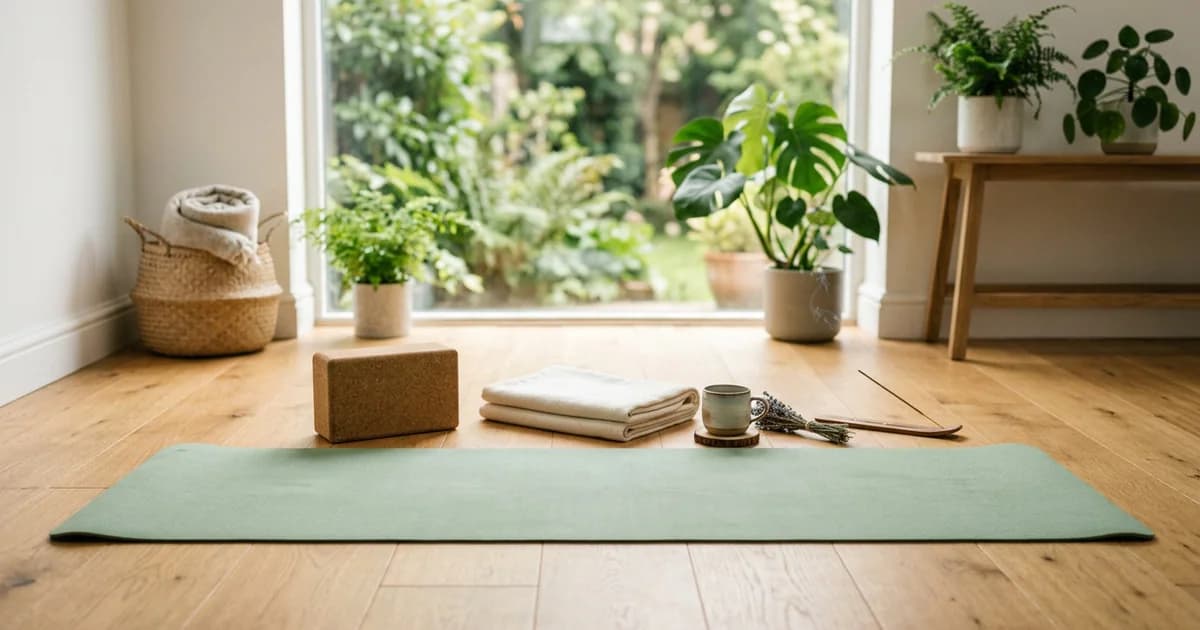
You absolutely need: a yoga mat. This is the one non-negotiable item. A good mat provides cushioning for your knees and grip so your hands and feet don't slip. You don't need the most expensive one, a basic mat in the $15-25 range works perfectly fine for beginners. Look for at least 5mm thickness for comfort. If you're taller than 180cm, consider an extra-long mat.
Highly recommended: two yoga blocks. Blocks are a beginner's best friend. They bring the floor closer to you in poses where you can't quite reach, and they make dozens of poses more accessible and comfortable. Cork or foam blocks cost $8-15 for a pair. Foam is lighter; cork is more stable. Either works.
Nice to have: a yoga strap. A simple strap (basically a belt with a buckle) helps you reach your feet in seated forward folds and opens up hamstring stretches. You can also use a regular belt or scarf, but a proper strap costs only $5-10 and lasts forever.
You don't need: special yoga clothes (any comfortable, stretchy clothing works), yoga socks (bare feet grip better), a yoga towel (unless you're doing hot yoga), fancy water bottles, yoga gloves, or any of the other accessories you'll see marketed to beginners. Save your money and invest in consistent practice instead.
10 Beginner-Friendly Yoga Poses to Start Today
These poses form the foundation of almost every yoga class. Master these and you'll feel comfortable in any beginner session. Hold each pose for 5-8 slow breaths (about 30-60 seconds) unless noted otherwise.
1. Mountain Pose (Tadasana). Stand with your feet hip-width apart, arms at your sides, palms facing forward. Distribute your weight evenly across both feet. Engage your thighs slightly, lengthen your spine, and relax your shoulders away from your ears. It looks like "just standing," but doing it with full awareness and proper alignment teaches you the foundation for every other standing pose.
2. Downward-Facing Dog (Adho Mukha Svanasana). Start on hands and knees, then lift your hips up and back to create an inverted V-shape. Your hands should be shoulder-width apart, fingers spread wide. Don't worry if your heels don't touch the floor, they probably won't for weeks or even months. Keep a slight bend in your knees if your hamstrings are tight. Focus on lengthening your spine rather than straightening your legs.
3. Warrior I (Virabhadrasana I). From standing, step one foot back about 3-4 feet. Bend your front knee to roughly 90 degrees (don't let it go past your ankle). Your back foot angles out about 45 degrees. Raise both arms overhead, palms facing each other. Square your hips toward the front of your mat. This pose builds leg strength, opens your hip flexors, and improves balance.
4. Warrior II (Virabhadrasana II). Similar to Warrior I, but your hips and torso face the long side of your mat instead of the front. Arms extend out to the sides at shoulder height, and you gaze over your front fingertips. Your front thigh works hard here, that burning sensation is normal and means it's working.
5. Tree Pose (Vrksasana). Stand on one leg and place the sole of your other foot on your inner calf or inner thigh (never on the knee joint). Bring your hands to prayer position at your chest. Pick a fixed point to stare at: this is called your drishti and it dramatically improves balance. If you're wobbly, that's perfectly fine. Wobbling means your stabilizer muscles are getting stronger.
6. Cat-Cow (Marjaryasana-Bitilasana). On hands and knees, alternate between arching your back (cow, belly drops, head lifts) and rounding your back (cat, belly pulls in, head drops). Move with your breath: inhale for cow, exhale for cat. This is one of the best spine mobilizers and feels amazing first thing in the morning. Do 8-10 rounds.
7. Child's Pose (Balasana). Kneel with your big toes touching, knees apart, and fold forward with arms extended or at your sides. This is yoga's universal rest position: you can take it any time during class when you need a break. No one will judge you. In fact, knowing when to rest is a sign of an advanced practitioner, not a weak one.
8. Cobra Pose (Bhujangasana). Lie face-down, place your hands under your shoulders, and gently press your chest up off the floor. Keep your elbows close to your body and your shoulders away from your ears. You don't need to straighten your arms completely, a gentle lift is enough. This pose counteracts all the forward hunching we do at desks and on phones.
9. Seated Forward Fold (Paschimottanasana). Sit with legs extended, feet flexed. Hinge forward from your hips (not your waist) and reach toward your toes. Can't reach your toes? Loop a strap around your feet or bend your knees slightly. The stretch should feel intense but never painful. This pose stretches the entire back of your body, hamstrings, calves, and spine.
10. Corpse Pose (Savasana). Lie flat on your back, arms at your sides with palms up, legs relaxed and falling open. Close your eyes. Stay here for at least 5 minutes at the end of your practice. Savasana looks easy but is actually one of the hardest poses because it requires complete stillness and surrender. Don't skip it: this is when your body integrates all the benefits of your practice.
How to Build a Consistent Yoga Practice
Starting yoga is easy. Sticking with it is where most people fail. Here's how to build a practice that actually lasts.
Start embarrassingly small. Commit to 10-15 minutes, three times per week. Not an hour. Not every day. The goal in your first month is to build the habit, not to become flexible. You can always do more once the routine is established, but you can't stick with something that feels like too much. If you're also working on building other positive habits, our guide on affirmations that actually work can help reinforce your commitment.
Pick a specific time and place. "I'll do yoga sometime this week" is a plan that never happens. "I'll roll out my mat in the living room at 7am on Monday, Wednesday, and Friday" is a plan that does. Attach yoga to an existing habit, after your morning coffee, before dinner, or right after putting the kids to bed. The more specific, the more likely you are to follow through.
Use guided classes at first. YouTube has thousands of excellent free yoga classes. Yoga with Adriene is the gold standard for beginners, her 30-day challenges are how millions of people got started. Other great channels include SarahBethYoga and Yoga with Kassandra (especially for yin). Follow along rather than trying to remember sequences from memory.
Track your practice. Use a simple calendar where you mark each day you practice. Seeing a chain of X's is surprisingly motivating. Don't break the chain. And if you do break it, start a new chain immediately, don't let one missed day become a missed week.
Be patient with progress. You probably won't notice physical changes for 3-4 weeks. But you'll notice mental changes much sooner, better sleep after a week or two, less stress reactivity, a general sense of calm that wasn't there before. Pay attention to these early wins. They're the real reason to keep going.
Don't compare yourself to others. This is the single biggest reason beginners quit. The person on the mat next to you (or on your screen) has probably been practicing for years. Your only competition is yesterday's version of yourself. If you couldn't touch your toes last week and this week you're two inches closer, that's genuine progress worth celebrating.
Common Beginner Mistakes (and How to Avoid Them)
Holding your breath. When a pose gets challenging, most beginners unconsciously hold their breath. This creates tension and makes the pose harder. Consciously breathe through every pose, slow inhales through your nose, slow exhales through your nose. If you can't breathe smoothly, you're pushing too hard. Back off until breathing feels natural again.
Pushing through pain. Discomfort is normal. Pain is not. There's a clear difference: discomfort feels like a deep stretch or muscle fatigue. Pain feels sharp, stabbing, or wrong. If something hurts, stop immediately and try a modification. Yoga should never cause injury, if it does, you're doing it wrong or pushing too far.
Skipping the warm-up. Jumping into deep stretches with cold muscles is asking for trouble. Always start with gentle movements, cat-cow, gentle twists, neck rolls, for at least 5 minutes before attempting deeper poses. Your body needs time to literally warm up the synovial fluid in your joints.
Focusing on what poses look like instead of how they feel. Nobody cares if your Warrior II looks picture-perfect. What matters is whether you feel the stretch in the right places, whether your breath is steady, and whether your alignment protects your joints. Stop looking at the mirror (or your camera) and start feeling what your body is telling you.
Going too hard, too fast. You don't need to do 90-minute hot yoga on day one. That's how people hurt themselves and associate yoga with suffering instead of relief. Start gentle. Build gradually. You have the rest of your life to deepen your practice: there's no rush.
Only doing the physical practice. Yoga is more than just poses. The breathing techniques and brief meditation at the end of class are equally important. Don't skip savasana, don't rush through breathing exercises, and consider adding even 5 minutes of meditation to your practice. This is where the deepest benefits live.
Frequently Asked Questions About Yoga for Beginners
How often should a beginner do yoga?
Start with 2-3 sessions per week, each lasting 15-30 minutes. This gives your body time to recover and adapt between sessions. After the first month, you can gradually increase to 4-5 times per week if you want. Consistency matters far more than frequency, three short sessions every week beats one long session whenever you remember.
Can I do yoga if I'm not flexible at all?
Absolutely: that's like saying you're too dirty to take a shower. Yoga is how you become flexible. Every pose has modifications for tight muscles. Use blocks, straps, and bent knees liberally. Your flexibility will improve naturally over weeks and months of consistent practice. Some of the stiffest people see the most dramatic improvements.
Is yoga enough exercise on its own?
It depends on the style and your goals. Vinyasa and Ashtanga yoga can provide a solid cardiovascular and strength workout. Yin and Restorative yoga are more about flexibility and recovery. For overall fitness, combining yoga with some form of cardio (walking, swimming, cycling) gives you the best of both worlds. But yoga alone is absolutely enough if your primary goals are stress reduction, flexibility, and functional strength.
What should I eat before yoga?
Practice on a mostly empty stomach, a light snack 1-2 hours before is fine, but a full meal will make twists and forward folds uncomfortable (and potentially embarrassing). A banana, a handful of nuts, or some yogurt works well. Stay hydrated throughout the day, but avoid chugging water right before class.
Do I need to go to a studio, or can I practice at home?
Both work beautifully. Studios offer hands-on corrections, community, and structure. Home practice offers flexibility, zero commute, and no self-consciousness. Many beginners start at home with YouTube to build basic confidence, then try a studio class after a few weeks. There's no wrong answer, the best option is whichever one you'll actually do consistently.
How long until I see results from yoga?
Mental benefits (reduced stress, better sleep, improved mood) typically appear within 1-2 weeks of regular practice. Physical changes (increased flexibility, better posture, muscle tone) usually become noticeable around the 4-6 week mark. Significant flexibility gains and strength improvements generally take 3-6 months. But remember, the journey itself is the point, not just the destination.
Read also:
Beginner's Complete Guide to Mindfulness Meditation
Benefits of Cold Showers: What Happens to Your Mood and Energy
Your Journey Starts with One Breath
Yoga isn't about perfection. It's about showing up, breathing, and paying attention to your body. The person who does 10 minutes of gentle stretching three times a week and sticks with it for a year will always be better off than the person who does one intense class and never comes back.
You don't need to be flexible. You don't need special clothes. You don't need to know Sanskrit. You just need a mat, a few minutes, and the willingness to be a beginner, which, by definition, you already are.
Roll out your mat today. Start with Cat-Cow and Child's Pose. Breathe slowly. See how it feels. That's it. That's your whole assignment. Everything else will unfold naturally from there.
🛒 Start Your Yoga Journey
As an Amazon Associate we earn from qualifying purchases.
What the Research Shows
Beyond flexibility, a growing body of neuroscience suggests yoga changes brain chemistry in ways that lower anxiety and stress.
| Researcher | Institution | Key finding | Year |
|---|---|---|---|
| Chris Streeter | Boston University School of Medicine | A randomized trial found 12 weeks of yoga improved mood and reduced anxiety more than walking, alongside higher brain GABA levels | 2010 |
| Streeter et al. (pilot) | Boston University | A single 60-minute yoga session was associated with a roughly 27% rise in brain GABA, a neurotransmitter that calms anxiety | 2007 |
Chris Streeter and colleagues at Boston University used brain-imaging spectroscopy to study why yoga feels calming. In a randomized controlled trial, participants who practiced yoga for 60 minutes three times a week over 12 weeks reported greater improvements in mood and larger reductions in anxiety than a matched group who walked for the same amount of time, and those benefits tracked with measured increases in the neurotransmitter GABA.
An earlier pilot study from the same group found that a single one-hour yoga session was linked to roughly a 27% increase in brain GABA, with no such change in a comparison group. Because low GABA activity is associated with anxiety and depression, these findings offer a plausible biological reason why even a beginner's practice can leave you feeling noticeably calmer, on top of yoga's documented effects on lowering the stress hormone cortisol.
Sources: Streeter et al. (2010): Yoga vs walking on mood, anxiety and brain GABA; Boston University: yoga and brain GABA.
Frequently Asked Questions
What are the benefits of yoga for beginners?
How often should I practice yoga as a beginner?
Do I need any special equipment to practice yoga?
What is the best type of yoga for beginners?
Can I practice yoga at home using online resources?
Should I be worried about being too stiff or inflexible for yoga?
What should I wear when practicing yoga?
Weekly happiness in your inbox
One practical idea every week. No spam and no miracle claims, just clear advice you can assess for yourself.
No spam. Unsubscribe anytime.
Marcel Kupures
Founder & Editor
Founder and editor of Get A Happy Life. Research references are linked where they are used, and product comparisons rely on public product information unless hands-on testing is explicitly documented.
Last updated: September 17, 2026
Want more happiness science?
Browse all our guides on mindfulness, gratitude, sleep, and well-being.
Read more guides