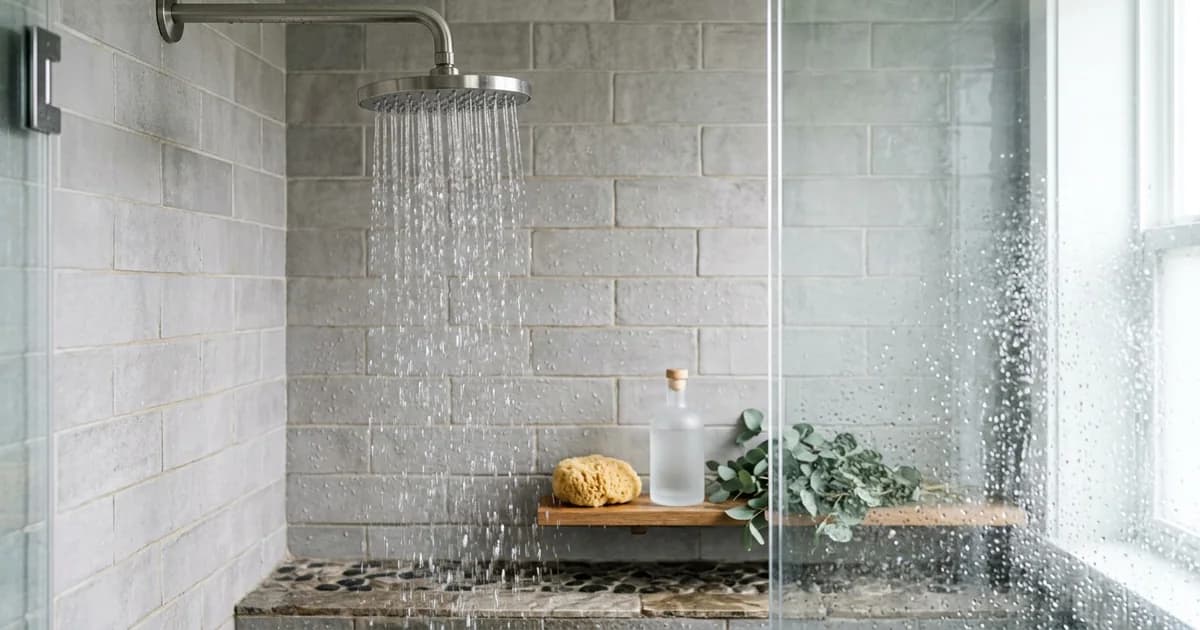
Cold showers significantly boost mood and energy by triggering your nervous system to release norepinephrine, dopamine, and endorphins. A 2016 study found that regular cold showers reduced sick days and improved quality of life scores. The physiological effects, increased heart rate, deeper breathing, and improved circulation, create rapid alertness without the dependency issues of caffeine.
- Release norepinephrine, dopamine, and endorphins
- Reduce sick days, improve quality of life
- Create alertness without caffeine dependency
- Train nervous system stress resilience
- Build daily confidence and self-discipline
You've probably heard that cold showers are life-changing. Maybe a friend raved about them, or you stumbled across a video of someone jumping into a freezing lake at 6 AM looking unnervingly cheerful. And now you're wondering: is there actually something to this cold shower thing, or is it just another wellness trend that sounds more impressive than it is?
Related reading: How to Reduce Anxiety Naturally: 8 Evidence-Based Strategies
Here's the honest answer: cold showers aren't a magic fix, but the science behind them is surprisingly solid. What happens to your mood, your energy levels, and your mental state after stepping under cold water is genuinely interesting, and for a lot of people, it becomes one of the most impactful two minutes of their entire day.
In this article, we'll walk through what cold showers actually do to your body and brain, look at the real (and realistic) benefits for mood and energy, and give you a practical guide to getting started, even if the thought of cold water makes you want to close this tab immediately. Let's go.
What actually happens to your body during a cold shower?
Before we get into the benefits, it helps to understand the mechanics. When cold water hits your skin, especially at temperatures below 15°C (59°F), your body goes into a mild stress response. Your heart rate increases, your breathing deepens, and your blood vessels constrict. This is your sympathetic nervous system kicking in: the "fight or flight" mode.
At first glance, that sounds like the opposite of relaxing. But here's where it gets interesting: what follows that initial stress response is a cascade of neurochemical activity that can genuinely shift how you feel, both in the moment and for hours afterward.
Your body releases a rush of norepinephrine (a hormone and neurotransmitter closely linked to alertness and focus), dopamine levels rise, and your endorphin system gets activated. Researchers have found that cold water immersion can increase norepinephrine levels by up to 300%. That's not a small bump: that's the kind of neurochemical shift that explains why so many people describe feeling "alive" after a cold shower in a way they just don't feel after a warm one.
You don't need to go fully cold from the start. Try ending your regular warm shower with just 30 seconds of cold water. That's enough to trigger the physiological response, and it's a much gentler way to begin building the habit.
The mood benefits: more than just a wake-up call
One of the most talked-about benefits of cold showers is their effect on mood, and this is an area where the research is actually quite compelling. A 2016 study published in PLOS ONE found that regular cold showers (starting at 38°C and ending at 10°C for 90 seconds) reduced self-reported sick days and improved quality of life scores significantly. Participants also reported feeling more energetic and positive.
But the mood benefits go deeper than just feeling "awake." The norepinephrine spike we mentioned earlier plays a direct role in mood regulation. Low norepinephrine levels are associated with depression and low motivation, which is why many antidepressants work by increasing norepinephrine availability in the brain. Cold showers provide a natural, temporary boost through a completely different mechanism.
There's also a psychological layer here that's worth taking seriously. When you make yourself do something uncomfortable, especially first thing in the morning, you build a kind of confidence that carries through the rest of your day. It's a small but meaningful act of self-discipline. You told yourself you'd do something hard, and you did it. That feeling compounds over time.
Psychiatrist and cold exposure researcher Dr. Anna Lembke has described this phenomenon as building what she calls "dopamine resilience", training your brain to find reward in discomfort rather than always seeking comfort. Cold showers are a low-stakes, daily way to practice exactly that.
Energy levels: why cold water beats your second coffee
We all know that morning fog, the 20 minutes after waking up where your brain feels like it's running on dial-up. Cold showers cut through that in a way that's hard to replicate with caffeine alone. Here's why.
When cold water hits your body, your breathing automatically deepens. You take in more oxygen, your heart pumps harder, and circulation increases throughout your body, including to your brain. The result is a rapid shift from that groggy, half-asleep state to a state of genuine alertness. Most people report this effect kicking in within 30 seconds.
The key difference between a cold shower and coffee? A cold shower doesn't create dependency or tolerance. Coffee boosts alertness partly by blocking adenosine receptors (the chemical that makes you feel sleepy), but your brain compensates over time by creating more receptors, which is why regular coffee drinkers often need more and more to get the same effect. Cold showers trigger alertness through a different pathway that doesn't have this dependency mechanism.
That said, combining both is absolutely fine. Many people find that a cold shower followed by a cup of coffee creates a particularly sharp, focused state, especially during winter months when both the external cold and the warm drink create an interesting contrast that your body responds well to.
Cold showers and mental health: what the research says
The connection between cold exposure and mental health is an emerging area of research, and while the science is still developing, some findings are genuinely promising.
A 2020 paper in Medical Hypotheses proposed that cold showers could act as a mild electroconvulsive therapy analog, stimulating the brain through a different physical mechanism, but producing some overlapping neurochemical effects. The paper suggested cold showers might be useful as a complementary approach for mild to moderate depression, particularly for people who prefer non-pharmaceutical options.
It's important to be clear: cold showers are not a treatment for clinical depression. If you're struggling with serious mental health challenges, please work with a healthcare professional. But as a daily mood-support practice? The case for them is solid.
Many people also report that cold showers help with anxiety, not by eliminating anxious thoughts, but by training the nervous system to regulate stress responses more effectively. When you repeatedly expose yourself to a controlled stressor (cold water) and practice breathing through the discomfort, you're essentially doing nervous system training. Over weeks and months, this can make you more resilient to other stressors in daily life.
Physical benefits worth knowing
While mood and energy are the most-reported benefits, cold showers also affect your physical wellbeing in several meaningful ways:
Circulation: Cold water causes your blood vessels to constrict, and when you warm up afterward, they dilate again. This vascular "exercise" can improve circulation over time, which matters for everything from cardiovascular health to how quickly your extremities warm up on cold days.
Muscle recovery: Athletes have been using cold water immersion for decades to reduce delayed onset muscle soreness (DOMS). A cold shower isn't the same as an ice bath, but it does help reduce inflammation in muscles after exercise. If you work out in the morning, ending with a cold shower can meaningfully speed up recovery.
Skin and hair: Hot water strips natural oils from your skin and hair. Cold water helps keep those oils in place, which can result in less dry skin and shinier hair over time. If you have naturally dry skin or a flaky scalp, switching to cooler showers often makes a noticeable difference within a few weeks.
Immune function: Some research suggests that regular cold exposure increases white blood cell count over time, potentially boosting immune function. The 2016 PLOS ONE study mentioned earlier found that participants who took cold showers reported 29% fewer sick days than the control group. More research is needed, but this is an interesting signal.
Cold showers as part of a morning routine
One of the most powerful ways to use cold showers isn't as a standalone practice, but as an anchor for a broader morning routine. When you start your day with something intentional and mildly challenging, it sets a different tone for everything that follows.
The cold shower becomes a kind of reset, a clear physical signal to your brain that the day has begun and you're showing up for it. Pair it with a few minutes of journaling, some light movement, or even just a quiet cup of coffee without your phone, and you've built a morning that genuinely supports your wellbeing rather than just reacting to the day as it comes at you.
If you want to go deeper on building a morning routine that actually sticks, here is a book worth your time:
The Miracle Morning
A longtime bestseller and widely praised guide to transforming your mornings, and your life, through a simple daily routine. The Miracle Morning fits perfectly into the kind of intentional start this article describes, with practical steps you can apply immediately.
Check price on Amazon.com →- Practical and actionable advice
- Widely praised and popular
- Great for morning routine beginners
- May feel basic if you already read extensively in the genre
- Prescriptive structure requires consistency to see results
If you're looking to track the temperature of your cold showers, useful when you're following a gradual cold exposure protocol, a simple digital thermometer lets you know exactly what you're working with. Starting at 20°C and working down to 15°C or lower over several weeks is a much more sustainable approach than just cranking the cold immediately.
ThermoPro TP03 Digital Instant Read Thermometer
A no-nonsense instant-read thermometer, handy for checking your shower water temperature when you're building up a cold exposure routine gradually. Compact enough to keep in a bathroom drawer and simple to use.
Check price on Amazon.com →- Very affordable
- Simple and easy to use
- Useful for tracking water temperature during gradual cold exposure
- Basic design, no frills
- Not waterproof for full submersion
You can also browse a wider range of options on Amazon.com →
How to start with cold showers: a beginner's guide
The single biggest mistake people make with cold showers is trying to go fully cold on day one. It's brutal, your body hates it, and you end up quitting after three days. Here's a smarter approach that actually builds a lasting habit.
Week 1-2: The contrast method. Take your normal warm shower as usual. In the final 30 seconds, turn the water to cool (not cold, just noticeably cooler than your comfort zone). Focus on your breathing. Let yourself feel the discomfort without fighting it. Breathe through it.
Week 3-4: Extend and cool down. Increase the cold part to 60 seconds and drop the temperature a bit more. By now, your body should be noticeably more comfortable with the initial shock. You're training your nervous system, not just your willpower.
Week 5 onward: Go fully cold. Start the shower cold and keep it cold for 90 seconds to 2 minutes. This is where most of the research-backed benefits kick in, and by this point, many people find they actually look forward to it.
A few practical tips that make a real difference:
- Don't hold your breath. The urge to gasp and hold your breath is instinctive, but deep, slow breathing is what helps your nervous system shift from panic to calm. Practice breathing out slowly as soon as the cold hits.
- Keep it short but consistent. 90 seconds every day beats 5 minutes twice a week. Consistency is where the benefits compound.
- Morning is better than evening for energy. The alertness boost from a cold shower can last several hours, so taking one late at night might actually interfere with sleep. Mornings are the natural time for this habit.
- Don't towel off immediately. Let your body warm up naturally for a minute or two after the cold shower. This allows your circulation response to play out fully and can intensify the energizing effect.
If you find it hard to commit to full cold showers, try pairing the habit with something you already do consistently, like brewing coffee. "After I start the coffee maker, I take my cold shower" is a more effective commitment device than "I'll do it every morning."
Who benefits most from cold showers?
Cold showers aren't for everyone in the same way, and it's worth being honest about who tends to see the most significant results.
People who are naturally low-energy in the mornings tend to notice the biggest mood and alertness boost, particularly those who describe themselves as "not morning people." The physiological jolt of cold water is a more powerful wake-up signal than almost anything else you can do at 7 AM.
People dealing with mild anxiety or low mood often report meaningful improvements with consistent cold shower practice. The nervous system regulation aspect appears to be genuinely helpful for emotional resilience over time. That said, if you're managing a mental health condition, discuss this with your doctor rather than treating cold showers as a replacement for professional support.
Athletes and active people benefit from the muscle recovery angle, particularly if they work out in the mornings or at lunchtime and need to feel functional again quickly afterward.
People with certain medical conditions should check with a doctor before starting. Cold showers cause rapid cardiovascular changes, so if you have a heart condition, Raynaud's disease, or similar issues, the practice may not be appropriate for you without medical guidance.
The mindset shift: from dreading it to craving it
Something interesting happens around the three to four week mark for most people who stick with cold showers: the relationship with the discomfort changes. You stop dreading it and start looking forward to it, not because it stops feeling cold (it doesn't), but because your brain has learned to associate the discomfort with how good you feel afterward.
This is a genuinely useful thing to experience. It's a small but real example of your brain learning that discomfort isn't always something to avoid, that sometimes it's the path to feeling genuinely good. That lesson shows up in other areas of life, too. Exercise feels more approachable. Difficult conversations feel less catastrophic. Hard work feels less threatening.
Cold showers are not some heroic act of suffering. They're a daily reminder that you're capable of doing something uncomfortable, that the discomfort passes, and that there's something good on the other side of it. That's a useful thing to know about yourself.
If you're working on building mental habits around positivity and resilience more broadly, you might find these internal reads useful: How to Stop Overthinking: 12 Practical Strategies That Actually Work and How to Be Happy Alone: 10 Ways to Enjoy Your Own Company are both worth bookmarking alongside your new cold shower habit.
Practical guide: how to choose your cold shower temperature
If you want to be intentional about your cold exposure protocol, rather than just guessing, it helps to know what temperature ranges actually do what:
15–20°C (59–68°F): The "cool" range. Good for beginners and for the contrast method. Noticeably cooler than body temperature, will trigger a mild stress response. Enough for the initial stages of habit building.
10–15°C (50–59°F): The "cold" range. This is where most of the research-backed benefits kick in. The norepinephrine spike, the circulation boost, and the mood effects are more pronounced here. Target range for experienced cold shower takers.
Below 10°C (50°F): This is ice bath territory and generally not achievable through a standard home shower without specific equipment. Cold water immersion research at this level is compelling but requires more careful monitoring, not necessary for everyday benefits.
For most people, getting your shower to the 10–15°C range is both achievable with a standard tap and sufficient to experience the full range of benefits associated with cold shower practice.
Frequently asked questions about cold showers
How long should a cold shower be to feel the benefits?
Research suggests that 90 seconds to 2 minutes of cold exposure is enough to trigger meaningful neurochemical responses, specifically the norepinephrine and dopamine boost associated with mood and energy improvements. You don't need to stand under cold water for 10 minutes. Short and consistent is more effective than occasional long sessions.
Can cold showers help with depression or anxiety?
Some research suggests cold showers may support mood regulation and reduce symptoms of mild depression, likely through norepinephrine and dopamine release. However, cold showers are not a treatment for clinical depression or anxiety disorders. They can be a useful complementary habit alongside professional treatment, but should never replace it. If you're dealing with serious mental health challenges, please work with a qualified healthcare professional.
Is it okay to take cold showers every day?
Yes, for most healthy adults, daily cold showers are safe. Many people who practice cold exposure do so daily and report no negative effects. The body adapts over time, which is actually part of the benefit, the regular mild stress response trains your nervous system to manage stress more effectively. If you have cardiovascular issues, Raynaud's disease, or other relevant conditions, check with your doctor first.
Why do I feel amazing after a cold shower but terrible during it?
This is completely normal and exactly what the science predicts. The discomfort during the cold shower is your sympathetic nervous system responding to a stressor. The great feeling afterward comes from the neurochemical rebound, norepinephrine, dopamine, and endorphins that get released during and after the stress response. Your brain learns over time that the discomfort reliably leads to feeling good, which is why experienced cold shower takers often shift from dreading to genuinely looking forward to it.
Should I take a cold shower before or after a workout?
It depends on your goal. A cold shower before a workout can increase alertness and prime your nervous system for effort, useful for early morning training sessions when you're still waking up. A cold shower after a workout helps reduce muscle soreness and inflammation, speeding recovery. Both have value; some people do both. If you can only do one, post-workout cold showers are generally considered more beneficial for physical performance and recovery.
Will cold showers make me lose weight?
This claim circulates a lot, and the honest answer is: not in any meaningful way on its own. Cold exposure does activate brown adipose tissue (brown fat), which burns calories to generate heat. But the caloric expenditure from a 90-second cold shower is small, not enough to drive weight loss by itself. Cold showers are great for mood, energy, and resilience. Weight management requires dietary and exercise habits. Don't take cold showers expecting to lose weight; take them for how they make you feel.
Cold showers trigger a real neurochemical response, norepinephrine and dopamine release, that genuinely improves mood and energy levels, particularly in the mornings. The benefits are most noticeable with consistent practice at 10–15°C for 90 seconds or more. Start with the contrast method (warm shower, cold finish) and build up gradually over a few weeks. Combined with a solid morning routine, cold showers can become one of the most impactful two minutes of your day, not because of hype, but because of what they actually do to your brain chemistry.
Related Reads
- 50 Mindfulness Quotes to Help You Stay Present Daily
- What Is Mindfulness: A Complete Beginner's Guide for 2026
- Best Yoga Mats in 2026
- Best Meditation Cushions in 2026
What the Research Shows
Cold exposure triggers measurable changes in stress hormones, mood chemistry, and even sick days. Here is what the peer-reviewed research has documented.
| Researcher | Institution | Key finding | Year |
|---|---|---|---|
| Geert Buijze | Academic Medical Center Amsterdam | Routine cold showering cut self-reported sickness absence from work by 29% | 2016 |
| Petr Srámek | Charles University, Prague | One hour in 14°C water raised plasma noradrenaline by 530% and dopamine by 250% | 2000 |
Geert Buijze and colleagues ran a randomized controlled trial in which over 3,000 participants took a cold shower for 30, 60, or 90 seconds daily for a month. Compared with controls, the cold-shower groups reported 29% fewer sick days off work, although the actual number of illness days did not differ significantly, suggesting people felt better able to function rather than getting sick less often.
Petr Srámek and colleagues immersed young men up to the neck in 14°C water and measured large surges in stress and reward chemistry: noradrenaline rose by 530% and dopamine by 250%. These spikes help explain the alertness and mood lift many people report after a cold shower, though most studies used full immersion rather than a brief shower.
Sources: PLOS One: Cold showering RCT (Buijze); PubMed: Srámek et al. (2000).
Frequently Asked Questions
Why is Benefits of Cold Showers important for mental health?
How does benefits of cold showers affect the brain?
What does the research say about benefits of cold showers?
How long before I notice the benefits?
Can benefits of cold showers replace therapy or medication?
Is benefits of cold showers suitable for everyone?
Weekly happiness in your inbox
One practical idea every week. No spam and no miracle claims, just clear advice you can assess for yourself.
No spam. Unsubscribe anytime.
Marcel Kupures
Founder & Editor
Founder and editor of Get A Happy Life. Research references are linked where they are used, and product comparisons rely on public product information unless hands-on testing is explicitly documented.
Last updated: September 17, 2026
Want more happiness science?
Browse all our guides on mindfulness, gratitude, sleep, and well-being.
Read more guides