
Being happy alone means distinguishing chosen solitude from painful loneliness and developing comfort with your own company. Research shows people comfortable with solitude are more emotionally resilient, self-aware, and satisfied with their lives. You can build this through reframing solo time as self-care, establishing morning rituals, taking solo dates, and pursuing creative hobbies.
- Solitude is chosen; loneliness is painful
- Reframe solo time as valuable self-care
- Establish daily morning rituals for yourself
- Take solo dates to comfort zones first
- Find creative hobbies that absorb you
Being alone and being lonely are two very different things — but it can be hard to tell them apart when you're sitting at home on a Friday night with no plans. Society has a way of making solo time feel like something to fix rather than something to cherish.
Related reading: How to Practice Self-Love Without Becoming Selfish
Related reading: How to Deal With Loneliness: A Science-Backed Guide
Related reading: How to Build Self-Confidence: A Science-Backed Guide
Here's the truth: learning how to be happy alone is one of the most valuable things you can do for your long-term happiness. When you genuinely enjoy your own company, you stop making decisions out of fear. You choose relationships because you want them, not because you need them to feel okay. You start discovering things about yourself that you'd never notice when constantly surrounded by other people.
This guide walks you through 10 practical, real-life ways to enjoy your own company — plus the best books on solitude to keep you inspired along the way. Whether you're newly single, living solo for the first time, or just craving more quality me-time, these tips are for you.
Best books for being happy alone: quick overview

Wherever You Go, There You Are
A longtime bestseller that introduces mindfulness in plain language — ideal for anyone learning to be fully present during quiet moments alone.
View on Amazon →
Quiet
A groundbreaking, hugely popular book about the hidden strengths of introverts — perfect for reframing alone time as a source of power.
View on Amazon →
Wild
A bestselling memoir about a transformative solo journey — a powerful reminder that time alone can heal, strengthen, and clarify who you are.
View on Amazon →
The Power of Now
A globally popular guide to spiritual presence and inner peace — a thoughtful companion for anyone ready to take solitude more seriously.
View on Amazon →
Braving the Wilderness
A widely loved book about true belonging and the courage to stand alone — an essential read for balancing solitude with meaningful connection.
View on Amazon →1. Reframe alone time as self-care, not loneliness
The first step toward being happy alone isn't about doing anything different — it's about thinking differently. There's a cultural story that says being alone equals being sad, unwanted, or boring. But solitude and loneliness are completely different experiences. Loneliness is the painful feeling of wanting connection and not having it. Solitude is the intentional, chosen state of being with yourself — and it can be deeply nourishing.
Researchers who study well-being consistently find that people who are comfortable with solitude tend to be more emotionally resilient, more self-aware, and more satisfied with their lives overall. They don't rely on constant external stimulation or validation. They've developed what psychologists call "self-sufficiency" — the ability to generate positive feelings from within rather than from outside sources.
Start noticing the story your brain tells when you find yourself alone. Is it "I have no one to hang out with" or "I have a few hours just for me"? That mental reframe doesn't change the facts on the ground, but it completely changes the emotional experience.
Try deliberately choosing one evening a week as your solo evening. Cook what you want, watch what you've been putting off, or just sit and read. Treat it as something you're looking forward to — because with practice, you genuinely will.
2. Build a solo morning ritual
One of the most reliable ways to enjoy being alone is to own the first part of your day. Most people wake up and immediately reach for their phone, jumping straight into other people's worlds — news, messages, notifications. Before they've even had coffee, they're reacting to things outside themselves.
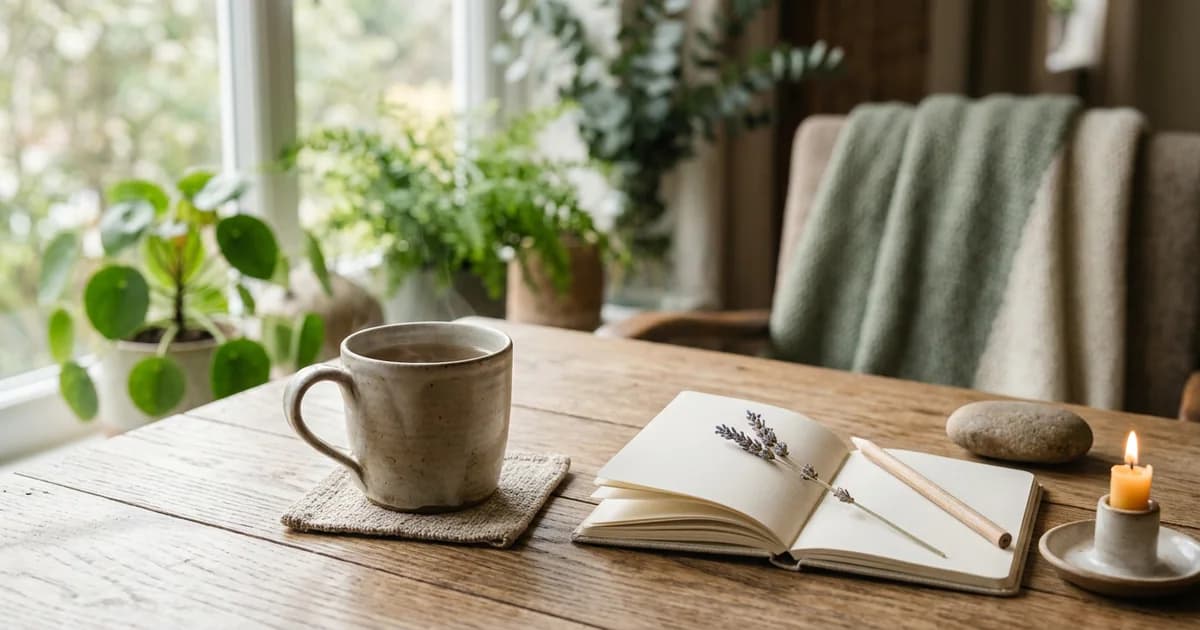
A solo morning ritual flips this around. It carves out a quiet pocket of time that belongs entirely to you. It doesn't have to be elaborate or lengthy. It could be as simple as making a good cup of coffee and sitting with it for fifteen minutes before opening any screen. Or doing a short stretch. Or writing a few lines in a notebook. The point is that it's yours, it's consistent, and it starts the day from the inside out rather than the outside in.
What matters isn't what you do — it's the intention behind it. When you have a morning ritual that you actually look forward to, being alone in the early hours stops feeling empty and starts feeling like the best part of the day.
Over time, this habit builds something important: a relationship with yourself. You start learning what helps you feel calm, what gets your mind going in a good direction, what you need more of and what drains you. That self-knowledge is genuinely one of the richest rewards of learning to enjoy your own company.
3. Take yourself on a solo date
This one makes many people cringe a little — which is exactly why it belongs on this list. There's something culturally awkward about doing things alone that are "supposed to be done with others": going to a restaurant solo, seeing a film by yourself, visiting a museum without a companion.
But here's the thing — once you actually try it, it's fantastic. When you go somewhere alone, you can do exactly what you want. You move at your own pace, spend as long as you like looking at the painting you love, leave when you feel like it. No compromising on where to sit. No waiting for someone to finish their dessert. No pretending to enjoy a film you didn't choose.
Start with something comfortable. A coffee shop you've wanted to try, a walk through a part of your city you don't know well, or a weekend afternoon at a gallery or bookshop. Bring a book if having something to do with your hands helps — but you probably won't need it.
People-watching, noticing your environment, letting your thoughts wander without interruption — these are quiet pleasures you rarely get when you're busy maintaining a conversation. Solo outings reconnect you with a more observational, present way of experiencing the world. With a bit of practice, you'll start looking forward to them.
4. Find a creative hobby that absorbs you
Flow states — those moments when you're so absorbed in something that time disappears — are among the most reliably joyful human experiences. And they tend to happen most easily when you're alone, without social pressure or interruption.
Creative hobbies are especially good at producing flow. Whether it's drawing, painting, writing, knitting, playing an instrument, cooking, photography, pottery, or something else — creative activities demand just enough focus to quiet the noise in your head, while giving back a genuine sense of accomplishment.
If you don't have a creative hobby, now is a great time to explore one. And if you used to have one you've let slide — consider picking it back up. The goal isn't to be good at it. The goal is the process: the absorption, the quiet, the satisfaction of making something. There's no audience, no one judging your progress, no need to explain yourself. It's just you and whatever you're creating. That freedom is one of the quiet joys of solo time.
Photography is one particularly wonderful solo hobby because it also gets you moving and outside. Taking a walk with your phone camera and looking for interesting details you'd normally walk past is a genuinely different way of experiencing your environment.
5. Spend time in nature — alone
There's solid research showing that spending time in nature reduces stress hormones, lowers blood pressure, and improves mood. Combine that with solitude, and you have one of the most effective natural mood-boosters available — and it's free.
A solo walk through a park or forest, a quiet morning at the beach, or even just sitting outside without your phone can be surprisingly restorative. Nature has a way of putting things in perspective. When you're surrounded by trees or watching water move, ordinary worries often shrink to their proper size.
The quiet (or rather, the natural sounds) of being outdoors alone can feel uncomfortable at first if you're used to constant background noise. But that discomfort usually gives way fairly quickly to something that feels like relief. Your mind slows down. You start noticing things — light through leaves, the texture of bark, the smell of earth after rain. These small sensory details are genuinely pleasurable, but you can only access them when you're not busy talking.
You don't need to go somewhere dramatic to get this effect. A twenty-minute walk in your local park, without earbuds, is enough to meaningfully reset your nervous system. Make it a regular part of your week and notice what it does to your overall mood.
6. Practice mindfulness when you're by yourself
Being alone is the perfect time to practice mindfulness — the simple practice of being fully present with whatever is happening right now. What's interesting about mindfulness is that it transforms ordinary solo activities into genuinely rich experiences.
Eating alone mindfully means actually tasting your food. Walking alone mindfully means noticing the ground under your feet, the temperature of the air, the sounds around you. Even washing dishes mindfully — feeling the warm water, noticing the soap bubbles — can become oddly satisfying when you're paying full attention.
When we're alone without distraction, the mind tends to fill the space with anxious thoughts about the future or rehashing of the past. Mindfulness gives you an alternative: actually inhabiting the present moment. And the present moment, it turns out, is usually completely fine.
You don't need an app or a course to start. Just pick one daily activity and commit to paying full attention to it from start to finish — no phone, no background noise, just the experience itself. If you want to explore further, our complete beginner's guide to mindfulness covers everything you need to get started.
7. Keep a journal
Writing about your thoughts and feelings is one of the most well-researched self-care practices there is. Journaling has been shown to reduce anxiety, improve emotional clarity, strengthen resilience, and even improve physical health over time. It also happens to be one of the most natural things to do when you're by yourself.
You don't need to write beautifully or have anything profound to say. Journaling is less about the output and more about the process of putting words to what's going on inside. When you articulate feelings, they become less overwhelming. Patterns emerge. You understand yourself better. Things that seemed like huge problems often look more manageable after writing them out.
There are many ways to do it. Stream-of-consciousness writing — just writing whatever comes, without editing — is great for processing emotions. Gratitude journaling (three things you're grateful for each day) is a simple and proven mood booster. Prompted journaling, using questions like "What made me smile today?" or "What do I actually need right now?", is helpful when you're not sure where to begin.
A dedicated journal makes the habit feel intentional and special. If you want help choosing one, we've put together a guide to the best happiness journals of 2026 — there are genuinely great options at every price point.
8. Cook a meal just for yourself
There's a quiet kind of self-respect in making a proper meal just for you. Not ordering something, not standing over the sink eating whatever was easiest — actually cooking something you genuinely want to eat, setting the table, and sitting down to enjoy it.
Many people who eat alone regularly fall into a pattern of barely feeding themselves properly. "It's not worth the effort for just one person." But that mindset is worth examining. You are worth the effort. Every single time.
Cooking for yourself is also a wonderful sensory experience. Chopping, stirring, smelling things as they cook, tasting as you go — it's a form of creative play that also satisfies something very physical. And when you cook and eat alone, you can make exactly what you want, season it how you like it, eat as much or as little as you feel like, without negotiating with anyone else's preferences.
Try making something you've always wanted to attempt. Follow a recipe from a cuisine you love but rarely make. Light a candle, put on music, pour yourself something nice to drink. Make the whole act of preparing and eating alone into something you look forward to — a small ceremony of self-care that happens to produce a delicious meal.
9. Curate your personal soundtrack
Music is one of the most emotionally powerful tools you have when you're alone — and unlike most mood-changers, it's instantly available and costs almost nothing. A well-chosen playlist can completely transform an evening from restless to genuinely enjoyable.
The trick is being intentional rather than just defaulting to whatever's popular or familiar. Think about what you actually want to feel. Something energising for moving around and cooking. Something slow and atmospheric for reading or thinking. Something that lets you sit with feelings when you need to process something difficult.
Many people discover music they genuinely love when they start exploring alone, without having to fit a group mood or explain their taste. You might find you love ambient electronica, classical vocal music, or something completely unexpected. Solo time is a genuine invitation to find out what you actually like, free from social influence.
If you want to try something beautiful and genuinely evocative for a quiet solo evening, indie-folk music recorded in solitude is worth exploring. Bon Iver's debut album For Emma, Forever Ago was famously written and recorded alone in a remote Wisconsin cabin, and the result is a widely praised record that feels made for solitary listening (around $20) — perfect for a candle-lit evening by yourself.
10. Stop measuring your alone time against others' social lives
One of the biggest obstacles to enjoying time alone is what happens when you pick up your phone. You're home on a Saturday evening, and your feed is showing you a continuous stream of other people laughing at parties, having drinks with friends, and apparently living their best, most connected lives. It's almost impossible not to feel like you're doing something wrong.
But social media is a highlight reel. The people posting those photos also have quiet evenings alone, boring Sundays, and moments when they don't know what to do with themselves. They just don't post about those. The comparison you're making isn't between your reality and their reality — it's between your reality and their curated performance of reality.
When you're choosing to spend time alone, treat it as the intentional activity it is — and that means not spending it passively watching other people's lives. Put the phone in another room or set a specific time limit. Use that time for anything else: a book, a bath, cooking, a walk, a phone call with someone you love.
The irony is that the less time you spend comparing your solo time to other people's social highlights, the more you start to genuinely appreciate your own company. Presence is the practice — and it gets easier every time.
Best books on solitude and enjoying your own company
Reading about solitude while you're alone is, admittedly, delightful. Here's an honest look at the best books to pick up if you want to go deeper on this topic.
1. Wherever You Go, There You Are — the classic guide to mindful solitude
Wherever You Go, There You Are
A longtime bestseller that introduces mindfulness meditation in plain language — ideal for anyone learning to be fully present during quiet moments alone.
View on Amazon →This longtime bestseller earns its reputation as the definitive introduction to mindfulness for everyday life. Jon Kabat-Zinn writes in a clear, gentle style that makes meditation feel accessible rather than esoteric. Rather than treating solitude as empty time to endure, the book shows how to fill it with simple, present-moment awareness.
What makes this book stand out is its practicality. The chapters are short and digestible, perfect for reading alone in small doses — a few pages with morning coffee or a quiet chapter before bed. It doesn't demand sustained concentration, but it rewards attention. Readers often report that it genuinely changes how they experience ordinary solo activities, from washing dishes to walking through a park.
At around $15, it represents excellent value for a book that has remained popular for decades. It's also a thoughtful gift for a friend navigating a period of unwanted solitude and looking for a healthier relationship with their own mind.
- Longtime bestseller with a devoted readership
- Short, readable chapters perfect for solo moments
- Practical rather than abstract
- Genuinely shifts how you experience daily life
- Benefits come from practicing the exercises, not just reading
- Some readers may want a more narrative approach
2. Quiet — a research-backed case for the power of introverts
Quiet
A groundbreaking, hugely popular book about the hidden strengths of introverts — validating and empowering for anyone who recharges in quieter, less stimulating environments.
View on Amazon →Susan Cain's blockbuster book reshaped the cultural conversation about introversion and the value of quiet. It's not strictly a solitude guide, but it's one of the best arguments ever written for why time alone isn't just acceptable — it's often where deep thinking, creativity, and restoration happen.
The book is particularly validating if you've ever felt pressure to be more outgoing, social, or constantly available. Cain draws on psychology research, interviews, and personal stories to show how society undervalues the contributions and needs of quieter individuals. That validation alone can make your solo evenings feel less like something missing and more like something essential.
At around $15, it's excellent value for a book of this breadth and influence. If you want to understand the science behind why constant social stimulation drains you — and why solitude genuinely restores you — this is the place to start.
- Hugely popular and influential
- Well-researched and credible
- Validating and empowering
- Useful for work and personal life
- More about identity and culture than step-by-step evening plans
- Less philosophical than some other picks on this list
3. Wild — a bestselling memoir of healing through solitude
Wild
A beloved bestseller about a transformative solo journey — a powerful, honest reminder that time alone can heal, strengthen, and clarify who you are.
View on Amazon →Cheryl Strayed's memoir is a modern classic about healing through solitude. After personal tragedy and years of turmoil, she hiked more than a thousand miles alone on the Pacific Crest Trail with no prior backpacking experience. The book is raw, gripping, and ultimately life-affirming.
Where the other books on this list are instructional or philosophical, Wild offers something equally valuable: companionship. Strayed's voice is honest, funny, and unflinching about fear and loneliness. It shows alone time at its most intense and transformative. Even if your own solo time is just a quiet evening at home, her journey puts it in perspective and reveals what being alone can teach you about your own resilience.
At around $15, it's a powerful addition to your shelf. Best suited for people who process their feelings through narrative and who need a reminder that difficult periods of aloneness can lead to profound personal change.
- Beloved bestseller and genuine page-turner
- Emotionally resonant without being saccharine
- Puts ordinary solo time in a larger perspective
- Widely praised for its honesty and courage
- A memoir, not a step-by-step guide
- Some passages deal with heavy grief and may be difficult for some readers
4. The Power of Now — a deeper spiritual take on presence
The Power of Now
A globally popular guide to spiritual presence and inner peace — a thoughtful, contemplative companion for anyone ready to take solitude more seriously.
View on Amazon →Eckhart Tolle's global bestseller is a deep, contemplative guide to spiritual presence and inner peace. The central teaching — that genuine peace is found by fully inhabiting the present moment rather than dwelling in the past or future — pairs naturally with solitary reflection.
Where Wild is narrative and Quiet is research-based, The Power of Now is philosophical and spiritual. It asks you to sit with yourself quietly and notice what is already here, beneath the noise of thought. It's the kind of book you read slowly, pen in hand, during a quiet evening without distractions. Many readers return to it repeatedly over years, finding new layers each time.
At around $14, it's a worthwhile investment for anyone ready to take their inner life seriously. This is a good choice if you like books that make you think, take notes in the margins, and revisit over time.
- Massively popular worldwide
- Offers a genuine shift in perspective
- Rewards slow, attentive reading
- Widely praised for its clarity
- More abstract than practical
- Some readers find the tone too spiritual
- Slower read requiring more sustained concentration
5. Braving the Wilderness — understanding solitude and true belonging
Braving the Wilderness
A widely loved book about true belonging and the courage to stand alone — an essential read for balancing solitude with meaningful, authentic connection.
View on Amazon →Brené Brown's book on true belonging and the courage to stand alone provides an important complement to the other titles here. She argues that real belonging begins with self-acceptance and the willingness to be separate when necessary — that solitude and connection aren't opposites but depend on each other.
This perspective is genuinely useful if you worry that enjoying alone time means becoming isolated. Brown shows that the stronger your relationship with yourself, the more authentic your connections with others become. The writing is warm, personal, and grounded in years of research into vulnerability and shame.
At around $14, it's accessible and widely applicable. Recommended for anyone who wants to balance a healthy solo life with meaningful relationships, or who feels they swing between craving solitude and craving connection without quite finding the balance.
- Widely loved #1 New York Times bestseller
- Warm, readable tone
- Directly addresses the balance between solitude and connection
- Full of relatable stories
- More about courage and belonging than quiet contemplation
- Less immediately philosophical than The Power of Now
You can also browse more options on Amazon.com →
How to choose the right book about solitude
With several good options available, it helps to know which type suits you right now. Here's a simple way to think about it.
If you're going through a difficult period of unwanted aloneness — a breakup, a big life change, a move — start with Wild. It's the most emotionally immediate and companionable of the bunch. If you want a practical, grounding read that changes how you experience quiet moments, Wherever You Go, There You Are is the classic choice. If you want research-backed validation for preferring less stimulation and more solo time, Quiet delivers. If you're drawn to deeper philosophical and spiritual contemplation, The Power of Now will meet you there. And if you want to understand how your solo time connects to your relationships with others, pair any of the above with Braving the Wilderness for a genuinely rounded perspective.
Start with one book, not five. The temptation when you're working on something like this is to buy everything at once and read none of it. Pick the one that resonates most right now, finish it, and let it change how you think before moving on to the next.
Frequently asked questions about how to be happy alone
Is it normal to prefer spending time alone?
Absolutely. Introversion — the preference for less social stimulation and more quiet time — is a completely normal personality trait shared by a significant portion of the population. Even extroverts benefit from regular alone time; research shows it supports creativity, emotional regulation, and self-awareness across all personality types. Preferring your own company isn't antisocial. It's self-aware.
How do I stop feeling lonely when I'm by myself?
The difference between loneliness and solitude is largely about perception. Loneliness comes from feeling disconnected — from others, and often from yourself. The tips in this article (especially building rituals, engaging in creative activities, and practicing mindfulness) help you build a more satisfying relationship with yourself, which reduces the hollow feeling that drives loneliness. It also helps to maintain at least a few meaningful connections in your life — being happy alone doesn't mean cutting off from people; it means not needing constant contact to feel okay.
What's the difference between being an introvert and being a loner?
Introverts naturally need more alone time to recharge and feel at their best — it's a wiring preference, not a choice. A loner, in the common sense, is someone who actively avoids social connection. Most people are somewhere on a spectrum. What matters isn't the label but the question: does your time alone feel chosen and nourishing, or does it feel like something you're settling for? If it's the latter, the tips and books in this guide can help shift that experience.
How long does it take before being alone starts to feel genuinely good?
It varies, but most people notice a shift within a few weeks of deliberately practicing the habits in this guide. The first few solo evenings or solo outings can feel awkward or restless — that's normal. Your nervous system is adjusting to not being stimulated or validated by others. Stick with it. That restlessness almost always softens into something more comfortable, and then eventually into something you genuinely look forward to.
Being happy alone is a skill you build, not a trait you either have or don't. Start with the mindset shift (solitude is self-care, not failure), add a few concrete habits — a morning ritual, a creative outlet, regular time in nature — and give yourself permission to enjoy your own company without guilt. For books, Wherever You Go, There You Are is the most inspiring choice for mindful solitude, while Quiet is the most practical starting point for reframing your alone time. Your alone time doesn't need to be fixed. It just needs to be yours.
Related Reads
- Why Social Connection Is the Key to Happiness (and How to Build It)
- Signs You're Happy Without Realizing It (And Why That's Beautiful)
- Best Self-Help Books
- Best Planners for Productivity
Strategy Comparison at a Glance
| Strategy | Effectiveness | Time Needed | Difficulty |
|---|---|---|---|
| Strategy 1: Mindful Breathing | High | 5 min/day | Easy |
| Strategy 2: Progressive Muscle Relaxation | High | 10 min/day | Easy |
| Strategy 3: Cognitive Reframing | Very High | 15 min/day | Medium |
| Strategy 4: Physical Exercise | Very High | 30 min/day | Medium |
| Strategy 5: Social Connection | High | Varies | Easy |
Frequently Asked Questions
How long does it take to Be Happy Alone?
What are the most common mistakes when trying to Be Happy Alone?
Is there scientific evidence that Be Happy Alone works?
Can Be Happy Alone help with anxiety or depression?
How do I get started with Be Happy Alone today?
What if I don't see results immediately?
Weekly happiness in your inbox
One practical idea every week. No spam and no miracle claims — just clear advice you can assess for yourself.
No spam. Unsubscribe anytime.
Marcel Kupures
Founder & Editor
Founder and editor of Get A Happy Life. Research references are linked where they are used, and product comparisons rely on public product information unless hands-on testing is explicitly documented.
Last updated: August 21, 2026
Want more happiness science?
Browse all our guides on mindfulness, gratitude, sleep, and well-being.
Read more guides