
You know that feeling — it's 8pm, you've had a full day, and you're sitting there scrolling through your phone feeling vaguely dissatisfied. Like something's missing. You can't point to anything wrong, exactly. Life is fine. But fine isn't the same as happy. Sound familiar?
Here's something that might surprise you: science has found one of the most reliable paths to genuine happiness, and it's not a new car, a better job, or a tropical holiday. It's gratitude. Not the surface-level "count your blessings" platitude — but a real, consistent gratitude practice that actually changes the structure of your brain over time. The research behind this is fascinating, and honestly a little mind-blowing.
In this article, we're going to look at what the science says about gratitude and happiness, how thankfulness physically rewires your brain, and how to actually build a gratitude practice that sticks. We'll also look at some of the best gratitude journals to help you get started — because sometimes having the right tool makes all the difference. Let's get into it.
Quick overview: the best gratitude journals at a glance
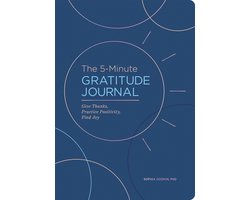
The 5-Minute Gratitude Journal (Deluxe Edition)
The gold standard for building a daily gratitude habit — quick, structured, and beautifully designed.
View price →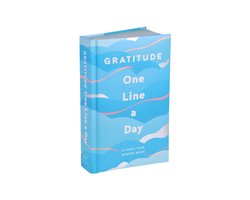
Gratitude One Line a Day — A Three-Year Memory Book
A three-year daily gratitude journal that lets you look back and see your own happiness journey unfold.
View price →
HappyBook — Gratitude & Mindfulness Journal
A beautifully designed softcover journal with affirmations, gratitude prompts, and space for daily reflection.
View price →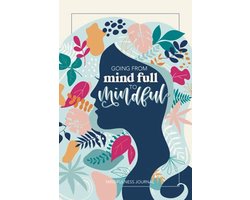
Mindfulness Journal: A Daily Diary for Women & Girls
Combines gratitude, meditation guidance, and breathing exercises in one gentle daily practice tool.
View price →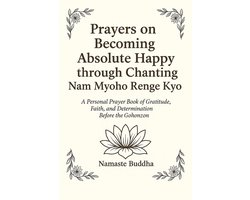
Prayers on Becoming Absolutely Happy — Gratitude Prayer Book
A spiritual gratitude practice combining chanting, faith, and daily thankfulness — great for those with a spiritual bent.
View price →
Bible Psalms Coloring Book (Premium Edition)
A meditative coloring book rooted in psalms of praise and thankfulness — a creative form of gratitude practice.
View price →
Bible Psalms Coloring Book (Budget Edition)
The budget-friendly version of the psalms coloring book — same meditative benefits at a lower price.
View price →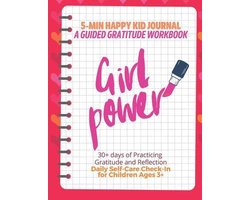
Girl Power! 5-Min Happy Kid Gratitude Journal
A fun, guided gratitude workbook to start children on a thankfulness habit from an early age.
View price →What science actually says about gratitude and happiness
Let's start with the research, because it's genuinely compelling. Dr. Robert Emmons, a psychology professor at UC Davis and one of the world's leading gratitude researchers, ran a series of studies where he asked participants to write down things they were grateful for each week. The results? People who kept gratitude journals reported 25% higher levels of happiness compared to people who wrote about daily irritations or neutral events. They also exercised more, slept better, and felt more optimistic about the week ahead.
But here's where it gets really interesting: gratitude doesn't just make you feel better in the moment — it actually changes your brain. Brain imaging studies have shown that when you genuinely feel grateful, it activates the medial prefrontal cortex, the part of your brain associated with moral reasoning, empathy, and positive emotion. This region becomes more active over time in people who practice gratitude regularly.
Neuroscientist Rick Hanson explains this beautifully with the phrase "neurons that fire together, wire together." Every time you consciously shift your attention to something you're thankful for, you're strengthening neural pathways associated with positive emotion. Over weeks and months, this becomes your brain's default setting. You're not just feeling grateful — you're becoming a more grateful person at a structural level.
Martin Seligman, the founder of positive psychology, found similar results with his "Three Good Things" exercise: simply writing down three good things that happened each day for a week led to increased happiness and decreased depressive symptoms — and those effects lasted for months after participants stopped the exercise. That's the power of a consistent gratitude practice for happiness.
How gratitude rewires your brain: the neuroscience
Your brain has what's called a negativity bias. It's an evolutionary feature, not a bug — your ancestors needed to pay close attention to threats to survive. The result is that your brain naturally gives more weight to negative experiences than positive ones. A harsh comment sticks with you far longer than a compliment. A near-miss on the motorway stays in your nervous system for hours.
Gratitude practice directly counters this bias. When you actively look for and acknowledge positive experiences — however small — you're training your brain to notice and register them more reliably. Research from the University of California found that people who wrote gratitude letters (even ones they never sent) showed greater neural sensitivity to gratitude several months later. The practice had literally changed how their brains processed positive social experiences.
There's also a chemical dimension. Gratitude triggers the release of dopamine (your brain's reward chemical) and serotonin (the mood-stabilising neurotransmitter that antidepressants work to boost). When you feel genuinely thankful, you get a small hit of both. Do it consistently, and you're essentially running a natural mood-enhancement program. No side effects, no prescription needed.
Sleep is another big one. A 2011 study published in Applied Psychology: Health and Well-Being found that writing in a gratitude journal for 15 minutes before bed significantly improved sleep quality and duration. The theory is that gratitude displaces the anxious, ruminative thoughts that often keep us awake — you're filling your mind with positive content instead of replaying the day's worries. If you struggle with overthinking at night, pairing a gratitude practice with the strategies in How to Stop Overthinking: 12 Practical Strategies That Actually Work can be a genuinely powerful combination.
1. The 5-Minute Gratitude Journal (Deluxe Edition) — best overall for building the habit
The 5-Minute Gratitude Journal (Deluxe Edition)
The deluxe edition of one of the most popular gratitude journals around — structured, beautiful, and designed to make the five-minute daily habit feel genuinely enjoyable rather than like homework.
View price on Bol.com →If you've ever tried to start a gratitude journal and given up after a week, this is the journal that might actually make it stick. The five-minute format is genius for one simple reason: it removes the excuse that you don't have time. Five minutes in the morning or before bed — that's it. The structure guides you through morning gratitude prompts and an evening reflection without ever feeling overwhelming.
The deluxe edition has noticeably nicer materials than the standard version — a quality hardcover, thicker paper, and a ribbon bookmark that makes it feel like something you actually want to pick up every day. That matters more than it sounds. When a journal feels good in your hands, you're more likely to use it consistently. And consistency is everything when it comes to gratitude practice for happiness — a neurological rewiring effect takes weeks, not days.
The prompts themselves are well-designed: they push you past vague gratitude ("I'm grateful for my family") toward specific, concrete appreciation ("I'm grateful that my sister called to check on me today"). That specificity is actually important — research suggests that detailed, specific gratitude entries have a stronger emotional impact than generic ones. You're not just going through the motions; you're actively engaging with positive memories.
This is also a great option if you're curious about journaling more broadly — check out our guide to the best happiness journals in 2026 for more options across different styles and formats.
- Only five minutes a day — genuinely achievable
- High-quality deluxe materials feel like a treat
- Specific prompts encourage deeper reflection
- Morning and evening structure covers the whole day
- Fixed prompts may feel repetitive after several months
- Less free-writing space if you want to write more
2. Gratitude One Line a Day — best for the long game
Gratitude One Line a Day — A Three-Year Memory Book
A unique memory book format where you write just one line of gratitude per day — and see what you wrote on the same date in previous years, creating a layered record of what brought you joy over time.
View price on Bol.com →There's something deeply moving about the "one line a day" format once you've been using it for a year or two. You open to today's date and you can see what made you grateful on this exact day last year — and the year before that. It becomes a beautiful, personal record of the good in your life, even during difficult times.
The format also solves one of the most common barriers to journaling: the pressure to write something meaningful every day. One line. That's all. It could be "good coffee this morning" or "saw a robin in the garden." It doesn't need to be profound. Over time, those tiny lines add up to a rich, layered picture of your life's small pleasures — and that accumulation has real psychological value. You're building what researchers call a "gratitude reservoir," a mental library of positive memories you can draw on in harder times.
At €17.29 for a three-year journal, it's also extraordinary value. Many people report that filling this kind of book becomes one of their most treasured possessions. If you're looking for something to give a friend going through a rough patch, or someone starting a mindfulness journey, this is a genuinely thoughtful gift.
- Just one line per day — the lowest-effort format possible
- Three-year design creates a moving personal history
- Excellent value for money
- Works as both a journal and a keepsake
- Very limited writing space — not for those who like to reflect at length
- The real magic only kicks in after year one
3. HappyBook — gratitude & mindfulness journal — best for the whole-life approach
HappyBook — Gratitude & Mindfulness Journal
A softcover journal that combines gratitude practice with mindfulness and affirmations — a well-rounded daily toolkit for emotional wellbeing with an elastic closure and a fresh green design.
View price on Bol.com →The HappyBook takes a broader approach than a pure gratitude journal — it weaves together gratitude, mindfulness, daily planning, and positive affirmations into one cohesive practice. If you're someone who finds pure gratitude prompts a bit narrow, this gives you more to work with. You can track your mood, set intentions for the day, write affirmations, and record what you're thankful for, all in one place.
The design is lovely — a fresh green softcover with a heart motif, lined pages, and an elastic closure to keep it neat. It's the kind of journal you actually want to leave on your nightstand rather than hide in a drawer. The affirmation prompts are particularly useful for anyone working on shifting negative self-talk — they complement the gratitude practice by actively building a more positive internal narrative, not just noticing the good in the outside world.
At €21.95 it's the most expensive option on this list, but given the range of what it covers, it represents solid value. It also makes an excellent gift — beautifully presented and genuinely useful for anyone interested in their mental wellbeing. Pair it with some background reading on mindfulness (our complete beginner's guide to mindfulness is a great starting point) and you have everything you need to build a meaningful daily practice.
- Combines gratitude, mindfulness, and affirmations
- Lovely design — a genuine pleasure to use
- Elastic closure keeps pages protected
- Great as a gift for anyone interested in wellbeing
- Priciest option on the list
- The broader scope may feel scattered for those wanting pure gratitude focus
4. Mindfulness Journal: A Daily Diary for Women & Girls — best for stress relief
Mindfulness Journal: A Daily Diary for Women & Girls
A daily mindfulness diary that integrates gratitude, meditation guidance, and breathing exercises — specifically designed to help with stress and anxiety alongside building a thankfulness habit.
View price on Bol.com →If you're drawn to gratitude practice partly because you're dealing with anxiety or chronic stress, this journal is designed with you specifically in mind. It doesn't just focus on what you're grateful for — it also includes breathing exercise guidance and meditation prompts that help regulate your nervous system before you sit down to reflect. That matters, because trying to feel gratitude when you're in a stressed, activated state is like trying to see stars through clouds. You need to calm down first.
The combination of mindfulness techniques and gratitude journaling is actually well supported by research. A study published in the Journal of Happiness Studies found that combining mindfulness with gratitude exercises produced significantly better outcomes for anxiety reduction than either practice alone. This journal essentially packages that research-backed combination into a simple daily format.
The "for women and girls" framing might put some people off, but the content itself is entirely universal — anyone dealing with stress and wanting to build a more positive mindset will find it useful. The price point is also very accessible, making it a low-risk way to try this style of combined mindfulness-gratitude practice before committing to a more expensive journal.
- Addresses stress and anxiety directly alongside gratitude
- Breathing and meditation guidance included
- Very accessible price
- Research-backed combination of mindfulness + gratitude
- Gendered branding may not appeal to everyone
- Less focused on pure gratitude if that's your main goal
5. Prayers on Becoming Absolutely Happy — best for spiritual practitioners
Prayers on Becoming Absolutely Happy — Gratitude Prayer Book
A personal prayer book rooted in Nichiren Buddhist practice — combining gratitude, faith, and chanting (Nam Myoho Renge Kyo) as a path to deep, lasting happiness.
View price on Bol.com →Gratitude has always been a cornerstone of spiritual practice, across virtually every tradition. This prayer book approaches thankfulness through the lens of Nichiren Buddhism — specifically through chanting Nam Myoho Renge Kyo as a daily practice of prayer, gratitude, and determination. If you're already a practitioner or curious about this tradition, it's a rich and deeply considered guide to using spiritual practice as a direct path to happiness.
What's interesting from a neuroscience perspective is that chanting and repetitive prayer activate the same brain regions as meditation — including the prefrontal cortex and the parasympathetic nervous system, which governs our "rest and digest" state. The gratitude dimension adds the dopamine and serotonin response we discussed earlier. So while this book comes from a faith tradition rather than a secular psychology background, the mechanisms at work in the brain are remarkably similar.
At €8.99, this is one of the most affordable options on the list. It's clearly meant for a specific audience — those with an existing connection to Nichiren Buddhist practice or a genuine interest in exploring it. If that's you, this book offers a genuinely profound approach to gratitude that goes well beyond standard journaling prompts.
- Very affordable at under €9
- Deep, spiritually grounded approach to gratitude
- Combines gratitude with faith, determination, and prayer
- Only relevant if you resonate with Nichiren Buddhist practice
- Not a secular or psychology-based approach
6. Bible Psalms Coloring Book (premium edition) — best creative gratitude practice
Bible Psalms Coloring Book (Premium Edition)
A meditative adult coloring book featuring psalms of praise, thanksgiving, and gratitude — a creative and calming way to engage with themes of thankfulness.
View price on Bol.com →Not everyone processes gratitude through writing. If you're more of a visual, creative person — or if sitting down to write feels forced — a coloring book approach to gratitude can work beautifully. The act of coloring has its own mindfulness benefits: it quiets the analytical mind, focuses attention on the present moment, and gently shifts you into a more receptive, calm state. Pair that with psalms that are explicitly about praise and thanksgiving, and you have a genuinely contemplative gratitude practice.
The psalms themselves are among the most celebrated expressions of gratitude in human history. Psalm 100, Psalm 136, Psalm 103 — these texts have been sources of comfort and thankfulness for thousands of years, and for good reason. Whether you approach them from a faith perspective or simply as profound poetry about the human experience of gratitude, they offer real depth to sit with while you color.
The premium edition has higher quality paper than budget coloring books — important if you're using wet markers or pens, which can bleed through on thinner pages. It's a lovely self-care ritual: a cup of tea, some colored pencils, a psalm about gratitude. Simple, calming, and surprisingly effective.
- Creative alternative to traditional journaling
- Meditative and calming — activates the same brain state as mindfulness
- Quality paper holds up to markers and pens
- Psalms provide genuine depth beyond generic prompts
- Requires coloring materials to get the most from it
- Best suited to those with a Christian or scriptural frame of reference
7. Bible Psalms Coloring Book (budget edition) — best value creative option
Bible Psalms Coloring Book (Budget Edition)
The same concept as the premium edition at a more accessible price — a great way to try the meditative psalm coloring approach before investing in the higher-quality version.
View price on Bol.com →If you're curious about the psalm coloring approach but not ready to spend €15, this budget edition is a sensible starting point. The core content — psalms of gratitude paired with coloring pages — is essentially the same. The main differences are in paper quality and production values. If you plan to use colored pencils rather than markers or felt-tips, you likely won't notice the difference at all.
At €10.49 it's one of the most affordable standalone gratitude tools on this list, making it a good option to pick up alongside one of the journaling options. Many people find that rotating between different formats — some days writing, some days coloring — keeps the gratitude practice feeling fresh and prevents it from becoming mechanical.
The psalms chosen for these books tend to be the most explicitly grateful ones — Psalm 136 with its repeated refrain "his steadfast love endures forever," Psalm 100's call to "enter his gates with thanksgiving" — beautiful meditations on thankfulness regardless of your relationship with religion.
- Very affordable — good for trying the format first
- Same core gratitude content as the premium edition
- Works well with colored pencils
- Thinner paper — wet markers may bleed
- Less polished production than the premium edition
8. Girl Power! 5-Min Happy Kid Gratitude Journal — best for children
Girl Power! 5-Min Happy Kid Gratitude Workbook
A guided 30+ day gratitude and self-care workbook for children ages 3+ — playful, accessible, and a wonderful way to start building the gratitude habit early.
View price on Bol.com →One of the most powerful things you can do for a child's long-term happiness is start them on a gratitude practice early. Neuroplasticity — the brain's ability to form new connections — is at its peak in childhood. A gratitude habit that begins at age 5 literally shapes the developing brain's default pathways in a way that becomes harder to achieve in adulthood (though never impossible). In short, this is one of the best gifts you can give a child.
The five-minute format keeps it achievable and age-appropriate. There's no pressure to write paragraphs — simple prompts guide children through noticing what made them happy today, what they're grateful for, and what they're looking forward to. The self-care check-ins help children build emotional vocabulary and begin connecting their daily habits with how they feel. These are genuinely foundational emotional intelligence skills.
Research on gratitude in children is clear: kids who practice gratitude regularly show higher levels of wellbeing, better social behaviour, and greater life satisfaction. A University of California study found that grateful teenagers were more engaged at school, more satisfied with their social relationships, and less depressed. Starting earlier only amplifies those effects.
- Very affordable at €8
- Age-appropriate format for children as young as 3
- Builds emotional vocabulary alongside gratitude
- 30+ guided days help establish the habit
- Explicitly aimed at girls — may not suit all children
- Younger children (3-5) will need parental support to use it
Do your gratitude practice at the same time every day — ideally in the morning or before bed. Anchoring it to an existing habit (your morning coffee, cleaning your teeth) dramatically increases how likely you are to stick with it. Scientists call this "habit stacking," and it's one of the most reliable methods for building new behaviours.
How to choose the right gratitude journal: a buying guide
With so many options available, it's worth thinking about what kind of practice will actually work for you — not the one that sounds most impressive, but the one you'll genuinely use.
How much time do you have? Be honest. If you're not someone who sits quietly for twenty minutes each morning, don't choose a journal that requires long entries. The 5-Minute Gratitude Journal or the One Line a Day format will serve you far better. A quick, consistent practice beats an elaborate one you abandon after two weeks.
Do you prefer structure or freedom? Some people thrive with specific prompts that guide them through what to write. Others find that kind of structure constraining and prefer blank or lightly lined pages. Journals like the HappyBook sit somewhere in the middle — some structure, plenty of free-writing space.
What else do you want from your practice? Pure gratitude focus? Mindfulness integration? Stress relief? Creative expression? Spiritual depth? Each of these calls for a different type of journal, as the options above demonstrate. Being clear on your primary goal helps you pick the right fit.
What's your budget? Options range from €8 to €22 here, and the most expensive is not necessarily the best for you. The One Line a Day journal at €17.29 covers three years — that works out to under two cents per day. Even the priciest option here is trivially cheap compared to what consistent gratitude practice can do for your wellbeing.
For a deeper comparison of the best journals on the market, including styles not listed here, our guide to the best gratitude journals for a happier life covers the full landscape.
Also worth browsing: gratitude journals on Amazon.nl →
Frequently asked questions about gratitude practice for happiness
How long does it take for gratitude practice to affect happiness?
Research suggests that noticeable effects on mood and wellbeing can appear within as little as two to three weeks of consistent daily practice. The landmark study by Robert Emmons found significant increases in happiness after just ten weeks. That said, the neurological rewiring — the lasting changes to brain structure — takes longer, typically three to six months of regular practice. This is why consistency matters more than intensity. Five minutes every day for six months will do more for you than an intensive journaling weekend once in a while.
Do I have to write things down, or can I just think about what I'm grateful for?
Writing has a clear advantage over mental gratitude lists. When you write something down, you engage more of your brain — visual processing, motor memory, and deeper cognitive encoding. Multiple studies have found that written gratitude exercises produce stronger and longer-lasting happiness effects than simply thinking about gratitude. That said, a mental gratitude practice is infinitely better than nothing. If there are days you can't write, a quiet moment of genuine thankfulness still activates the neurological response. The journal just makes the practice more reliable and effective.
What if I struggle to feel genuine gratitude — what if it feels fake?
This is one of the most common experiences when starting out, and it doesn't mean the practice isn't working. The brain initially resists because the negativity bias makes it more "natural" to focus on problems. The feeling of authenticity develops over time as new neural pathways strengthen. Researchers suggest focusing on very specific, concrete things rather than vague generalities. "I'm grateful for the warmth of the sun on my face this morning" will feel more genuine than "I'm grateful for nature." Start small, start specific, and trust that the emotional resonance builds with practice.
Can gratitude practice help with depression and anxiety?
Studies show that gratitude practices can reduce symptoms of depression and anxiety, though they work best as a complement to other treatments rather than a replacement. A 2017 meta-analysis published in the Journal of Positive Psychology found that gratitude interventions produced small to moderate improvements in wellbeing and mental health outcomes. If you're dealing with clinical depression or anxiety, please speak with a healthcare professional — but adding a gratitude practice to your toolkit is something most therapists actively encourage, precisely because the evidence supports it.
Is it better to practice gratitude in the morning or at night?
Both work, and the research doesn't strongly favour one over the other. Morning gratitude sets a positive emotional tone for the day and can influence how you interpret events as they unfold. Evening gratitude helps you consolidate positive memories from the day and has the additional benefit of improving sleep quality by replacing anxious thoughts with thankful ones. Many experienced practitioners do a brief morning gratitude and a slightly longer evening reflection — but if you can only do one, choose the time of day when you're least likely to skip it.
The science is clear: a consistent gratitude practice for happiness genuinely rewires your brain over time, boosting dopamine and serotonin, countering the negativity bias, and improving sleep, mood, and relationships. The best journal is simply the one you'll actually use — whether that's the efficient 5-Minute Gratitude Journal for daily habit-building, the touching Gratitude One Line a Day for a three-year happiness record, or the beautifully designed HappyBook for a whole-life mindfulness approach. Start small, stay consistent, and give it at least a month. The research — and your brain — will thank you.
Weekly happiness in your inbox
One science-backed tip every week. No spam, no fluff — just practical advice to make your life a little better.
No spam. Unsubscribe anytime.
Get A Happy Life
Science-backed happiness guides
Our mission is to help people live with more happiness, calm, and balance. Through practical, research-backed guides on mindfulness, gratitude, sleep, and well-being — we help you build a life you truly love.
Want more happiness science?
Browse all our guides on mindfulness, gratitude, sleep, and well-being.
Read more guides