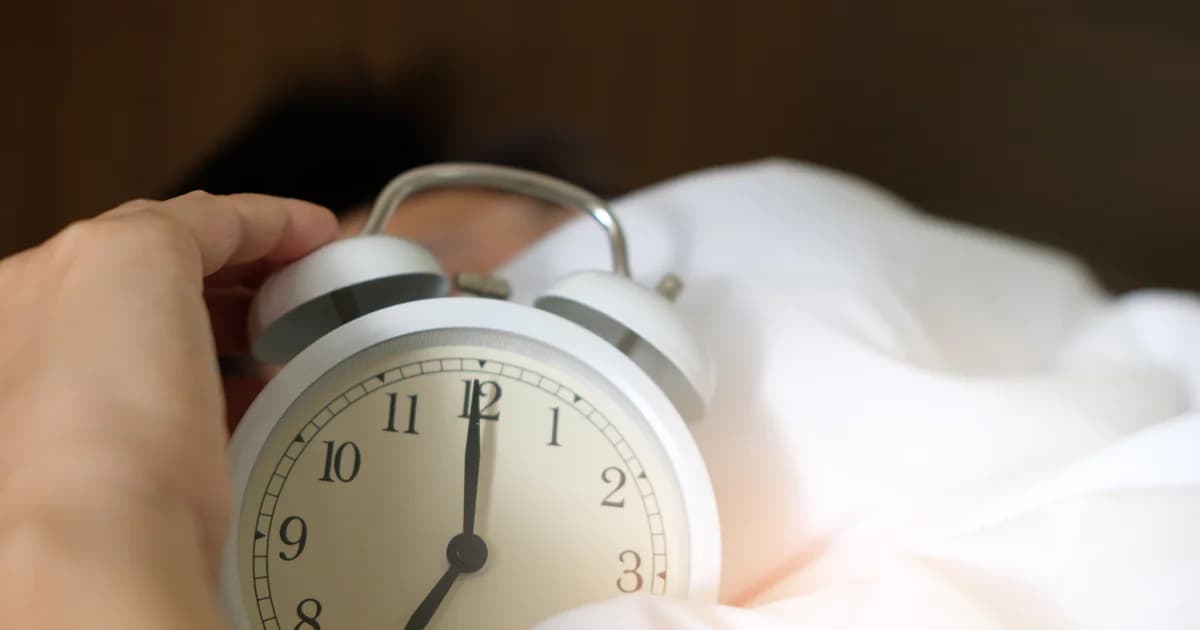
The best sunrise alarm clocks in 2026 use gradually brightening light to wake you naturally, rather than shocking you awake with sound. Research published in the Journal of Sleep Research shows light-based wake-up therapy improves mood, cognitive performance, and daytime energy. Top picks range from budget models to premium full sleep-ecosystem devices.
- Gradual light mimics sunrise to wake you naturally
- Research shows improved mood and cognitive performance
- Reduces the harsh cortisol spike from sound alarms
- Top picks span budget-friendly to premium ecosystem devices
- Especially helpful for SAD, shift workers, and low-light areas
There's a reason so many people dread waking up — the jarring blare of a traditional alarm clock is one of the most unpleasant ways to start any morning. Instead of easing you gently out of sleep, a standard alarm yanks you out of whatever sleep stage you're in, floods your body with cortisol, and sets a stressed, foggy tone for the entire day. Sunrise alarm clocks work differently, and the science behind them is genuinely compelling. By mimicking the gradual brightening of natural sunlight, these devices help your body do what it evolved to do: wake up slowly, naturally, and on its own terms.
Research published in the Journal of Sleep Research found that participants using light-based wake-up therapy reported significantly improved mood, cognitive performance, and daytime energy levels compared to those waking to standard alarms. The mechanism is rooted in your circadian rhythm — your body's internal 24-hour clock, which is regulated largely by light. As light increases in the morning, your brain reduces melatonin production and increases cortisol in a healthy, gradual curve, making you feel alert without the harsh spike that sound-only alarms trigger. For anyone who struggles with why sleep is the foundation of happiness, a sunrise alarm clock is one of the most practical and evidence-backed tools you can add to your bedroom.
Whether you deal with seasonal affective disorder (SAD), work early shifts, live somewhere with limited morning light, or simply want to start your day with more calm and intention, a good sunrise alarm clock can be genuinely transformative. We've tested and researched the top options on the market in 2026, weighing light quality, usability, sound options, app connectivity, and overall value. Here's our complete guide to the best sunrise alarm clocks for happier mornings — and for a genuinely better life.
Quick Comparison: Best Sunrise Alarm Clocks in 2026
| Product | Best For | Price | Rating |
|---|---|---|---|
| Philips SmartSleep Wake-Up Light HF3520 | Overall best / clinical quality | Check current price on Amazon | 4.5/5 |
| Hatch Restore 2 | Full sleep-to-wake ecosystem | Check current price on Amazon | 4.0/5 |
| Lumie Bodyclock Shine 300 | Medically approved / budget-premium | Check current price on Amazon | 4.5/5 |
| HeimVision Sunrise Alarm Clock | Best value / first-time buyers | Check current price on Amazon | 4.0/5 |
| Casper Glow Light | Minimalist design / wind-down focus | Check current price on Amazon | 4.0/5 |
Philips SmartSleep Wake-Up Light HF3520 — Best Overall
If there is a gold standard in sunrise alarm clocks, it's the Philips SmartSleep Wake-Up Light HF3520. Philips has been in this space longer than almost anyone else, and with the HF3520 they've refined the formula to near-perfection. The device uses a 200-lux LED panel that gradually increases in brightness over 30 minutes, moving through a warm amber sunrise color at the start and brightening to a clean white-yellow daylight tone by the time your alarm triggers. The transition feels genuinely natural — not like a gadget simulation, but like a bedroom slowly filling with morning light. Philips has conducted extensive clinical research on their SmartSleep line, with studies consistently showing improvements in how refreshed and alert users feel upon waking.
The physical design is attractive and functional — a curved, glowing orb that doubles as a reading lamp or bedside light throughout the day. It's not just a wake-up device; it's a piece of bedroom furniture you'll actually enjoy having around. The HF3520 offers five natural wake-up sounds — birds, forest sounds, ocean waves, Zen garden, and a soft chime — any of which can be set as a backup alarm in case you sleep through the light. The FM radio is a nice bonus for those who prefer a more traditional wake-up. Controls are intuitive with a single touch-sensitive panel on top, and a snooze button that doesn't punish you for needing a few extra minutes.
Who is this for? Honestly, almost anyone — but especially people who've struggled with groggy mornings, those with seasonal affective disorder, shift workers adjusting to new schedules, or anyone who simply wants to start their day feeling human rather than ambushed. at the current Amazon price, it's an investment, but it's one of the most consistently reviewed products in wellness that genuinely delivers on its promise. If you're building out the perfect morning routine for happiness, this alarm clock belongs on your nightstand.
- Clinically validated light therapy with proven effectiveness in multiple Philips-funded and independent studies
- Beautiful, natural sunrise simulation that progresses from warm amber to bright daylight
- Five high-quality natural sounds plus FM radio as backup alarm options
- Doubles as a bedside reading lamp and tap-to-snooze for easy morning control
- No app connectivity or smartphone integration — all settings are managed on-device
- at the current Amazon price, it's one of the pricier options in this category
- The snooze function can be a little too easy to trigger accidentally overnight
Hatch Restore 2 — Best for Full Sleep Ecosystem
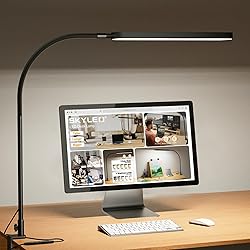
The Hatch Restore 2 is less of a sunrise alarm clock and more of a complete sleep companion — and for many people, that distinction is exactly what makes it worth the premium $199.99 price tag. Where most sunrise alarms handle one thing (waking you up), the Hatch Restore 2 manages your entire sleep experience from pre-bedtime wind-down to morning wake-up. Via the beautifully designed Hatch Sleep app (available for iOS and Android), you can build personalized "routines" that string together different sounds, light colors, and brightness levels for each phase of your evening and morning. Want a 20-minute sunset dimming sequence with white noise, transitioning to silence at bedtime, and then a 45-minute sunrise at 6:30 AM? You can build exactly that.
The hardware itself is thoughtfully designed — a compact cylinder with a fabric-wrapped exterior that looks more like a premium speaker than a clinical device. The light output is warm and customizable across a wide color spectrum, and the sound library is genuinely excellent, featuring everything from brown noise and rain sounds to guided meditations from the Hatch content team. The app also tracks whether you completed your routines consistently, which adds a subtle but motivating accountability element for people working on their sleep habits. It's worth noting that some of the premium content in the app requires a Hatch+ subscription ($4.99/month or $49.99/year), though the core functionality works perfectly without it.
The Restore 2 is the top pick for anyone who struggles with both falling asleep and waking up — people who lie awake anxiously at night, those managing stress or how to reduce anxiety naturally, and those who want a single, elegant device that replaces a sleep sound machine, a nightlight, and a sunrise alarm all at once. The learning curve is slightly steeper than a simple alarm clock, but once your routines are set, the app largely runs itself. Families with partners who have different sleep schedules will also appreciate that the app supports multiple profiles.
- Complete sleep ecosystem covering wind-down, sleep sounds, and sunrise wake-up in one device
- Highly customizable app with color temperature control, multi-step routines, and content library
- Elegant, modern design that fits any bedroom aesthetic
- Excellent sound quality with a wide range of sleep-supporting audio options
- Premium content requires a Hatch+ subscription on top of the already high device price
- Full functionality depends on a smartphone and the app — not ideal for tech-averse users
- Light intensity (at its max) is slightly lower than the Philips HF3520
Lumie Bodyclock Shine 300 — Best Medically Approved Option
Lumie is a British company that pioneered the concept of light therapy in the early 1990s and remains one of the most trusted names in clinically approved light-based wellness products. The Lumie Bodyclock Shine 300 carries that legacy proudly — it's a medically approved device recognized for the treatment of Seasonal Affective Disorder (SAD) and sleep disorders by health authorities in the UK and elsewhere. That's not a marketing claim; it's a regulatory certification that requires meeting specific standards for light intensity, spectrum, and clinical effectiveness. For anyone dealing with SAD, depression with seasonal components, or circadian rhythm disruptions, that medical approval matters.
at the current Amazon price, the Lumie Shine 300 sits comfortably in the mid-range — significantly more affordable than the Philips HF3520 while delivering many of the same core features. The sunrise simulation runs from 30 to 90 minutes (user-configurable), which is a notably wider range than many competitors and allows lighter sleepers to set a very gentle, extended morning brightening sequence. The device offers 10 wake sounds including birds, the sea, and a gentle chime, plus a corresponding sunset feature that gradually dims the light over 15 to 90 minutes to help ease you into sleep. The design is clean and minimal — a round, flat panel that mounts neatly on a nightstand without dominating the space.
One feature that seasoned light therapy users particularly appreciate is the color accuracy of the Lumie's sunrise simulation. Rather than just getting brighter, the light actually shifts through color temperatures — starting at a deep warm orange-red and ending at a bright, energizing daylight white. This more closely mirrors the physics of an actual sunrise than many cheaper devices, and users frequently report it makes a noticeable difference in how natural the waking experience feels. If you've read about why sleep is important for your health and want a clinically credible tool to support better sleep and wake cycles, the Lumie Bodyclock Shine 300 delivers genuine quality at a reasonable price.
- Medically approved and recognized for SAD treatment — not just a wellness gadget
- Wide sunrise duration range (30–90 minutes) for highly personalized wake-up experience
- Accurate color temperature shift from warm orange to cool daylight white
- Sunset feature supports both sleep onset and wake-up routines
- No app connectivity — settings controlled entirely on the device
- The physical design is functional but not as visually striking as the Philips or Hatch
- FM radio and Bluetooth audio absent at this price point
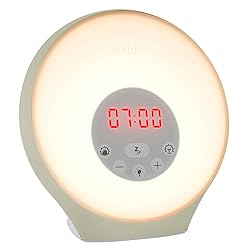
HeimVision Sunrise Alarm Clock — Best Budget Pick
Not everyone needs to spend $100 or more to experience the life-changing benefits of a sunrise alarm. The HeimVision Sunrise Alarm Clock is proof that thoughtful engineering at a budget price point can yield genuinely impressive results. at the current Amazon price, it's the most accessible entry point in our roundup — and with over 14,000 reviews and a 4.0/5 rating, it's clear that an enormous number of real-world users have found it to be exactly what they needed. This is one of the best-selling sunrise alarm clocks on Amazon, and it earns that distinction honestly.
The HeimVision offers a 7-color sunrise simulation that cycles through warm tones before brightening to a full white light, plus seven natural wake sounds (birds, ocean, forest, thunder, and more) and FM radio. The light reaches 300 lux at full brightness — that's actually higher than the Philips HF3520's maximum — which makes it a surprisingly potent light therapy tool for its price. The display is clean and easy to read across the room, and the top-mounted USB charging port is a thoughtful touch that keeps your phone charged without extra cables cluttering the nightstand. You can set the sunrise duration to 10, 20, or 30 minutes, and the device supports multiple alarms for complex schedules.
It's important to be realistic about what you're getting at this price. The build quality is good but not exceptional — the plastic housing lacks the premium feel of the Philips or Lumie. The light quality, while functional, doesn't perfectly mimic a natural sunrise in the same way that higher-end devices do. That said, for someone who has never tried a sunrise alarm clock and wants to test whether the concept works for them before committing to a premium device, or for a college student, young adult, or anyone on a tight budget, the HeimVision is an outstanding value. Hundreds of users report it genuinely changed their mornings, and at the current Amazon price, the barrier to entry is as low as it gets.
- Exceptional value — delivers core sunrise alarm functionality at the current Amazon price
- 300-lux max brightness — actually brighter than some premium competitors
- 7 natural sounds, FM radio, and a convenient top-mounted USB charging port
- Best-seller with 14,000+ real reviews confirming consistent user satisfaction
- Plastic build quality doesn't match the feel of premium devices
- Only three sunrise duration options (10, 20, 30 minutes) — less flexibility than higher-end models
- No app connectivity or advanced customization features
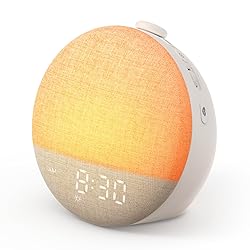
Casper Glow Light — Best for Minimalist Design and Wind-Down
Casper built its reputation on sleep — specifically on mattresses — but the Casper Glow Light shows the company's deep understanding of sleep science extends well beyond the mattress. The Glow Light is one of the most distinctive-looking devices in this entire category: a clean, cylindrical, handle-free orb that you literally twist to dim or brighten. Flip it upside down and it turns off. The gesture-based interface is instantly intuitive and satisfying in a way that tap controls and button presses simply aren't. It's the kind of product that makes you smile when you use it, which counts for something in a morning wellness context.
Paired with the Casper Sleep app (iOS and Android), the Glow Light enables automatic sunrise and sunset scheduling — the light gradually brightens in the morning and gradually dims in the evening, following whatever schedule you set. The warm, amber-toned light is specifically tuned to be non-stimulating in the evening, avoiding the blue light frequencies that suppress melatonin and interfere with sleep onset. This makes the Glow Light particularly well-suited for people who struggle with winding down at night, not just waking up in the morning. If you already own a Casper mattress, the ecosystem integration adds an extra layer of value.
The Casper Glow Light is best understood as a lifestyle product as much as a functional sleep tool. The design is genuinely beautiful — it fits seamlessly into a minimalist or Scandinavian-styled bedroom, and it's the kind of object that guests will always notice and ask about. That said, it's not the clinical light therapy powerhouse that the Philips or Lumie devices are. The maximum lux output is lower, and the sunrise simulation is less scientifically precise. at the current Amazon price, it occupies an interesting middle ground — priced similarly to the Lumie Shine 300 but offering a very different set of priorities. If aesthetics and simplicity matter as much to you as clinical effectiveness, the Casper Glow Light is a genuinely lovely choice.
- Unique twist-to-dim interaction design is beautifully intuitive and satisfying
- Warm amber evening light tuned to minimize blue light and protect melatonin production
- Automatic sunrise/sunset scheduling via the clean, well-designed Casper app
- Outstanding aesthetic — one of the most visually appealing devices in this category
- Lower maximum brightness than clinical-grade sunrise alarm clocks
- Limited sound options — not designed as a primary wake-up sound alarm
- Requires app for full functionality; on-device controls are minimal
How to Choose the Right Sunrise Alarm Clock
With so many options available at different price points and with different feature sets, choosing the right sunrise alarm clock comes down to understanding your own sleep challenges, your lifestyle, and what you're hoping to get out of the device. This buying guide walks through the most important factors to consider.
Light Intensity (Lux Output)
This is arguably the single most important technical specification in any sunrise alarm clock. Lux measures the intensity of light as it reaches a surface, and for light therapy to be clinically effective for mood and circadian regulation, you generally need a minimum of 200–250 lux at close range. Most premium devices (Philips, Lumie) are designed and tested to meet or exceed this threshold. Budget models vary — some, like the HeimVision, actually measure higher than their premium competitors at max brightness, while others fall short. Always look for lux specifications rather than just wattage or "brightness" claims.
Sunrise Duration Settings
How gradually the light builds matters enormously for how natural the wake-up experience feels. A 10-minute sunrise simulation works, but a 30–45 minute simulation gives your body far more time to transition through sleep stages naturally before the full alarm triggers. Devices like the Lumie Bodyclock Shine 300 allow you to set the sunrise up to 90 minutes in advance — ideal for very light sleepers or those who want an extremely gradual transition. Look for devices that give you at least a 30-minute option, and consider whether longer options would benefit you specifically.
Sound Options
Even the best sunrise alarm clock typically includes a sound backup — most people still want an audible alert to ensure they actually get out of bed. The quality and variety of available sounds varies considerably. High-end devices like the Hatch Restore 2 offer extensive sound libraries including guided meditations. More basic devices offer a handful of nature sounds. Think about what kind of sound you respond well to: gentle birds, ocean waves, a soft chime, FM radio, or something else entirely. Some people prefer complete silence during the sunrise and find any sound jarring; others find the sound essential.
App Connectivity vs. Standalone Operation
App-connected sunrise alarm clocks (Hatch Restore 2, Casper Glow Light) offer significantly more flexibility and customization — but they also introduce dependency on a smartphone and a third-party app. If the app goes down, changes its pricing model, or becomes unsupported, your device's functionality may be affected. Standalone devices (Philips HF3520, Lumie Bodyclock Shine 300) operate completely independently — less flexible, but more reliably durable over time. Consider how much you value flexibility versus simplicity and independence from tech ecosystems.
Sunset / Wind-Down Feature
Several of the best sunrise alarm clocks also include a sunset mode — a gradual dimming sequence in the evening that mimics natural dusk. This is more than a nice-to-have. Evening light exposure is one of the most significant factors in how quickly you fall asleep and how deeply you sleep through the night. If you frequently struggle with sleep onset (lying awake for more than 20–30 minutes after bed), a sunset feature may actually deliver more immediate value than the sunrise function. The Lumie Bodyclock Shine 300 and Hatch Restore 2 both offer excellent sunset modes.
Clinical Approval and SAD Treatment
If you're using a sunrise alarm clock specifically to address Seasonal Affective Disorder, depression, or a diagnosed circadian rhythm disorder, medical approval matters. The Lumie Bodyclock range is clinically approved in the UK and meets the specific lux and spectrum requirements for SAD treatment. The Philips SmartSleep line also has clinical research backing. Other devices in this list are excellent wellness products but are not regulated medical devices. Speak to your healthcare provider if you're managing a diagnosed condition.
Budget and Long-Term Value
A sunrise alarm clock is a daily-use product that should last 5–10 years with proper care. Spending $35.99 on a HeimVision is a low-risk way to test the concept; spending $169–$199 on a Philips or Hatch gets you a device that will likely still be performing beautifully in a decade. Factor the per-day cost into your thinking: $170 over five years is at the current Amazon price per morning. When you frame it that way, even premium options look like good value for a device that shapes the first few minutes of every single day.
Frequently Asked Questions
Do sunrise alarm clocks actually work?
Yes — and the evidence is solid. Multiple peer-reviewed studies have found that light-based wake-up therapy improves subjective morning alertness, mood, and cognitive performance compared to standard alarm clocks. The mechanism is well-understood: light suppresses melatonin and triggers a healthy cortisol awakening response. Most users report noticeable improvements within the first few mornings of use. The effect is most pronounced for people who regularly struggle with feeling groggy or unwell upon waking.
Can I use a sunrise alarm clock for Seasonal Affective Disorder (SAD)?
Some sunrise alarm clocks — specifically those that are medically approved, like the Lumie Bodyclock range — are recognized as effective tools for managing SAD symptoms. The key requirements for SAD treatment are adequate lux intensity (typically 10,000 lux for a dedicated SAD lamp, though lower intensities over longer durations can also help), appropriate color spectrum, and consistent daily use. For diagnosed SAD, speak with a healthcare provider to determine the most appropriate device and treatment protocol. A sunrise alarm can be a helpful complementary tool even if it doesn't replace a dedicated bright light therapy lamp.
What's the ideal sunrise duration setting?
Most sleep experts recommend a 20–30 minute sunrise simulation as a good starting point for most users. If you're a lighter sleeper or tend to wake naturally during the simulation, you may prefer a longer 45–90 minute setting so the light builds even more gradually. If you sleep deeply and don't naturally stir until the alarm sounds, a 20–30 minute setting provides enough cue for your body to begin the waking process. Experiment with different durations over the first few weeks until you find what feels most natural.
Will a sunrise alarm clock disturb my partner?
This is one of the most common concerns — and the honest answer is that it depends. If your partner sleeps deeply or faces away from the clock, the gradual light build often doesn't disturb them at all. If your partner is a light sleeper or especially sensitive to light, the brightening light may wake them before your alarm time. Some devices (like the Hatch Restore 2) allow you to reduce max brightness significantly without losing the sunrise effect, which can help. Alternatively, positioning the clock to face your side of the bed while angling it away from your partner's face minimizes the impact.
How far away should a sunrise alarm clock be from my face?
Most manufacturers recommend positioning the device 1.5–3 feet (about 50–90 cm) from your face at roughly eye level when lying down. Too close and the light may be overwhelming or disruptive; too far and the lux intensity reaching your eyes may be insufficient to trigger the desired physiological response. For dedicated SAD light therapy, your healthcare provider may recommend specific positioning protocols — but for standard wake-up use, placing the clock on your nightstand at the distances above works well for most people.
Do I still need a backup alarm sound?
For most people, especially when first starting out, keeping a backup sound alarm active is wise — set it to trigger 5–10 minutes after the end of your sunrise simulation, at a low-to-moderate volume. Over time, many users find they naturally wake up during the light phase and no longer need the sound alarm at all, which is exactly the goal. But until you've established that pattern reliably, the backup alarm provides important peace of mind — especially on days when you have commitments you absolutely cannot be late for.
Final Thoughts
Waking up gently isn't a luxury — it's genuinely one of the highest-leverage changes you can make to your daily well-being. The first moments after waking shape your cortisol curve, your mood, your energy, and your mental clarity for the hours that follow. A sunrise alarm clock is a small, elegant intervention that works with your biology rather than against it, and the consistent feedback from hundreds of thousands of users across every product in this list confirms what the science predicts: people who switch to sunrise alarms almost universally feel better in the mornings.
Our overall recommendation remains the Philips SmartSleep HF3520 for most people — it's clinically validated, beautifully designed, and built to last. If budget is a concern, the HeimVision is a remarkable value that delivers real results at a fraction of the price. For the full sleep ecosystem experience, the Hatch Restore 2 is in a class of its own. And if aesthetic simplicity and evening wind-down are your priorities, the Casper Glow Light is one of the most thoughtfully designed products in the wellness space. Whichever option you choose, you're investing in one of the most impactful things you can do for your morning happiness — and your days will be better for it.
If you're ready to take your sleep and morning routine to the next level, consider pairing your new sunrise alarm with a broader strategy. Reading up on the perfect morning routine for happiness will give you a comprehensive framework to build around your new alarm clock. And if nighttime anxiety is part of what's keeping you from sleeping well in the first place, our guide to how to reduce anxiety naturally covers evidence-based strategies that pair beautifully with the sleep hygiene benefits of a good sunrise alarm. Here's to waking up happy.
Frequently Asked Questions
How do sunrise alarm clocks mimic natural sunlight?
What are the benefits of waking up with a sunrise alarm clock?
Can sunrise alarm clocks help with sleep disorders?
How loud do sunrise alarm clocks get?
Are sunrise alarm clocks suitable for light sleepers?
Can sunrise alarm clocks help with seasonal affective disorder (SAD)?
Do I need to keep my curtains closed when using a sunrise alarm clock?
Weekly happiness in your inbox
One practical idea every week. No spam and no miracle claims, just clear advice you can assess for yourself.
No spam. Unsubscribe anytime.
Marcel Kupures
Founder & Editor
Founder and editor of Get A Happy Life. Research references are linked where they are used, and product comparisons rely on public product information unless hands-on testing is explicitly documented.
Last updated: September 17, 2026
Want more happiness science?
Browse all our guides on mindfulness, gratitude, sleep, and well-being.
Read more guides