

Building habits that stick relies on six behavioral science principles: start small, anchor to existing habits, design your environment for success, track progress visibly, reward yourself immediately, and plan for setbacks. Building lasting habits is a learnable skill backed by research. By applying these principles, you can change your daily routines sustainably without relying on willpower.
- Start with embarrassingly small habit goals
- Anchor new habits to daily routines you already do
- Design your environment to make behavior easiest
- Track progress visibly to prevent breaking the chain
- Add immediate rewards to motivate early repetition
You've started a new habit with the best intentions — going to the gym, meditating before bed, drinking more water — and a week later, life gets in the way and the whole thing falls apart. Sound familiar? You're not alone, and honestly, it's not a lack of willpower. The way most people try to build habits is simply set up to fail.
Related reading: How to Set Goals and Achieve Them: A Science-Backed Framework
Related reading: How to Improve Focus and Concentration: 9 Proven Strategies
The good news: building habits that actually stick is a learnable skill. It comes down to a handful of simple principles backed by behavioral science, and once you understand them, changing your daily routines becomes a lot less of a battle. This guide walks you through exactly how to do it — step by step — plus a look at the books and tools that can make the whole process a lot more enjoyable.
Whether you're trying to exercise more, read before bed, eat better, or carve out time for something that matters to you, you'll find a clear path forward here. Let's get into it — but first, a quick look at the best resources to support your habit journey.
Quick overview: best habit-building tools and books

Atomic Habits — James Clear
The most practical, science-backed guide to building and breaking habits — written by someone who actually walks the talk.
View on Amazon →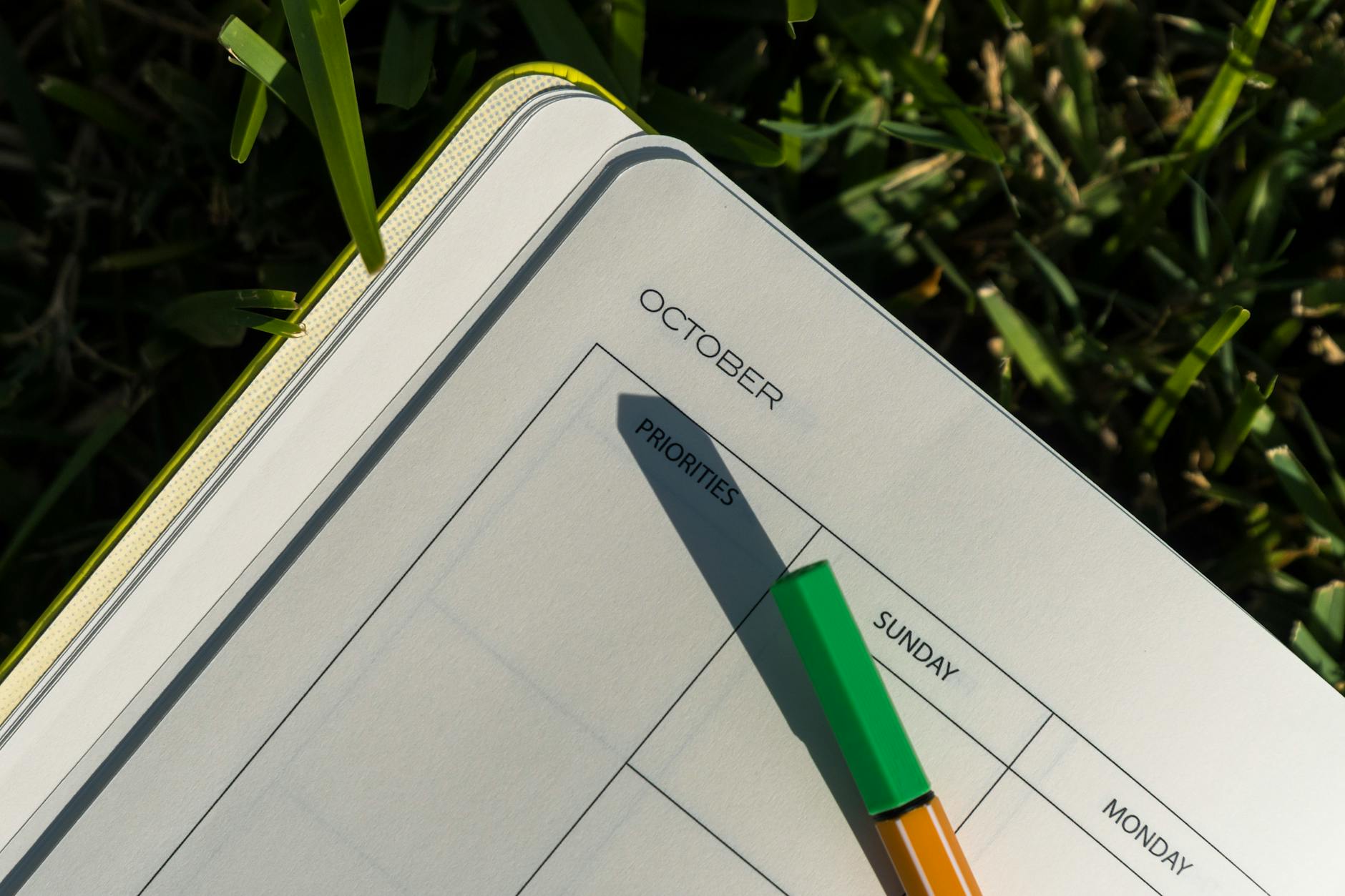
Full Focus Planner
A structured quarterly planner that ties your daily habits directly to your bigger goals — not just a to-do list.
View on Amazon →
Clever Fox Habit Tracker
A beautifully simple habit tracker journal with monthly grids — satisfying to fill in and easy to stay consistent with.
View on Amazon →How to build good habits: the step-by-step guide
Before we get to the product deep-dives, let's cover the actual mechanics of habit formation. These are the principles that consistently show up in the research — and in the lives of people who've genuinely changed their behavior long-term.
Step 1: Start embarrassingly small
This is where most people go wrong right out of the gate. They decide to "start running" and sign up for a 5K. They decide to "read more" and commit to 30 minutes a night. These are fine ambitions — but as starting points, they're too much too soon.
The brain treats habits as automatic responses to cues. For a behavior to become truly automatic, you need to repeat it consistently. And you can only repeat it consistently if the friction to do it is almost zero. So your starting point should feel almost laughably easy: two minutes of stretching, one page of a book, a single glass of water first thing in the morning.
James Clear calls this the "two-minute rule" in his book Atomic Habits — and it works because it removes the psychological resistance of getting started. Once you're doing the habit, it's easy to do a bit more. But that initial moment of starting is where people quit before they begin. Make the starting point so small it would feel silly not to do it.
Step 2: Attach your new habit to an existing one
One of the most reliable ways to make a new habit stick is to anchor it to something you already do reliably. This is called habit stacking. The formula looks like this: "After I [CURRENT HABIT], I will [NEW HABIT]."
For example:
- "After I pour my morning coffee, I will write three things I'm grateful for."
- "After I sit down at my desk, I will do two minutes of breathing exercises."
- "After I brush my teeth at night, I will read for ten minutes."
The existing habit acts as a reliable trigger. You don't need to remember to do the new thing — the old habit reminds you automatically. Over time, the two become linked, and the new behavior starts to feel just as natural as the one you've been doing for years. If you want to explore this idea more deeply, check out our article on how to practice gratitude daily — it covers habit stacking with morning routines in particular.
Step 3: Design your environment for success
Your environment shapes your behavior far more than your willpower does. If you want to eat more fruit, put a bowl of fruit on the counter. If you want to read before bed, put the book on your pillow. If you want to go to the gym in the morning, sleep in your workout clothes.
This sounds almost too simple, but it's grounded in solid behavioral science. We default to whatever is easiest in the moment. By making the desired behavior the path of least resistance, you stop relying on motivation — which is unreliable — and start relying on setup, which you can control.
The flip side also works: if you want to stop a habit, add friction to it. Want to scroll less before bed? Charge your phone in another room. Want to stop snacking in the evening? Don't keep snacks within arm's reach. You're not fighting yourself — you're just changing what's convenient.
Step 4: Track your progress visibly
There's something deeply satisfying about marking off a habit on a tracker. It creates a visual record of your streak — and once you have a few days in a row, you don't want to break it. This is sometimes called the "don't break the chain" method, popularized by Jerry Seinfeld, who apparently used it to write jokes every single day.
A simple habit tracker — whether it's a journal, an app, or just a calendar on your wall — gives you a tangible sense of progress. Progress is motivating. Motivation feeds consistency. Consistency builds the habit. The tracker closes the loop.
We'll look at a couple of excellent physical habit trackers below. But even a homemade calendar with an X for each completed day works perfectly well. The format matters less than the act of tracking.
Step 5: Give yourself an immediate reward
Habits that stick usually have one thing in common: they feel rewarding in the moment, not just eventually. The challenge with health habits in particular is that the reward is often delayed — you don't feel fitter after one run. You feel tired. The payoff comes weeks later.
To bridge this gap, attach an immediate reward to your new habit. Treat yourself to your favorite podcast only during your morning walk. Enjoy a cup of specialty tea only after your journaling session. Let the habit be the gateway to something you enjoy right now.
Over time, you may start to enjoy the habit itself — that's the goal. But in the early days, an immediate reward gives your brain a reason to repeat the behavior before it's had enough time to become automatic.
Step 6: Plan for imperfection — and recover fast
You will miss a day. That's not pessimism — it's just life. The difference between people who build lasting habits and people who don't isn't that the first group never slips. It's that they don't treat a single miss as a reason to quit.
The rule of thumb: never miss twice. One missed day is an accident. Two missed days is the beginning of a new (unwanted) habit. If you skip your morning meditation on Tuesday, you do it Wednesday — no matter what. The streak resets, and that's fine. The habit is still there.
This is where self-compassion becomes part of the strategy, not just a feel-good idea. Research consistently shows that people who treat themselves kindly after a failure are more likely to get back on track than those who beat themselves up. For more on the connection between kindness to yourself and everyday happiness, our article on how to wake up happy covers some useful morning mindset habits.
Step 7: Review and adjust regularly
Once a week, take five minutes to ask yourself: Which habits am I actually doing? Which ones are slipping? What's getting in the way? This kind of regular review keeps you honest without being punishing. It also helps you catch problems early — before a skipped day becomes a skipped week.
Monthly reviews are worth doing too. Are the habits you're building actually moving your life in the direction you want? Sometimes we work hard on a habit only to realize after a few months that it wasn't really the right one for us. Better to find that out at month one than month six.
Schedule your weekly habit review at the same time each week — Sunday evening works well for many people. Treat it like a five-minute appointment with yourself, not an optional extra. Pairing it with a ritual (a cup of tea, a comfortable chair) makes it something to look forward to rather than a chore.
1. Atomic Habits by James Clear — the habit book that actually changes behavior
Atomic Habits — James Clear
If you read one book about habits, make it this one. James Clear spent years distilling behavioral science research and real-world habit stories into something genuinely useful — not motivational fluff, not overcomplicated theory. Atomic Habits gives you a clear, repeatable system for building good habits and getting rid of bad ones.
The central idea is that small changes compound. A 1% improvement every day adds up to a massive transformation over a year. But Clear doesn't just give you the philosophy — he gives you the mechanics: the four laws of behavior change (make it obvious, make it attractive, make it easy, make it satisfying), habit stacking, temptation bundling, and the two-minute rule we mentioned earlier.
What makes the book stand out is how concrete and immediately actionable it is. You can read a chapter and implement something that day. The writing is clear and engaging without being preachy. Clear practices what he preaches — he built his own habits after a serious injury derailed his athletic career, and that personal grounding makes the book feel honest rather than theoretical.
Readers consistently describe it as one of the most practical self-help books they've read — the kind you underline heavily and return to. It's also one of our top picks in our roundup of the best self-help books of all time.
- Immediately actionable — clear steps, not just ideas
- Grounded in solid behavioral science, explained simply
- Covers both building new habits and breaking bad ones
- Engaging writing that doesn't feel like a textbook
- Great value — the ideas inside are worth far more than the cover price
- Some readers feel it could be shorter — there's some repetition
- Focused on individual habits, less on whole lifestyle design
2. Full Focus Planner — for people who want habits connected to real goals
Full Focus Planner
The Full Focus Planner is not your average daily planner. Designed by productivity author Michael Hyatt, it's built around a quarterly system that ties your daily habits and tasks directly to the goals you've set for the next 90 days. That connection matters more than it might seem: when you can see why a habit serves a bigger purpose, you're much more likely to keep doing it.
Each quarter, you set your most important goals. Each week, you identify the "big three" things you need to accomplish. Each day, you plan your morning rituals, daily tasks, and evening reflection. There's a dedicated section for tracking your daily habits with simple checkboxes — clean, uncluttered, and satisfying to use.
The paper quality is excellent, the layout is well thought through, and the compact but not cramped format makes it easy to carry. Many users report that this planner is the first one that actually got them to keep planning consistently — because the system makes you feel organized rather than overwhelmed.
If you're someone who likes to see the big picture alongside the daily details, the Full Focus Planner is worth the higher price. We also cover it in our comparison of the best planners for productivity and wellbeing.
- Connects daily habits to quarterly goals — gives habits real purpose
- High-quality paper, feels durable and premium
- Structured without being rigid — flexible enough for different lifestyles
- Built-in weekly and daily reflection prompts
- More expensive than most planners
- The system takes a little time to learn — not grab-and-go on day one
- Only covers one quarter — you need a new one every 90 days
3. Clever Fox Habit Tracker — simple, visual, and genuinely satisfying to use
Clever Fox Habit Tracker
If you're looking for something focused purely on tracking — without the goal-setting framework or the reading commitment — the Clever Fox Habit Tracker is a strong choice. It's a dedicated monthly habit journal with clean grid layouts, room for up to 10 habits per month, and a simple system that takes about 30 seconds a day to maintain.
Each monthly spread lets you list your habits down the left column and check them off day by day across the top. At the end of the month, you get a clear visual picture of your consistency — which habits you nailed, which ones need attention, and where the gaps appeared. There's also space for a monthly review and notes.
The spiral binding makes it flat to write on, the paper handles most pens without bleeding through, and the cover options are cheerful without being childish. It's a good fit for beginners who want to start simple, as well as experienced habit builders who find digital trackers too distracting.
Where it differs from the Full Focus Planner is in scope: this is just a tracker, not a full planning system. That's not a weakness — for many people, a single-purpose tool they actually use is better than a comprehensive system they abandon. The low friction makes it easy to pick up and maintain.
- Simple and fast to use — under a minute per day
- Visual monthly grids make streaks satisfying and obvious
- Good paper quality, lies flat when open
- Reasonably priced for what you get
- No goal-setting or planning sections — purely a tracker
- Limited to around 10 habits per month
How to choose the right habit-building tool: a practical buying guide
Not every tool is right for every person, and the "best" habit tracker is simply the one you'll actually use. A few things worth thinking through before you buy:
Are you a planner or a tracker? Some people need the broader structure of a planner — goals, priorities, daily schedules — and the habit tracking is one piece of that. Others just want a simple grid to mark off their habits each day. Be honest about which type you are. A complex system that goes unused is worth less than a simple notebook you fill in every morning.
Digital or paper? Apps like Habitica, Streaks, or even a basic notes app work well for people who are on their phones constantly anyway. But many people find that paper trackers create a stronger psychological reward — there's something about physically crossing off a box that a screen tap doesn't replicate. If you're undecided, start with paper. You can always switch.
How many habits are you tracking? Behavioral science is pretty consistent here: trying to build multiple habits simultaneously is much harder than focusing on one or two. If you're just starting out, pick the one habit that would make the biggest difference to your life and track that one first. Once it's automatic — which typically takes anywhere from 2 to 8 weeks — you can add another.
Budget. A habit tracker can be as cheap as a printed calendar or as expensive as a premium quarterly planner. The price doesn't determine effectiveness. Spend what makes sense for your situation, but don't let cost be a barrier — even a $2 notebook works if you actually use it.
Before buying any tool, spend a week manually tracking your habits with a simple piece of paper. If you're still doing it a week later, that's a good sign you'll get value from a proper tracker. If you forget about the paper entirely, no tool will fix that — focus on the habit system first.
Browse all options on Amazon →
Frequently asked questions about building good habits
How long does it really take to form a habit?
You've probably heard "21 days" — that's a popular figure, but it's not accurate. A well-known study from University College London found that on average, it takes about 66 days for a behavior to become automatic. But the range was huge: anywhere from 18 to 254 days, depending on the person and the habit. Simple habits (drinking a glass of water with lunch) form faster; complex ones (a daily 30-minute workout) take longer. The takeaway: don't expect automatic behavior after three weeks. Give yourself two to three months before judging whether something has stuck.
What should I do if I miss a day?
Get back on track the very next day, and don't make it a bigger deal than it is. One miss doesn't break a habit — two misses in a row starts to. Research by Dr. Kristin Neff on self-compassion shows that treating yourself kindly after a slip-up actually makes you more likely to recover and continue, not less. The voice that says "you've ruined it now" is lying to you. You haven't. Just do the habit tomorrow.
Should I try to build several habits at once, or focus on one?
Start with one. This runs counter to the "new year, new me" instinct to overhaul everything at once, but the research is pretty clear: each new habit you're building is drawing on the same pool of self-regulation resources. The more habits you're trying to establish simultaneously, the more likely each one is to fail. Pick the single habit that would make the most difference to your life right now. Build it until it's genuinely automatic, then add the next one.
What's the best habit to start with?
That depends on your life, but there are a few habits that tend to have outsized positive effects: consistent sleep and wake times, some form of daily movement (even a 10-minute walk), and a morning or evening reflection practice (journaling, gratitude, or just a few minutes of quiet). These habits tend to make everything else easier because they improve your energy, mood, and mental clarity. If you're not sure where to start, better sleep is often the highest-leverage first step — see our guide on how to sleep better at night for practical ideas.
Do I need a special app or journal to build habits, or can I just use my phone's notes?
You don't need anything special. The tool is just a trigger and a record — it matters far less than the habit itself. That said, many people find that a dedicated physical tracker adds a layer of intention that a notes app doesn't. There's also research suggesting that handwriting engages the brain differently than typing, which may strengthen memory and commitment. But if a notes app is what you'll actually use, use that. The best system is the one you stick with.
Building good habits comes down to starting small, anchoring new behaviors to existing routines, designing your environment to make the right choices easier, and tracking your progress visibly. The three tools that support this best: Atomic Habits for the mindset and framework, the Full Focus Planner for connecting habits to bigger goals, and the Clever Fox Habit Tracker for a simple, satisfying daily tracking system. Don't wait for the "right moment" — pick one habit, make it tiny, and start today.
What the Research Shows
The science of habit formation has a clear headline: habits form through repetition in a consistent context, and they take longer to lock in than the popular "21 days" myth suggests.
| Researcher | Institution | Key finding | Year |
|---|---|---|---|
| Phillippa Lally | University College London | It took an average of 66 days for a new behavior to become automatic, ranging from 18 to 254 days depending on the person and the habit's complexity | 2010 |
| Phillippa Lally & colleagues | University College London | Missing a single day did not measurably derail habit formation, and simple behaviors (like drinking water) automated faster than complex ones (like doing 50 sit-ups) | 2010 |
Phillippa Lally and her team at UCL followed 96 volunteers who chose a daily health behavior tied to a consistent cue and rated how automatic it felt over 12 weeks. The average time to reach peak automaticity was 66 days, but the range was enormous, which is why a fixed "number of days" target can mislead more than it helps.
Two findings are especially encouraging for habit-builders. First, automaticity followed a gradual curve rather than an on-off switch, so progress is steady even when it feels slow. Second, occasional slip-ups did not measurably impair the process, meaning one missed day is no reason to abandon a new routine.
Sources: Lally et al., European Journal of Social Psychology; British Psychological Society.
Frequently Asked Questions
How long does it take to Build Good Habits That Stick?
What are the most common mistakes when trying to Build Good Habits That Stick?
Is there scientific evidence that Build Good Habits That Stick works?
Can Build Good Habits That Stick help with anxiety or depression?
How do I get started with Build Good Habits That Stick today?
What if I don't see results immediately?
Weekly happiness in your inbox
One practical idea every week. No spam and no miracle claims — just clear advice you can assess for yourself.
No spam. Unsubscribe anytime.
Marcel Kupures
Founder & Editor
Founder and editor of Get A Happy Life. Research references are linked where they are used, and product comparisons rely on public product information unless hands-on testing is explicitly documented.
Last updated: June 25, 2026
Want more happiness science?
Browse all our guides on mindfulness, gratitude, sleep, and well-being.
Read more guides