

The best personal growth books include Atomic Habits by James Clear, The Power of Now by Eckhart Tolle, Mindset by Carol Dweck, and The 7 Habits of Highly Effective People by Stephen Covey. These books have transformed how millions of people think, feel, and act through practical frameworks and accessible guidance on habit-building, mindfulness, and personal values.
- Atomic Habits shows small changes compound over time
- The Power of Now addresses anxiety through presence
- Covers habits, mindfulness, psychology, purpose, and relationships
- Backed by science, millions of readers, and bestseller status
- Practical frameworks for beginners and experienced growth seekers
You picked up a book once — maybe in a rough patch, maybe out of pure curiosity — and it quietly changed the way you see yourself. That's the strange power of a good personal growth book. It doesn't lecture you. It meets you where you are, hands you a new lens, and sends you back into your life slightly different from how you arrived.
Related reading: How to Build Self-Confidence: A Science-Backed Guide
The problem is that the personal development shelf is enormous. For every book that genuinely shifts your thinking, there are twenty that repeat the same tired advice in slightly different packaging. So this guide cuts through the noise. Below you'll find ten books that have genuinely transformed how millions of people think, feel, and act — backed by reader reviews, real-world impact, and years of staying power on bestseller lists.
Whether you're looking for your first personal growth read or your twentieth, you'll find something here worth putting on your nightstand. Let's get into it.
Quick overview: the best books for personal growth at a glance

Atomic Habits — James Clear
The most practical system for building good habits and breaking bad ones — backed by science.
View on Amazon →
The Power of Now — Eckhart Tolle
A deep, accessible guide to living in the present moment and finding peace from within.
View on Amazon →
Mindset — Carol S. Dweck
Stanford psychologist Carol Dweck explains why believing you can improve changes everything.
View on Amazon →
Man's Search for Meaning — Viktor Frankl
A psychiatrist's account of surviving the Holocaust — and what it teaches us about finding purpose.
View on Amazon →
The 7 Habits of Highly Effective People — Stephen Covey
A timeless framework for aligning your actions with your values — still as sharp as ever after 35 years.
View on Amazon →
Daring Greatly — Brené Brown
Brené Brown makes the case for vulnerability as a source of strength — not weakness.
View on Amazon →
The Subtle Art of Not Giving a F*ck — Mark Manson
A refreshingly blunt antidote to toxic positivity — about choosing what actually matters to you.
View on Amazon →
Big Magic — Elizabeth Gilbert
An invitation to live a creative life — and stop waiting for permission to pursue what lights you up.
View on Amazon →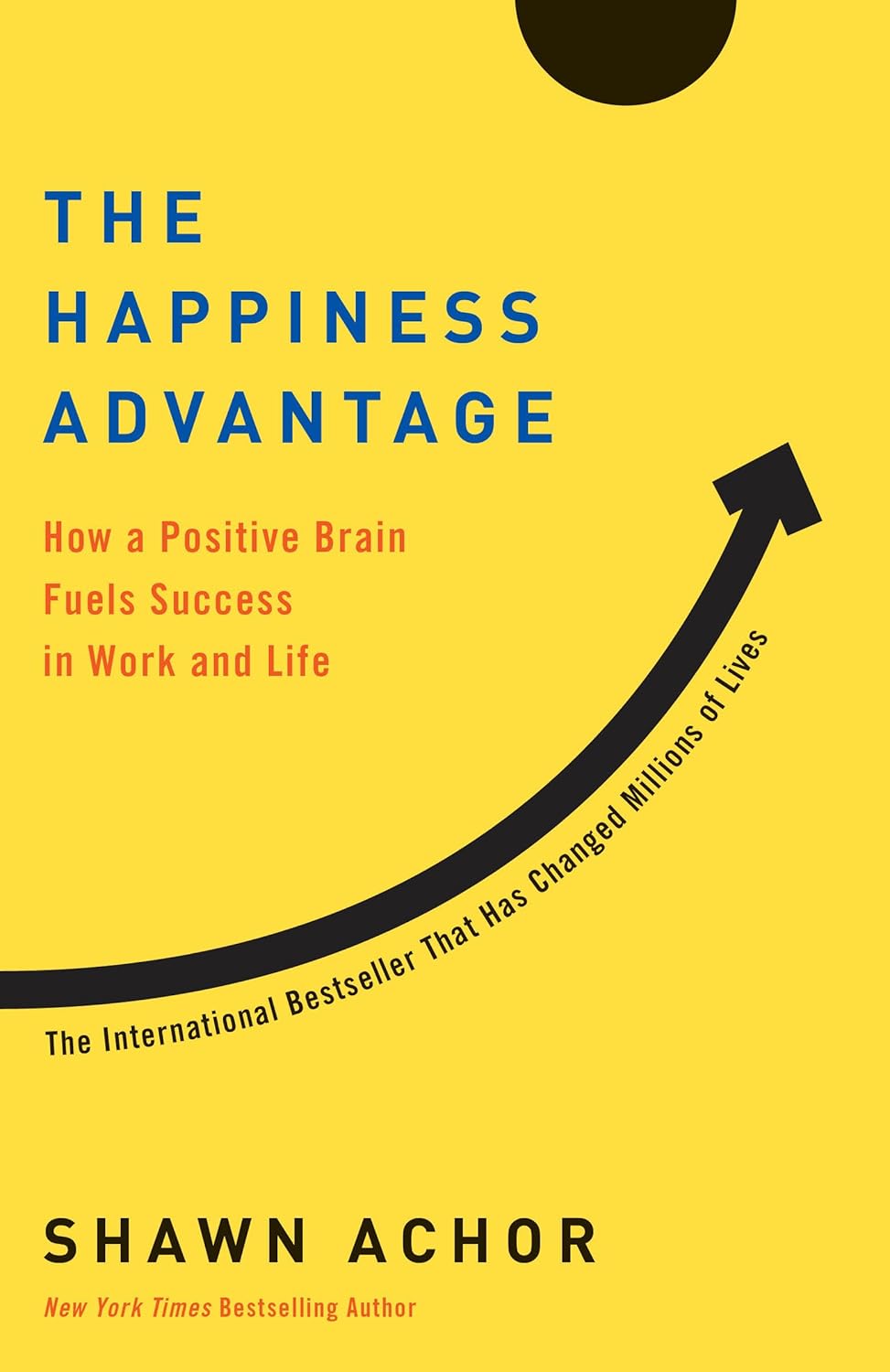
The Happiness Advantage — Shawn Achor
Harvard-backed research showing that happiness fuels success — not the other way around.
View on Amazon →
How to Win Friends and Influence People — Dale Carnegie
The original relationship bible — still painfully relevant nearly ninety years after it was written.
View on Amazon →1. Atomic Habits by James Clear — the small changes that produce big results
Atomic Habits
If there's one book on this list that people press into the hands of everyone they care about, it's Atomic Habits. James Clear spent years studying the science of behaviour change and distilled it into one surprisingly simple idea: you don't rise to the level of your goals, you fall to the level of your systems. The book is about building those systems — one tiny, almost embarrassingly small step at a time.
Clear's framework — the four laws of behaviour change — is easy to remember and immediately usable. Make it obvious, make it attractive, make it easy, make it satisfying. He walks you through habit stacking, environment design, identity-based habits, and the role of immediate rewards. None of this is hand-wavy philosophy. It's grounded in real psychology research and illustrated with stories from athletes, artists, and surgeons who used exactly these techniques to perform at their best.
What separates Atomic Habits from other self-help books is how honest it is about the unglamorous reality of change. James Clear doesn't promise you'll feel motivated. He tells you that motivation is unreliable and design is far more powerful. If you want to read more, put the book on your pillow. If you want to eat less junk food, stop buying it. Small, structural adjustments compound into big outcomes over time — that's the whole argument, and it's hard to argue with.
For anyone who has tried and failed to build better habits — and felt bad about themselves for it — this book is a relief. It shifts the blame from willpower to systems, which is both scientifically accurate and enormously freeing. If you're going to read just one book from this list, make it this one. It pairs beautifully with our guide on how to build good habits that actually stick.
- Practical, immediately applicable framework
- Grounded in solid behavioural science
- Honest about the limits of motivation and willpower
- Well-paced and very readable
- Some readers want more depth on psychology theory
- Overlaps with earlier books like The Power of Habit for those already familiar
2. The Power of Now by Eckhart Tolle — finding peace in the present moment
The Power of Now
Some books improve your habits. The Power of Now tries to change the way your mind works altogether. Eckhart Tolle's central message is simple: most human suffering comes from living in the past (regret, guilt, nostalgia) or in the future (anxiety, worry, planning). The only place where life actually happens — where peace is possible — is right now.
Tolle writes from personal experience. He describes a profound shift he went through in his late twenties, moving from near-suicidal depression to a state of deep stillness. The book is his attempt to explain what that shift felt like and how readers can access something similar in their own lives. It's structured as a dialogue between Tolle and an unnamed questioner, which makes dense spiritual ideas feel surprisingly approachable.
Not everyone will resonate with the style. Tolle leans into spiritual language — the ego, the pain body, consciousness — that can feel unfamiliar at first. But readers who stick with it consistently report that something clicks. Many describe re-reading certain passages during anxious periods and finding immediate relief. In that sense, it functions less like a book you read once and more like a resource you return to.
If you've ever tried meditation and found your mind too loud to settle, this book explains exactly why that happens — and what to do instead. It's a companion to any mindfulness practice, not a replacement for one. Over 3 million copies sold in North America alone suggest it's doing something right.
- Addresses the root cause of anxiety and restlessness
- Accessible spiritual philosophy without religious dogma
- Useful for meditation practitioners and complete beginners alike
- Spiritual vocabulary can feel foreign to some readers
- More contemplative than action-oriented — not for readers looking for quick tips
3. Mindset by Carol S. Dweck — the psychology of why you can always grow
Mindset: The New Psychology of Success
Carol Dweck's research at Stanford produced one of the most influential ideas in modern psychology: the growth mindset. People with a fixed mindset believe their abilities are set in stone — you're either talented or you're not. People with a growth mindset believe abilities can be developed through effort, strategy, and feedback. The difference in outcomes, across every domain Dweck studied, was staggering.
Mindset is the popular version of that research, and it's a genuinely important read. Dweck walks through how fixed versus growth thinking shows up in education, sports, business, and relationships — with vivid examples from Marva Collins's classroom to the careers of Michael Jordan and Jack Welch. She also tackles something most books on this topic avoid: how parents and teachers can inadvertently cultivate a fixed mindset in children by praising intelligence instead of effort.
Reading this book has a way of making you suddenly notice your own fixed-mindset voice — the one that says "I'm just not a morning person" or "I'm terrible at numbers." Dweck doesn't pretend that voice goes away. She teaches you to hear it, name it, and then choose a different response. That alone is worth the price of the book.
The concepts here apply equally to professionals navigating career setbacks, athletes working through plateaus, and anyone who has ever talked themselves out of trying something new because they were afraid of looking stupid. The research is solid. The stories are compelling. And the central idea is one you'll carry with you for years.
- Deeply researched, credible scientific foundation
- Applies to parenting, leadership, sports, and personal life
- Changes how you interpret failure and setbacks
- Some chapters (particularly the business sections) feel repetitive
- The core idea is fully delivered by midway through — later chapters reinforce rather than deepen
4. Man's Search for Meaning by Viktor Frankl — finding purpose in the hardest conditions
Man's Search for Meaning
This is not a comfortable read. It is, however, one of the most important books ever written. Viktor Frankl was a psychiatrist who survived Auschwitz, Dachau, and two other Nazi concentration camps during World War II. Man's Search for Meaning is his account of that experience — and the psychological theory he developed from it: logotherapy, the idea that finding meaning is the primary human motivation.
Frankl observed that the prisoners most likely to survive weren't necessarily the physically strongest. They were the ones who held onto a sense of purpose — a manuscript to finish, a child to return to, a truth to bear witness to. His conclusion: everything can be taken from a person except the freedom to choose how they respond to any given situation. That idea, as old as Stoicism but grounded here in unbearable lived experience, carries a weight no motivational poster ever could.
The second half of the book introduces logotherapy in more clinical terms. Some readers find this section drier, but it grounds the memoir in a coherent framework that's stood up well to decades of psychological research. Concepts like the existential vacuum and the Sunday neurosis — a vague restlessness people feel when they have time but no sense of purpose — feel more relevant now than when Frankl wrote them in 1946.
At under 200 pages, this is a short book. But it's one many readers describe as the most significant they've ever encountered. If you've been feeling adrift or purposeless, it cuts right to the heart of why — and what to do about it.
- Unmatched depth and moral weight
- Short but transformative — most readers finish in one sitting
- Directly addresses the search for purpose and meaning
- Emotionally heavy — not ideal if you're in a fragile state
- The logotherapy section is more academic in tone
5. The 7 Habits of Highly Effective People by Stephen Covey — a framework that still holds up
The 7 Habits of Highly Effective People
Published in 1989, Stephen Covey's masterwork has sold over 40 million copies worldwide and remains a staple of business schools, leadership programmes, and personal development courses. The reason it's lasted this long is simple: Covey didn't write a trends book. He wrote about principles — timeless qualities like integrity, proactivity, and mutual benefit — that remain relevant regardless of what decade you're reading in.
The seven habits move from independence to interdependence: be proactive, begin with the end in mind, put first things first, think win-win, seek first to understand, synergise, and sharpen the saw. Each habit builds on the last, forming a coherent philosophy of how to live a life that's aligned with your values rather than just your inbox. Covey's distinction between the urgent and the important — captured in the now-famous time management matrix — is alone worth the read.
Yes, some sections feel dated. The language is occasionally corporate, and the examples skew toward a particular era of American business culture. But the underlying ideas are sound, and readers who approach it with an open mind consistently report that the habits genuinely changed their daily behaviour. Covey's concept of "beginning with the end in mind" — imagining what you want people to say about you at your own funeral — is one of the most effective exercises in personal clarity ever put to paper.
- Comprehensive, integrated framework rather than isolated tips
- Deeply principled — not trend-dependent
- 40+ million readers can't all be wrong
- Some passages feel dated in tone
- Long and dense — takes commitment to finish
6. Daring Greatly by Brené Brown — why vulnerability is your greatest strength
Daring Greatly
Brené Brown spent over a decade researching shame, vulnerability, and human connection before she gave the TED Talk that changed her life — and the lives of millions of viewers. Daring Greatly is the full version of that research, expanded into a detailed and often deeply moving book about what it means to show up fully in your own life.
Brown's central argument is that vulnerability — the willingness to be seen, to take risks without guarantees, to let yourself be known — is not a weakness. It's the birthplace of connection, creativity, and belonging. She traces how shame (the fear of being unworthy of connection) keeps people armoured and disengaged, and how the antidote isn't toughness but wholehearted living.
What makes this book stand out from vague "be yourself" advice is the research behind it. Brown interviewed thousands of people over years, and the patterns she identified — the shame triggers, the armour people wear, the difference between empathy and sympathy — are precise enough to be genuinely useful. Reading it, most people recognise themselves in multiple places.
The book touches on parenting, leadership, schools, and intimate relationships, making it unusually wide in its application. If you've ever held yourself back from something because you were afraid of failing in public, or avoided closeness because intimacy felt risky, this book speaks directly to you. It's also a warm companion to thinking about why social connection matters so much for our happiness.
- Research-backed but warmly written
- Covers relationships, parenting, work, and self-worth
- Genuinely changes how you think about shame and fear
- Some sections repeat ideas covered in Brown's earlier books
- More emotionally focused — readers wanting tactical advice may prefer other picks
7. The Subtle Art of Not Giving a F*ck by Mark Manson — choosing your struggles wisely
The Subtle Art of Not Giving a F*ck
Mark Manson's best-seller arrived at exactly the right moment — when most people had grown deeply tired of being told to be positive, to hustle harder, and to believe in themselves at all times. The book is a deliberate counterweight to that culture. Its central argument: you have a limited amount of energy to care about things. Stop wasting it on things that don't matter. Choose your struggles carefully, because the quality of your life is determined by the quality of your problems — not the absence of them.
Manson writes with a bluntness that is either refreshing or jarring depending on your tolerance for profanity. But underneath the provocative packaging is a surprisingly thoughtful set of ideas rooted in Stoic philosophy, existentialism, and modern psychology. He argues that seeking comfort and certainty leads to a smaller life, that most of our values are inherited rather than chosen, and that taking responsibility for your own experience — even when things aren't your fault — is the only path to genuine agency.
The book is at its best when it punctures the illusion that happiness means the absence of problems. It's at its weakest in the later chapters, where some readers feel the philosophical depth thins out. But for a first encounter with ideas like acceptance, chosen suffering, and values clarification, this is as entertaining a delivery vehicle as you'll find.
- Entertaining and easy to read in one or two sittings
- A useful antidote to toxic positivity and hustle culture
- Introduces Stoic and existentialist ideas accessibly
- Provocative tone won't suit everyone
- Later chapters less developed than the opening ones
8. Big Magic by Elizabeth Gilbert — permission to live creatively
Big Magic: Creative Living Beyond Fear
Most personal growth books are about efficiency, habits, or mindset. Big Magic is about something rarer and harder to pin down: the courage to live creatively, regardless of whether your creativity pays the bills. Elizabeth Gilbert — best known for Eat Pray Love — brings all the warmth and wit of a brilliant storyteller to the question of what it means to live a life driven by curiosity rather than fear.
Her argument is that creativity isn't a special gift reserved for artists. It's a way of engaging with life — asking questions, following interests, making things — that every person is capable of. What stops most people isn't lack of talent. It's fear. Fear of failure, of judgment, of not being good enough. Gilbert treats fear with neither contempt nor excessive analysis. She acknowledges it, includes it, and gently insists that you can move forward anyway.
The book is structured into six sections — Courage, Enchantment, Permission, Persistence, Trust, and Divinity — each of which takes a different angle on what it means to do creative work. Gilbert's voice is warm and funny and disarmingly honest about her own struggles and missteps. Readers who have put off a creative project for years — a book, a garden, a course, a business — often describe finishing this book and immediately starting the thing they'd been postponing.
- Beautifully written and joyful to read
- Addresses creative fear without dismissing or catastrophising it
- Motivating without being preachy
- Some spiritual ideas (ideas as living entities) won't resonate with everyone
- Light on structured frameworks compared to other books on this list
9. The Happiness Advantage by Shawn Achor — why happiness comes before success
The Happiness Advantage
Shawn Achor spent over a decade at Harvard researching positive psychology before writing this book. His main finding: the formula most people use — "I'll be happy when I succeed" — is backwards. Happiness doesn't follow success. It precedes it. A positive brain is demonstrably more creative, more energetic, more resilient, and more productive than a neutral or negative one. That's not motivational fluff. It's the outcome of rigorous scientific research, and Achor explains the mechanisms clearly.
The book presents seven principles for cultivating a psychological edge — including the Tetris Effect (training your brain to scan for positives), the Zorro Circle (regaining control by focusing on small, manageable wins), and the 20-second rule (lowering the activation energy for habits you want to keep). Each principle is immediately applicable, and Achor backs each one with studies from Harvard, positive psychology labs, and real-world business case studies.
What's unusual about this book is its tone. Achor is a genuinely funny writer — his TED Talk is one of the most-watched of all time — and the research is delivered with warmth rather than academic distance. Readers working in high-pressure environments, from hospitals to investment banks, describe the book as reframing their entire relationship with performance. And crucially, the practical takeaways are simple enough to actually use on a Monday morning.
- Strong scientific foundations throughout
- Funny, warm, and accessible writing
- Seven actionable principles that are easy to remember
- Business and workplace focus may not suit all readers
- Some concepts overlap with other positive psychology titles
10. How to Win Friends and Influence People by Dale Carnegie — the relationship classic
How to Win Friends and Influence People
First published in 1936, Dale Carnegie's book has never gone out of print and has sold over 30 million copies. The title sounds manipulative to modern ears, but the book is really about something simpler: how to treat people in a way that genuinely respects their perspective and makes them feel valued. That turns out to be both rare and enormously effective.
Carnegie's principles — remember people's names, become genuinely interested in others, acknowledge mistakes quickly, let others feel the idea was theirs — are less about tactics than about a fundamental shift in orientation. Instead of thinking about what you want from an interaction, you think about what the other person needs. That reframe sounds minor. In practice, it changes everything from job interviews to difficult family conversations.
Yes, the prose is dated. The examples come from another era, and some cultural attitudes embedded in the text haven't aged well. But the core insights are based on something that doesn't change: human beings want to feel understood, appreciated, and respected. Carnegie built his entire system around that simple truth, and the book holds up because the truth holds up.
For anyone who has ever struggled with difficult conversations, networking, leadership, or just feeling comfortable in social situations, this is a surprisingly useful starting point. It also pairs naturally with thinking about how friendship and social bonds support our overall wellbeing.
- Practical and immediately applicable
- Short, readable, and full of memorable examples
- 90 years of proof that the principles work
- Some passages feel dated in tone and cultural framing
- Can read as manipulative if approached in bad faith — that's a you problem, not a book problem
How to choose the right personal growth book: a practical buying guide
With so many books to choose from, the selection itself can become a source of paralysis. Here's a simple framework to help you pick the right starting point.
What do you actually want to change? Books about habits (Atomic Habits) won't help much if your real problem is emotional avoidance (Daring Greatly). Books about purpose (Man's Search for Meaning) won't answer questions about productivity (The 7 Habits). Being specific about what's bothering you right now — and choosing a book that addresses that directly — makes a real difference to how much you get out of it.
Consider how much theory versus practice you want. Mindset and The Happiness Advantage lean more heavily on research and explanation. Atomic Habits and The 7 Habits are more framework-driven and action-oriented. Neither approach is better — it depends on whether you're trying to understand something or do something differently right away.
Check your reading history. If you've read ten personal development books already, titles like Atomic Habits or The Subtle Art may feel like familiar territory. In that case, reach for something harder: Man's Search for Meaning, The Power of Now, or Big Magic. These are books that ask more of you — and tend to give more in return.
Price and format. Most of these titles are available in paperback for under $15 and on Kindle for less. Audiobooks are a great option if you have a commute or regular walks — several of these, including Big Magic and The Happiness Advantage, are narrated by the authors, which adds a lot.
Don't try to read all ten books at once. Pick one that speaks to where you are right now, read it actively (take notes, underline, reflect), and give yourself two to three weeks to try one idea from it before picking up the next one. That approach will do more for you than racing through a stack of titles and retaining nothing.
Frequently asked questions about books for personal growth
What is the single best book for personal growth if you can only read one?
If we had to pick just one, it would be Atomic Habits by James Clear. It's practical, well-researched, immediately applicable, and addresses the mechanics of behaviour change that underpin almost every other area of personal development. Whatever else you want to improve — health, relationships, career, creativity — building better habits will help. Start there.
Are personal growth books actually useful, or is it mostly empty inspiration?
Quality varies enormously. There are books in this genre that are genuinely backed by decades of rigorous research (Mindset, The Happiness Advantage, Man's Search for Meaning) and books that are mostly anecdote and enthusiasm. The titles on this list all have substance behind them — real research, real frameworks, real reader impact over many years. Reading critically and applying at least one concrete idea from each book makes all the difference between inspiration and actual change.
How long does it take to see results from reading personal growth books?
It depends on the book and how you use it. Some ideas produce immediate shifts in perspective — you put the book down differently than you picked it up. Others, like building systems from Atomic Habits, produce visible results over weeks and months of consistent application. The books that tend to have the most lasting impact are the ones you return to — reading the same passage in a different season of life and finding it means something new. Don't rush through them. Slow reading with active reflection beats fast consumption every time.
Are these books suitable for teenagers and young adults?
Several of them absolutely are. Atomic Habits, Mindset, and The Subtle Art of Not Giving a F*ck are all widely read and recommended for younger readers — the last one explicitly addresses values and identity questions that are particularly resonant in young adulthood. Man's Search for Meaning is commonly assigned in high school and college courses. The 7 Habits has a separate Young Adults edition if the original feels too corporate.
Can I listen to these as audiobooks?
Yes — all ten are available as audiobooks on Audible and other platforms. Big Magic (narrated by Elizabeth Gilbert), The Happiness Advantage (narrated by Shawn Achor), and Daring Greatly (narrated by Brené Brown) are particularly recommended in audio format, as the authors bring the warmth of their live talks to the narration. Atomic Habits is also well-narrated. Man's Search for Meaning is available in a powerful audio edition that many listeners find more affecting than the print version.
For most people, Atomic Habits is the best starting point — practical, science-backed, and immediately useful for building the behaviours that support every other area of growth. If you're grappling with anxiety or restlessness, The Power of Now addresses the root. If you need a reminder of what actually matters, there is nothing quite like Man's Search for Meaning. Browse all options on Amazon →
Related Reads
Weekly happiness in your inbox
One practical idea every week. No spam and no miracle claims, just clear advice you can assess for yourself.
No spam. Unsubscribe anytime.
Marcel Kupures
Founder & Editor
Founder and editor of Get A Happy Life. Research references are linked where they are used, and product comparisons rely on public product information unless hands-on testing is explicitly documented.
Last updated: July 17, 2026
Want more happiness science?
Browse all our guides on mindfulness, gratitude, sleep, and well-being.
Read more guides