Research strongly suggests minimalism does make you happier, but only when it is a voluntary, values-based choice. Studies link household clutter to elevated stress hormones and higher rates of depression and fatigue. Choosing to own less is associated with greater wellbeing, more autonomy, and stronger relationships — while being forced into deprivation produces no such benefit.
- Clutter raises cortisol and increases stress hormones
- Voluntary simplicity improves wellbeing and relationships
- Materialism correlates with lower life satisfaction
- Unresolved clutter drains focus and mental energy
- Minimalism works best as a values-based choice
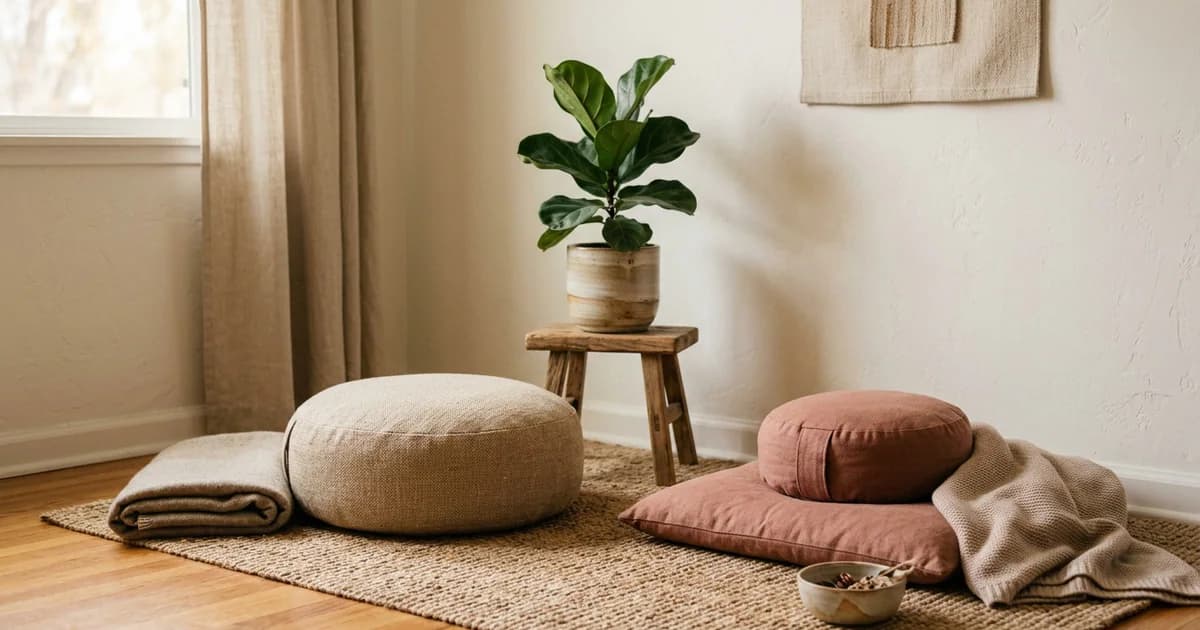
You've probably felt it at some point — that vague sense of suffocation in a cluttered room, or the unexpected lightness that comes after clearing out a drawer. Maybe you've scrolled past someone's minimal white apartment on Instagram and thought, why does that look so peaceful? There's a reason that feeling is so universal. And it turns out, science has a lot to say about it.
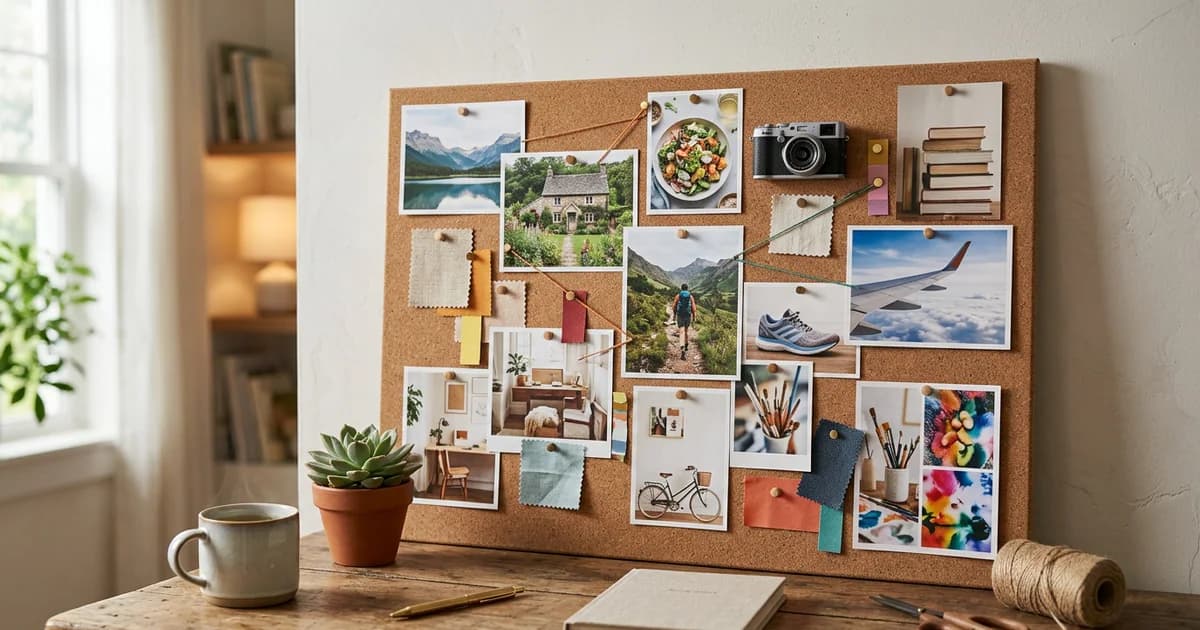
Minimalism — intentionally owning and doing less — has become one of the most talked-about lifestyle philosophies of the past decade. But beyond the aesthetic, beyond the Pinterest boards and the capsule wardrobes, there's a real question worth asking: does minimalism actually make you happier? Or is it just another wellness trend dressed up in clean lines?
The research is more interesting than you might expect. Studies in positive psychology, neuroscience, and behavioral economics all point in a consistent direction — though the picture is more nuanced than "own less, feel better." In this article, we'll walk through what the science actually says, what minimalism does and doesn't fix, and which books are genuinely worth reading if you want to go deeper. Let's start with a quick look at the best reads on the topic.
Quick overview: the best minimalism books to start your journey
Goodbye, Things — Fumio Sasaki
A deeply personal and research-backed journey from extreme clutter to radical simplicity — one of the most honest minimalism books written.
View on Amazon →The Joy of Less — Francine Jay
A room-by-room practical guide to decluttering that stays focused on why less stuff equals more freedom and headspace.
View on Amazon →Decluttering at the Speed of Life — Dana K. White
Grounded, funny, and refreshingly free of perfectionism — the best book for people who've tried and failed to declutter before.
View on Amazon →What does the research actually say about minimalism and happiness?
Before we look at specific books, it's worth spending time on the science — because the evidence is genuinely compelling, and it helps you understand why minimalism tends to work when people actually commit to it.
A landmark study by UCLA's Center on Everyday Lives of Families found that the density of objects in a home was directly associated with elevated cortisol levels in women. More clutter, more stress hormones. The relationship between a chaotic environment and a stressed nervous system is not metaphorical — it's measurable. Our brains are constantly processing visual information, and a cluttered space forces the prefrontal cortex to work harder to filter out noise. Over time, that's exhausting in a very physical way.
Research published in the journal Personality and Social Psychology Bulletin found that people who described their homes using language like "cluttered" or "full of unfinished projects" had higher depression and fatigue levels throughout the day compared to those who described their homes as "restful" or "restorative." The effect held even after controlling for other lifestyle factors.
On the flip side, a 2010 study by Ryan and Deci — the researchers behind Self-Determination Theory — found that voluntary simplicity (choosing to own and consume less) was associated with greater wellbeing, more autonomy, and stronger relationships. The word "voluntary" is doing a lot of work there. Forced poverty or deprivation doesn't produce the same effect. The happiness benefit comes specifically from choosing less, not from having less imposed on you.
There's also strong research linking materialism to lower wellbeing. Tim Kasser, a psychologist at Knox College who has spent decades studying the psychology of money and materialism, found consistently that people who place high value on wealth, image, and possessions report lower satisfaction with life, worse relationships, and more anxiety. This doesn't mean owning nice things is bad — it means organizing your life around acquiring them tends to backfire.
One more finding worth knowing: a concept called "attention residue," studied by Sophie Leroy at the University of Washington, shows that unfinished tasks and unresolved clutter take up mental bandwidth even when we're not actively thinking about them. A pile of unsorted papers, a garage full of things you've been meaning to deal with — these create a background hum of cognitive load that chips away at focus and mood. Clearing that up doesn't just tidy a room. It frees up working memory.
So the short answer to "does minimalism make you happier?" is: the evidence strongly suggests yes — but only when it's approached as a values-based choice, not a competition to own the least amount of stuff possible.
1. Goodbye, Things by Fumio Sasaki — the honest minimalism memoir
Goodbye, Things
Fumio Sasaki was, by his own admission, a mess. An editor living in Tokyo, he owned hundreds of books he'd never read, mountains of DVDs, sports equipment he never used, and a guitar he'd convinced himself he'd eventually learn. His apartment was so stuffed that he could barely move through it. And he was, beneath the accumulation, profoundly unhappy.
What makes Goodbye, Things so different from most minimalism books is the honesty. Sasaki doesn't romanticize the process or sell a fantasy. He describes the psychological reasons we hold on to things — identity, fear of regret, the sunk cost fallacy — with the kind of clarity that makes you feel understood, not lectured. He went on to get rid of roughly 95% of his possessions, and the book is his account of what changed as a result.
The happiness connection is explicit and researched. Sasaki draws on positive psychology, Buddhist philosophy, and Stoicism to explain why detachment from objects doesn't lead to emptiness — it leads to presence. When you're not managing, organizing, and worrying about your stuff, you have more energy for the things that actually generate lasting happiness: relationships, experiences, growth, and being genuinely useful to others.
The book includes 55 practical tips for letting go, but these are grounded in philosophy rather than presented as arbitrary rules. It's also beautifully written — translated from Japanese with a lightness that suits the subject matter. If you read one book on minimalism, this is the one. It doesn't just tell you to own less; it makes you want to, which is an entirely different thing.
Readers consistently report feeling lighter just from reading it — before they've cleared a single shelf. That's the power of a genuinely good argument: it shifts how you see things, not just what you do with them. If you're interested in books that fundamentally change how you think about self-improvement, you might also enjoy our guide to the best self-help books of all time.
- Deeply personal and relatable — reads like a memoir, not a manual
- Grounded in real psychological research and philosophy
- 55 concrete tips that actually make sense
- Beautifully written and easy to read in one sitting
- Some readers find Sasaki's level of minimalism extreme or unrealistic
- Less practical for families with children or shared households
2. The Joy of Less by Francine Jay — the practical room-by-room guide
The Joy of Less
Where Sasaki's book is about the why, Francine Jay's The Joy of Less is unapologetically about the how. Jay — who writes under the name "Miss Minimalist" — has been writing about simple living for over a decade, and this book distills her method into a clear, room-by-room framework she calls STREAMLINE.
The STREAMLINE method walks you through each space in your home with a structured approach: Start Over (imagine the room empty), Trash/Treasure/Transfer, Reason for each item, Everything in its place, All surfaces clear, Modules, Limits, If one comes in one goes out, Narrow it down, and Everyday maintenance. It sounds methodical because it is — and that turns out to be exactly what most people need when they're overwhelmed by where to start.
What Jay does well is keep the emotional undercurrent alive throughout the practical guidance. She returns again and again to the question of what you're actually gaining — time, freedom, mental clarity, the ability to enjoy your space rather than just manage it. The happiness argument isn't abstract here; it's woven into specific scenarios that feel true to life. She writes about the relief of knowing where everything is, the ease of cleaning a room that has room in it, the way a simpler home creates space for a richer inner life.
The book covers every room in the house including often-neglected spaces like the garage, storage areas, and digital life. Jay also addresses the social friction that sometimes comes with minimalism — dealing with family members who don't share your inclination toward less, navigating gifts, and handling sentimental items with kindness rather than cold efficiency.
For anyone who has read an inspiring minimalism book but then stood frozen in front of their closet not knowing what to do next, The Joy of Less is the practical follow-up you need. It pairs beautifully with Sasaki's book — read one for motivation, the other for method.
Start with the room that bothers you most — not the easiest one. Research on habit formation shows that early wins in high-stakes areas produce stronger motivation to continue. Clearing your bedroom first, for example, can immediately improve your sleep and morning mood.
- Clear, repeatable system that works across every room
- Covers digital clutter as well as physical
- Warm and encouraging tone — not preachy
- Addresses shared households and family dynamics
- Less focus on the psychological "why" compared to other books
- Some readers find the STREAMLINE acronym a bit forced
3. Decluttering at the Speed of Life by Dana K. White — for real people with real messes
Decluttering at the Speed of Life
Dana K. White started her blog "A Slob Comes Clean" in 2009 as a form of personal accountability — she was, by her own description, a slob who desperately wanted to not be one anymore. Years later, she's one of the most trusted voices in decluttering precisely because she's never pretended to be naturally tidy. Decluttering at the Speed of Life is her second book, and it's arguably her best.
The central insight of the book is that most decluttering advice fails because it assumes you have unlimited time and energy to do it perfectly. White's approach is almost confrontationally realistic: you don't need to find the perfect home for every item before you get rid of it. You don't need to wait until you have a whole weekend free. You can make meaningful progress in fifteen minutes, in the middle of an ordinary Tuesday, without a system, without labeled bins, and without Instagram-worthy results.
White introduces the concept of the "container principle" — every category of stuff has a natural container (a drawer, a shelf, a cupboard), and when that container is full, something has to leave before something new can come in. This simple mental model cuts through the paralysis that most declutterers feel and gives a clear answer to the question: do I keep this or not? If there's room, keep it. If there isn't, one of them goes. That's it.
The happiness angle in this book is quieter but real. White writes about what it actually feels like to live in a manageable home — not a magazine-ready one, just one that doesn't make you anxious when you walk through the door. She talks about the mental relief of surfaces you can actually clean, the confidence that comes from inviting someone over without panic, and the particular freedom of not having to think about your stuff all the time.
For people who've tried Marie Kondo and felt defeated, or who own homes rather than minimalist studios, or who live with other people who don't share their decluttering ambitions, this book is a breath of fresh air. It's also genuinely funny in a way that makes the topic feel less heavy than it sometimes does. Building better habits around your environment connects closely to broader wellbeing — for more on that, see our article on how to build good habits that stick.
- Highest-rated of the three books — and deserves it
- Works for real-life situations: families, busy schedules, shared spaces
- The "container principle" is immediately usable and genuinely clarifying
- Funny, honest, and free of perfectionism
- Less philosophical depth than Sasaki's book
- Focuses more on decluttering than on broader minimalist lifestyle
The limits of minimalism: what it won't fix
The research on minimalism and happiness is genuine, but it's worth being honest about what minimalism can and can't do. A clean home won't cure depression. Getting rid of half your wardrobe won't repair a broken relationship or give your life meaning it was previously missing. Minimalism is an environmental intervention — it changes the conditions you live in, and those conditions do affect your mood, focus, and stress levels. But it works best as part of a broader approach to wellbeing, not as a silver bullet.
There's also a risk of minimalism becoming its own form of consumption — a new identity to perform, new aesthetically curated products to buy, new rules to follow and feel guilty about breaking. That's the opposite of what the research supports. The benefit comes from simplicity and intentionality, not from hitting a target number of possessions or achieving a particular aesthetic.
The happiest minimalists in the research tend to share a common thread: they're clear on what they value, and they've structured their environment to support those values. That clarity — not the empty shelf — is where the wellbeing comes from. Practices like daily gratitude work similarly: they don't change your circumstances, they change how you relate to them.
How to choose the right minimalism book: a practical buying guide
With a wave of minimalism books published in the last ten years, it can be hard to know which ones are actually worth your time. Here's what to look for — and what to avoid.
Start with your motivation. If you're primarily overwhelmed by clutter and want a workable system, start with Dana K. White or Francine Jay. If you want to understand why the stuff bothers you in the first place and shift your whole relationship with ownership, start with Fumio Sasaki. If you're somewhere in the middle — intellectually curious but also practically stuck — any of the three will move you forward.
Be skeptical of books that promise dramatic transformation. The research supports gradual, values-driven simplification — not a one-weekend overhaul that leaves your living room looking like a hotel lobby. The best books acknowledge that this is a process, not a project.
Look for books that address your actual household. Single-person minimalism looks very different from minimalism with a partner, with kids, or with aging parents in the picture. White's book is the most realistic about shared household dynamics. Sasaki's is most suited to individuals willing to go to extremes.
Price range. Most minimalism books fall in the $12–$20 range in paperback, or $10–$14 for Kindle. Given that the entire point is to buy fewer things more intentionally, buying a good book here is exactly the kind of purchase that aligns with the philosophy.
Before buying any of these books, check whether your local library has them — starting your minimalism journey by borrowing rather than buying is a satisfying way to put the values into practice immediately.
If you're looking to extend your reading into broader personal growth territory after these, our roundup of the best books for personal growth has plenty of well-researched picks that complement the minimalism philosophy.
Browse all options on Amazon →Frequently asked questions about minimalism and happiness
Does science actually prove minimalism makes you happier?
The research is consistent but not absolute. Studies show that cluttered environments elevate cortisol (the stress hormone), that materialism is associated with lower life satisfaction, and that voluntary simplicity tends to improve wellbeing. That said, no study can prove that minimalism will make any specific individual happier — context, personality, and values all play a role. What the evidence does support is that reducing unnecessary possessions and commitments, when done intentionally, tends to free up mental and physical space in ways most people find beneficial.
Do I have to get rid of most of my stuff to benefit from minimalism?
No — and this is one of the most important points to take away. The research doesn't suggest that owning fewer things is inherently better; it suggests that owning things intentionally — keeping what serves you and releasing what doesn't — leads to better outcomes. Some people make dramatic changes; others tidy one drawer and find that's enough to shift their relationship with their home. There's no minimum object count for a happier life.
What if I live with someone who doesn't want to declutter?
This is one of the most common practical challenges, and the honest answer is: you can only control your own space. Most good minimalism books, including Dana K. White's, address this directly. Start with your own belongings — your wardrobe, your side of the desk, your collections. Don't pressure, lecture, or passive-aggressively remove other people's things. If your own space becomes visibly calmer and more functional, that often does more to influence shared habits than any amount of persuasion.
Is minimalism compatible with having children?
Yes, though it looks different. Children have genuine developmental needs for play materials, creative tools, and space to make a mess. Minimalism in family life tends to mean being more intentional about what comes into the house, rotating toys rather than keeping everything out at once, and involving children in age-appropriate decluttering decisions. Research on children's environments actually mirrors adult findings — kids focus and play better in less chaotic spaces. But the goal isn't a sterile home; it's a home where things have a place and chaos is manageable.
What's the connection between minimalism and mental health?
The most direct link is through stress and cognitive load. Cluttered environments have been linked to elevated cortisol, reduced focus, and lower restorative quality (meaning your home feels less like a place where you recharge). People with anxiety in particular often find that environmental order has a measurable calming effect. Minimalism is not a treatment for mental health conditions, but creating a more intentional, manageable environment is a legitimate and evidence-supported way to support overall mental wellbeing.
Research genuinely supports the idea that intentional simplicity — owning and doing less, by choice — tends to reduce stress, improve focus, and increase life satisfaction. The best books to explore this are Fumio Sasaki's Goodbye, Things for a mindset shift, Francine Jay's The Joy of Less for practical structure, and Dana K. White's Decluttering at the Speed of Life for real-world, imperfect households. Start wherever you are, not where you think you should be.
Related Reads
- Creative Hobbies for Mental Health: Why Making Things Makes You Happy
- Sleep Hygiene Tips: The Complete Guide to Better Sleep Habits
- Best Herbal Teas for Relaxation
- Best Essential Oils for Anxiety
What the Research Shows
Whether owning less actually makes us happier comes down to research on materialism and well-being, an area led for decades by psychologist Tim Kasser.
| Researcher | Institution | Key finding | Year |
|---|---|---|---|
| Tim Kasser | Knox College | People who center their values on wealth and possessions face higher risk of anxiety, depression, and low self-esteem, regardless of age, income, or culture | 2002 |
| Sonja Lyubomirsky, Kennon Sheldon & David Schkade | UC Riverside / U. Missouri / UC San Diego | Proposed that roughly 40% of happiness is driven by intentional activities rather than possessions or circumstances | 2005 |
Tim Kasser, a psychology professor at Knox College, summarized a decade of empirical data in The High Price of Materialism (MIT Press). His central finding is that organizing life around acquiring money and possessions is linked to greater unhappiness, including anxiety, depression, and weaker relationships, and that this pattern holds across ages, income levels, and cultures. Minimalism's appeal, in this light, is less about owning fewer things and more about shifting values toward connection and meaning.
That shift matters because, as Sonja Lyubomirsky and colleagues argued in a widely cited 2005 model, life circumstances (including what we own) account for only a small slice of happiness, while intentional activities account for a much larger share. In other words, decluttering helps most when it frees time and attention for the activities that actually move the needle.
Sources: The High Price of Materialism (MIT Press); The Science of Lasting Happiness (Scientific American).
Frequently Asked Questions
What is Does Minimalism Make You Happier? What Research Shows and why does it matter?
How can I start practicing does minimalism make you happier? what research shows in my daily life?
Is there scientific evidence supporting does minimalism make you happier? what research shows?
How long does it take to see results?
What are the most common mistakes to avoid?
Can does minimalism make you happier? what research shows help with stress and anxiety?
Weekly happiness in your inbox
One practical idea every week. No spam and no miracle claims — just clear advice you can assess for yourself.
No spam. Unsubscribe anytime.
Marcel Kupures
Founder & Editor
Founder and editor of Get A Happy Life. Research references are linked where they are used, and product comparisons rely on public product information unless hands-on testing is explicitly documented.
Last updated: July 17, 2026
Want more happiness science?
Browse all our guides on mindfulness, gratitude, sleep, and well-being.
Read more guides